


Gut microbiome-mediated regulation of neuroinflammation
- PMID: 35462279
- PMCID: PMC9167715
- DOI: 10.1016/j.coi.2022.102177
Gut microbiome-mediated regulation of neuroinflammation
Abstract
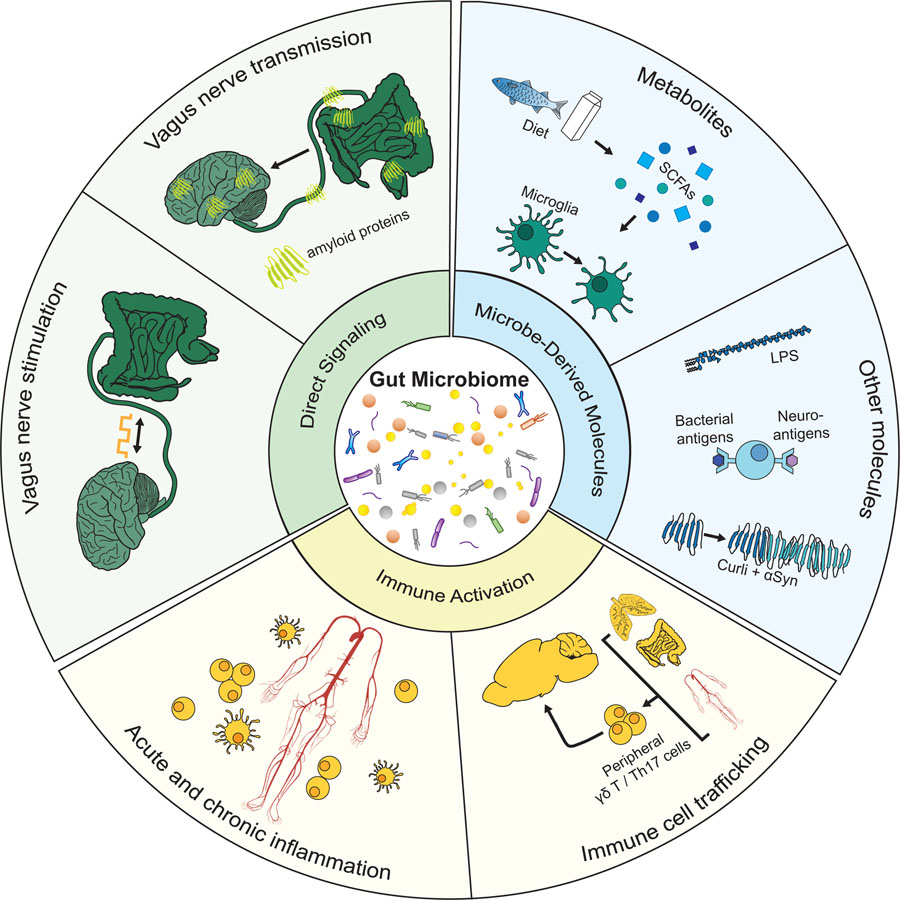
The intestinal microbiome influences neuroinflammatory disease in animal models, and recent studies have identified multiple pathways of communication between the gut and brain. Microbes are able to produce metabolites that enter circulation, can alter inflammatory tone in the intestines, periphery, and central nervous system (CNS), and affect trafficking of immune cells into the brain. Additionally, the vagus nerve that connects the enteric nervous system to the CNS is implicated in modulation of brain immune responses. As preclinical research findings and concepts are applied to humans, the potential impacts of the gut microbiome-brain axis on neuroinflammation represent exciting frontiers for further investigation.
Copyright © 2022 Elsevier Ltd. All rights reserved.
Conflict of interest statement
Declaration of interests
The authors declare that they have no known competing financial interests or personal relationships that could have appeared to influence the work reported in this paper.
Figures
References
-
-
Benakis C, Brea D, Caballero S, Faraco G, Moore J, Murphy M, Sita G, Racchumi G, Ling L, Pamer EG, et al. : Commensal microbiota affects ischemic stroke outcome by regulating intestinal γδ T cells. Nat Med 2016, 22:516–523.
** This seminal study demonstrated that the gut microbiome can modulate immune cell populations in the small intestine and affect disease outcomes in stroke. The authors found that IL-17A-producing γδ T cells could traffic to the meninges and enhance disease severity, suggesting that suppression of intestinal immune activation and trafficking could be a therapeutic target for stroke.
-
-
-
Zhu W, Romano KA, Li L, Buffa JA, Sangwan N, Prakash P, Tittle AN, Li XS, Fu X, Androjna C, et al. : Gut microbes impact stroke severity via the trimethylamine N-oxide pathway. Cell Host Microbe 2021, 29:1199–1208.e5.
** Using two bacterial populations with either high or low trimethylamine N-oxide-producing potential, the authors identified a bacteria-driven and transmissible mechanism for the enhancement of stroke severity. The authors made use of a genetically tractable engineered bacterial population to demonstrate that the genetic disruption of a key enzyme, CutC, was sufficient to protect against stroke.
-
Publication types
MeSH terms
Grants and funding
LinkOut - more resources
Full Text Sources
Research Materials
