. 2022 Apr 8:9:853044.
doi: 10.3389/fvets.2022.853044. eCollection 2022.

Epidemiological and Genetic Characteristics of Porcine Reproductive and Respiratory Syndrome Virus in South China Between 2017 and 2021

Affiliations

Epidemiological and Genetic Characteristics of Porcine Reproductive and Respiratory Syndrome Virus in South China Between 2017 and 2021

Kui Fang et al. Front Vet Sci. .

Abstract

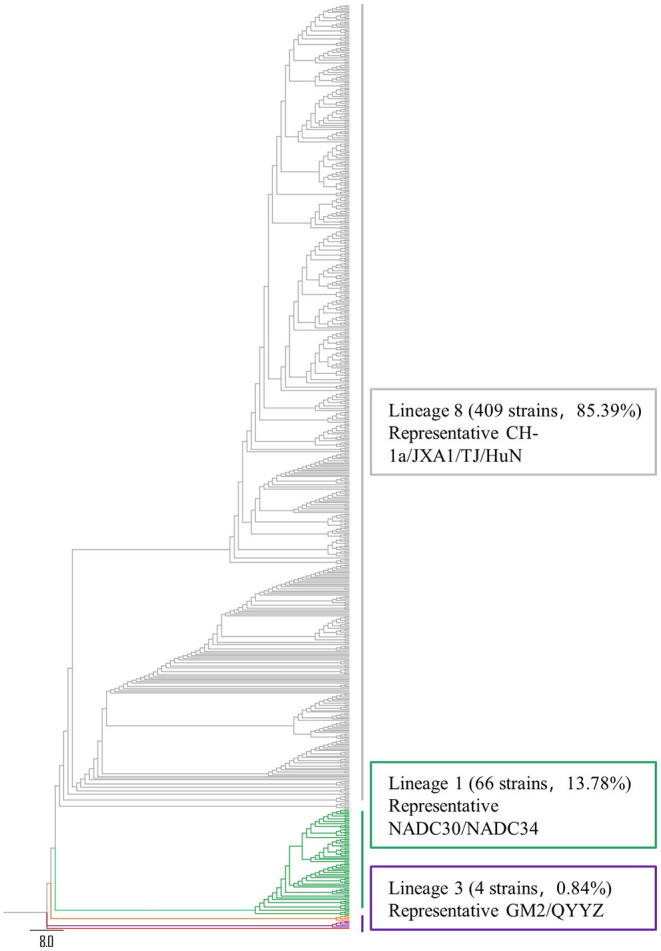
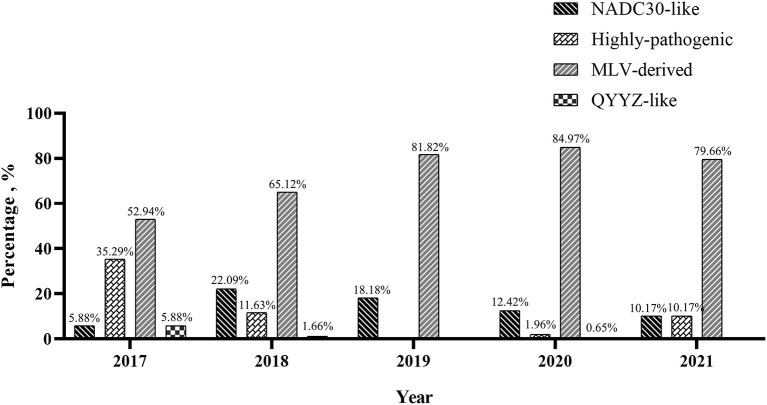
Porcine reproductive and respiratory syndrome virus (PRRSV) remains a major threat to the swine industry in China and has caused enormous losses every year. To monitor the epidemiological and genetic characteristics of PRRSV in South China, 6,795 clinical samples from diseased pigs were collected between 2017 and 2021, and 1,279 (18.82%) of them were positive for PRRSV by RT-PCR detecting the ORF5 gene. Phylogenetic analysis based on 479 ORF5 sequences revealed that a large proportion of them were highly-pathogenic PRRSVs (409, 85.39%) and PRRSV NADC30-like strains (66, 13.78%). Furthermore, 93.15% of these highly-pathogenic strains were found to be MLV-derived. We next recovered 11 PRRSV isolates from the positive samples and generated the whole genome sequences of them. Bioinformatic analysis showed that seven isolates were MLV-derived. Besides, six isolates were found to be recombinant strains. These eleven isolates contained different types of amino acid mutations in their GP5 and Nsp2 proteins compared to those of the PRRSVs with genome sequences publicly available in GenBank. Taken together, our findings contribute to understanding the prevalent status of PRRSV in South China and provide useful information for PRRS control especially the use of PRRSV MLV vaccines.

Keywords: MLV-derived isolates; epidemiological characteristics; genetic characteristics; porcine reproductive and respiratory syndrome virus; recombination.


Conflict of interest statement

The authors declare that the research was conducted in the absence of any commercial or financial relationships that could be construed as a potential conflict of interest.

Figures
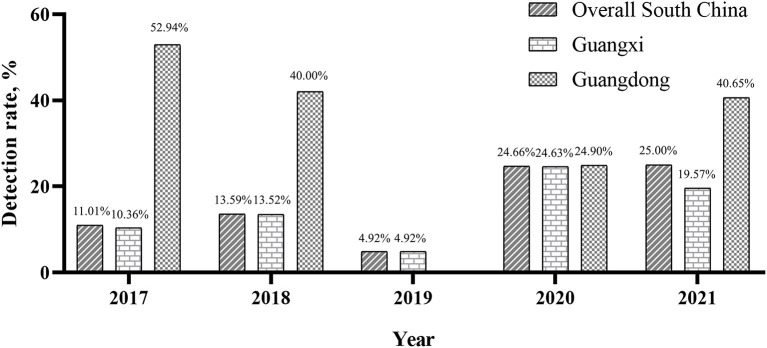
Figure 1
Figure 1
Detection rate of PRRSVs in different regions between 2017 and 2021.
Figure 2
Figure 2
Phylogenetic tree based on ORF5 sequence. Different phylogenetic cluster are shown in different colors. Sequences were aligned using the MegAlign program of DNASTAR, followed by phylogenetic analysis in MEGA 7 by using Neighbor-Joining method with bootstrap 100 times (29).
Figure 3
Figure 3
Annual detection rate of highly-pathogenic PRRSVs, MLV-derived PRRSVs, NADC30-like PRRSVs and QYYZ-like PRRSVs in South China between 2017 and 2021.
Figure 4
Figure 4
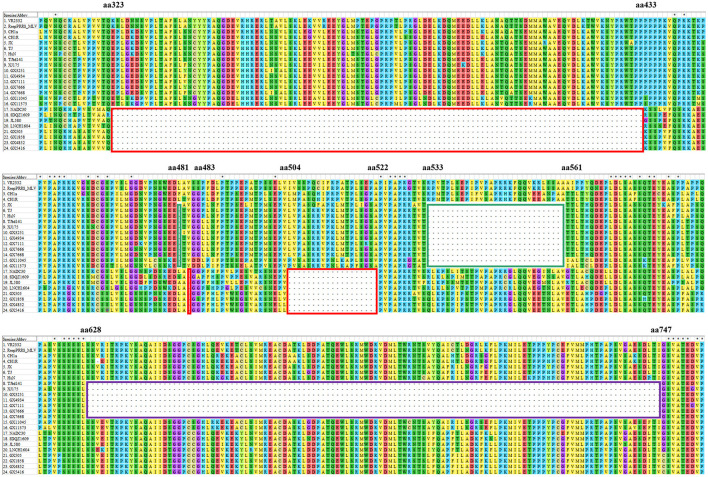
Alignment of the Nsp2 amino acid sequences of the eleven PRRSV isolates. The 131-amino-acid discontinuous deletion of NADC30-like PRRSVs is shown in red box. The 30-amino-acid discontinuous deletion of highly-pathogenic PRRSVs is shown in green box. The additional 120 amino-acid deletion of MLV-derived PRRSVs is shown in purple box.
Figure 5
Figure 5
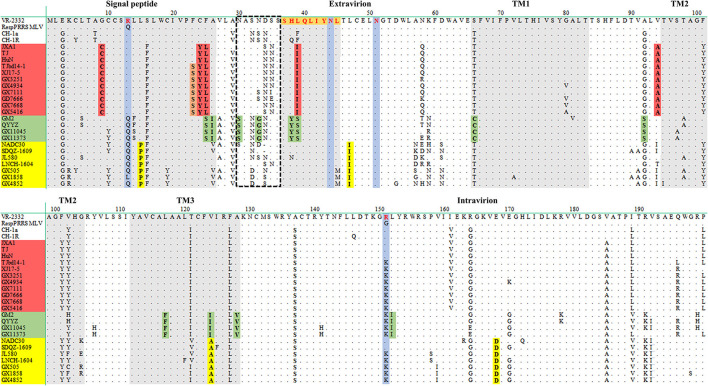
Alignment of the GP5 amino acid sequences of the eleven PRRSV isolates. The signal peptide, PNE and three transmembrane (TM) domains are shown in gray. Identical mutations of highly-pathogenic strains, QYYZ-like strains, and NADC30-like strains are shown in red, green and yellow, respectively. Variable region of NGSs is shown in dashed black box.
Figure 6
Figure 6
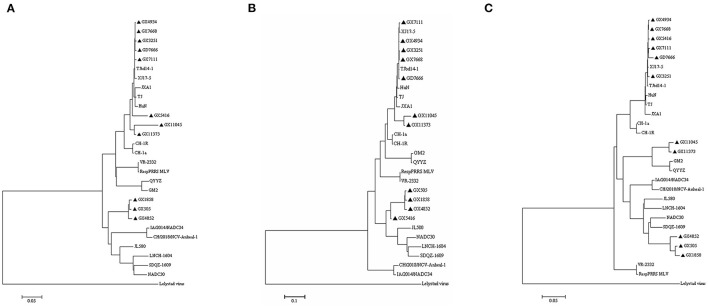
Phylogenetic trees based on the complete genome, nsp2, and ORF5 of PRRSV. (A) Complete genome nucleotide; (B) Nsp2 nucleotide; (C) ORF5 nucleotide. The isolates recovered in this study are indicated by black triangles.
Figure 7
Figure 7
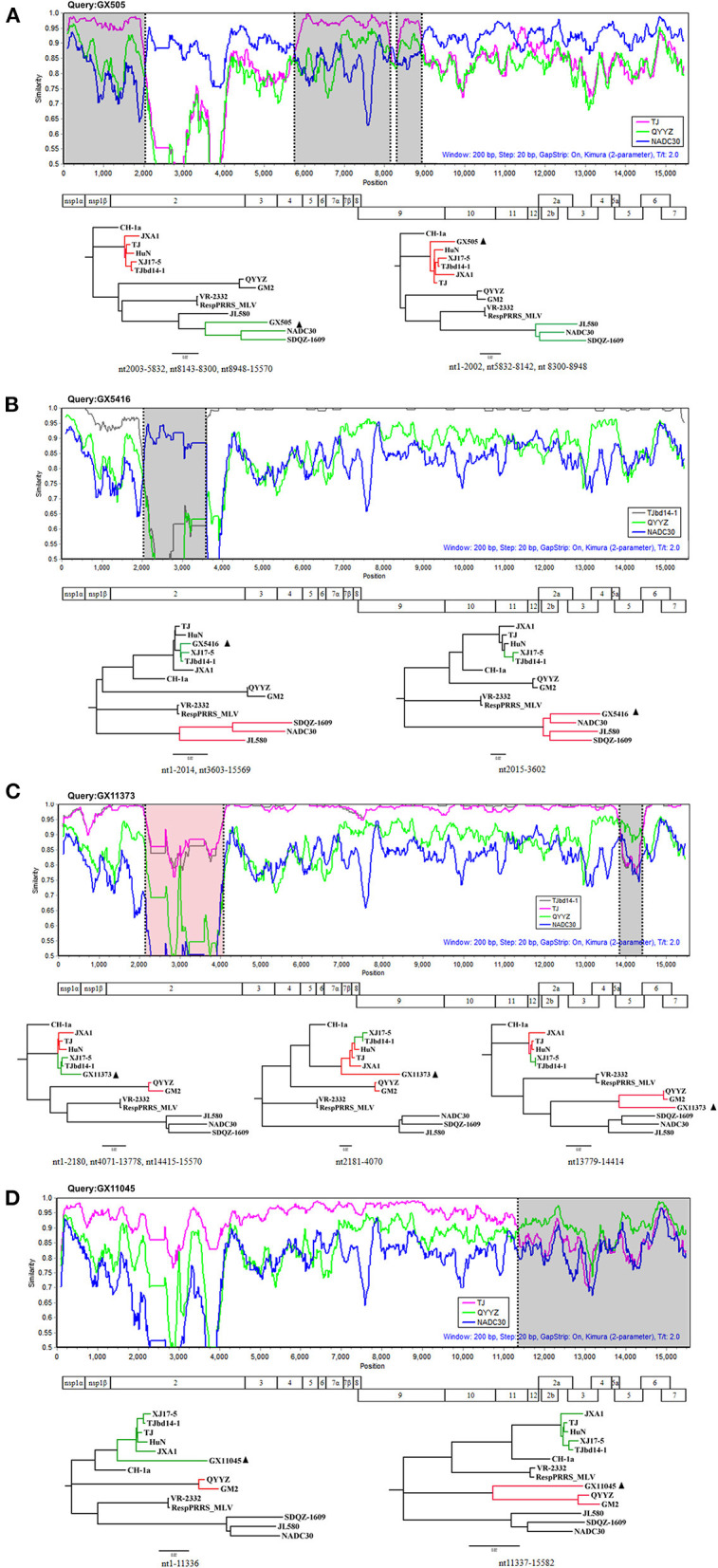
Recombination analysis of strains GX505 (A), GX5416 (B), GX11373 (C), and GX11045 (D). Genome scale similarity comparison of the isolates (query) with TJ (orange), TJbd14-1 (gray), NADC30 (blue), and QYYZ (green). Recombination breakpoints are shown as black dashed lines. The background color of the major parental regions is white, whereas that of the minor parental regions is gray or red. Below the similarity plot is a full genome structure of PRRSV, with reference to CH-1a, shows the position of the ten open reading frames and the fourteen Non-structural proteins. Phylogenetic trees based on different regions of the isolates are shown below the similarity plots. The major parental group is shown in green, the minor parental group is shown in red. The isolates recovered in this study are indicated by black triangles.

References

    1. Adams MJ, Lefkowitz EJ, King AMQ, Harrach B, Harrison RL, Knowles NJ, et al. Changes to taxonomy and the international code of virus classification and nomenclature ratified by the international committee on taxonomy of viruses (2017). Arch Virol. (2017) 162:2505–38. 10.1007/s00705-017-3358-5 - DOI - PubMed
    1. Benfield DA, Nelsen E, Collins JE, Harris L, Goyal SM, Robison D, et al. Charaterization of swine infertility and respiratory syndrme (SIRS) virus (isolate ATCC VR2332). J Vet Diagn Invest. (1992) 4:127–33. 10.1177/104063879200400202 - DOI - PubMed
    1. Dokland T. The structural biology of PRRSV. Virus Res. (2010) 154:86–97. 10.1016/j.virusres.2010.07.029 - DOI - PMC - PubMed
    1. Meulenberg JJM, Besten APD, Kluyver EPD, Moormann RJM, Schaaper WMM, Wensvoort G. Characterization of proteins encoded by ORFs 2 to 7 of Lelystad virus. Virology. (1995) 206:155–63. 10.1016/S0042-6822(95)80030-1 - DOI - PMC - PubMed
    1. Murtaugh MP, Elam MR, Kakach LT. Comparion of the structural protein coding sequences of the VR2332 and Lelystad virus strains of the PRRS virus. Arch Virol. (1995) 140:1451–60. 10.1007/BF01322671 - DOI - PMC - PubMed