


Microorganisms in the reproductive system and probiotic's regulatory effects on reproductive health
- PMID: 35465162
- PMCID: PMC9010680
- DOI: 10.1016/j.csbj.2022.03.017
Microorganisms in the reproductive system and probiotic's regulatory effects on reproductive health
Abstract
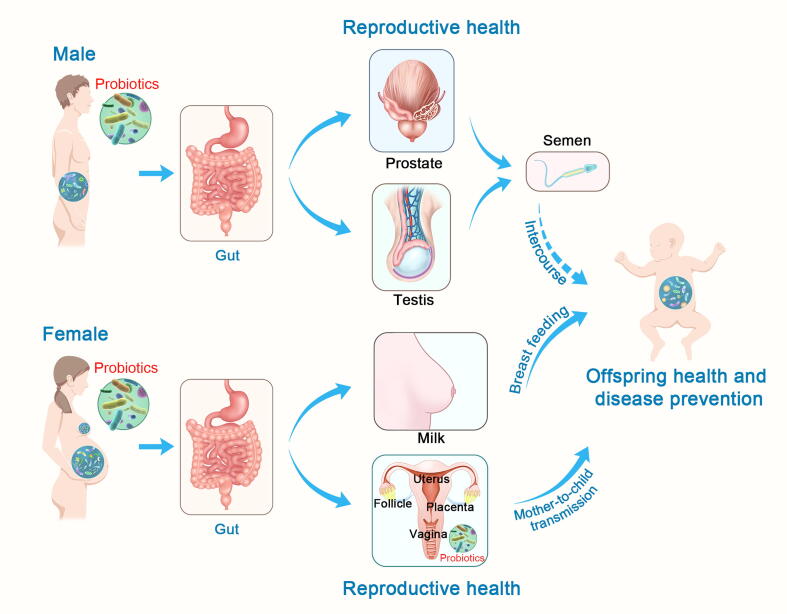
The presence of microbial communities in the reproductive tract has been revealed, and this resident microbiota is involved in the maintenance of health. Intentional modulation via probiotics has been proposed as a possible strategy to enhance reproductive health and reduce the risk of diseases. The male seminal microbiota has been suggested as an important factor that influences a couple's health, pregnancy outcomes, and offspring health. Probiotics have been reported to play a role in male fertility and to affect the health of mothers and offspring. While the female reproductive microbiota is more complicated and has been identified in both the upper and lower reproductive systems, they together contribute to health maintenance. Probiotics have shown regulatory effects on the female reproductive tract, thereby contributing to homeostasis of the tract and influencing the health of offspring. Further, through transmission of bacteria or through other indirect mechanisms, the parent's reproductive microbiota and probiotic intervention influence infant gut colonization and immunity development, with potential health consequences. In vitro and in vivo studies have explored the mechanisms underlying the benefits of probiotic administration and intervention, and an array of positive results, such as modulation of microbiota composition, regulation of metabolism, promotion of the epithelial barrier, and improvement of immune function, have been observed. Herein, we review the state of the art in reproductive system microbiota and its role in health and reproduction, as well as the beneficial effects of probiotics on reproductive health and their contributions to the prevention of associated diseases.
Keywords: BTB, Blood-testis barrier; BV, Bacterial vaginosis; DEHP, Diethylhexyl phthalate; FMT, Fecal microbiota transplantation; FSH, Follicle-stimulating hormone; GDM, Gestational diabetes mellitus; PCOS, Polycystic ovary syndrome; Probiotic; Regulation effect; Reproduction; Reproductive microbiome; Reproductive system; TLR, Toll-like receptor; VMT, Vaginal microbiota transplantation.
© 2022 The Authors.
Conflict of interest statement
The authors declare that they have no known competing financial interests or personal relationships that could have appeared to influence the work reported in this paper.
Figures


References
-
- Lundy S.D., Sangwan N., Parekh N.V., Selvam M.K.P., Gupta S., McCaffrey P., et al. Functional and taxonomic dysbiosis of the gut, urine, and semen microbiomes in male infertility. Eur Urol. 2021;79(6):826–836. - PubMed
-
- Rowe M., Veerus L., Trosvik P., Buckling A., Pizzari T. The Reproductive microbiome: an emerging driver of sexual selection, sexual conflict, mating systems, and reproductive isolation. Trends Ecol Evol. 2020;35(3):220–234. - PubMed
-
- Heil B.A., Paccamonti D.L., Sones J.L. Role for the mammalian female reproductive tract microbiome in pregnancy outcomes. Physiol Genomics. 2019;51(8):390–399. - PubMed
-
- Koedooder R., Mackens S., Budding A., Fares D., Blockeel C., Laven J., et al. Identification and evaluation of the microbiome in the female and male reproductive tracts. Hum Reprod Update. 2019;25(3):298–325. - PubMed
Publication types
LinkOut - more resources
Full Text Sources