


Averting wildlife-borne infectious disease epidemics requires a focus on socio-ecological drivers and a redesign of the global food system
- PMID: 35465645
- PMCID: PMC9014132
- DOI: 10.1016/j.eclinm.2022.101386
Averting wildlife-borne infectious disease epidemics requires a focus on socio-ecological drivers and a redesign of the global food system
Abstract
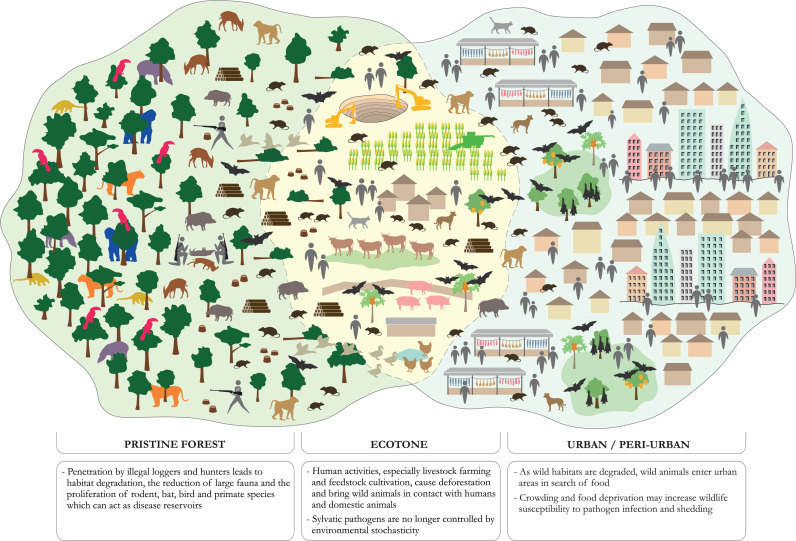
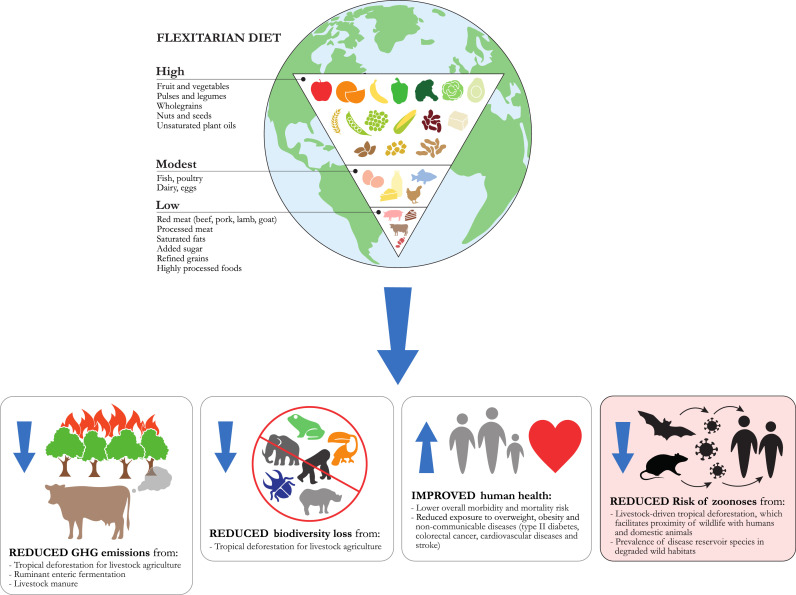
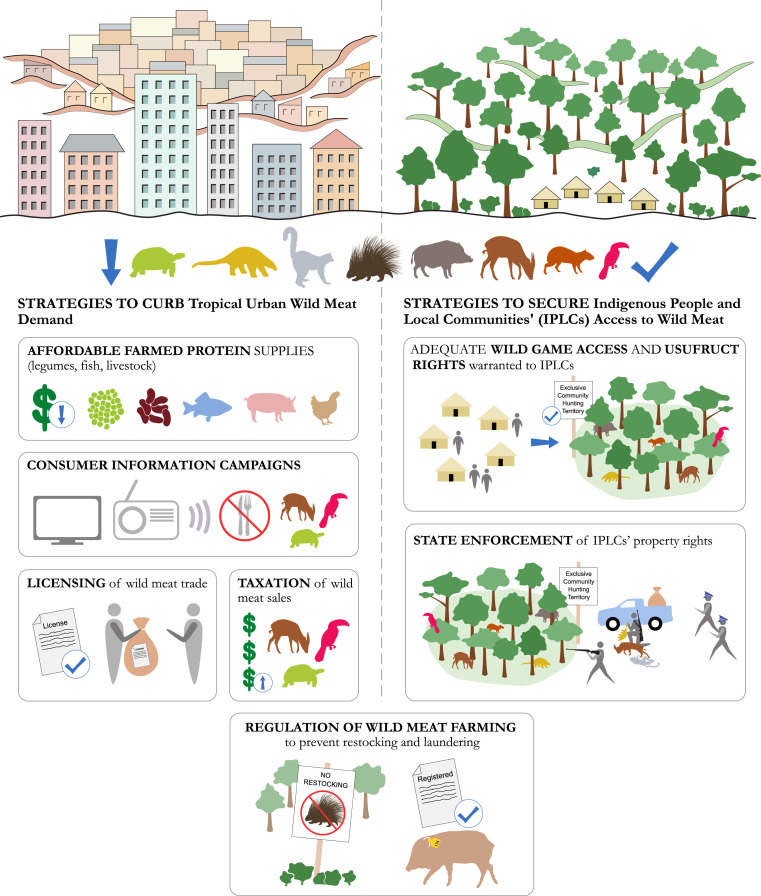
A debate has emerged over the potential socio-ecological drivers of wildlife-origin zoonotic disease outbreaks and emerging infectious disease (EID) events. This Review explores the extent to which the incidence of wildlife-origin infectious disease outbreaks, which are likely to include devastating pandemics like HIV/AIDS and COVID-19, may be linked to excessive and increasing rates of tropical deforestation for agricultural food production and wild meat hunting and trade, which are further related to contemporary ecological crises such as global warming and mass species extinction. Here we explore a set of precautionary responses to wildlife-origin zoonosis threat, including: (a) limiting human encroachment into tropical wildlands by promoting a global transition to diets low in livestock source foods; (b) containing tropical wild meat hunting and trade by curbing urban wild meat demand, while securing access for indigenous people and local communities in remote subsistence areas; and (c) improving biosecurity and other strategies to break zoonosis transmission pathways at the wildlife-human interface and along animal source food supply chains.
Keywords: Agriculture; Deforestation; Emerging infectious disease; Global food system; Livestock; One health; Wild meat; Zoonosis.
© 2022 The Author(s).
Conflict of interest statement
The authors received no funding or other support for production of the manuscript and have no conflicts of interest.
Figures



References
-
- WHO. Zoonoses. https://www.who.int/news-room/fact-sheets/detail/zoonoses. Published 2020. Accessed 14 October 2021.
-
- UNCTAD . UNCTAD; 2020. The Covid-19 Shock for Developing Countries.https://unctad.org/system/files/official-document/gds_tdr2019_covid2_en.pdf
Publication types
LinkOut - more resources
Full Text Sources
