


The Clinician's Guide to Baseball Pitching Biomechanics
- PMID: 35465789
- PMCID: PMC9950989
- DOI: 10.1177/19417381221078537
The Clinician's Guide to Baseball Pitching Biomechanics
Abstract
Context: Improper baseball pitching biomechanics are associated with increased stresses on the throwing elbow and shoulder as well as an increased risk of injury.
Evidence acquisition: Previous studies quantifying pitching kinematics and kinetics were reviewed.
Study design: Clinical review.
Level of evidence: Level 5.
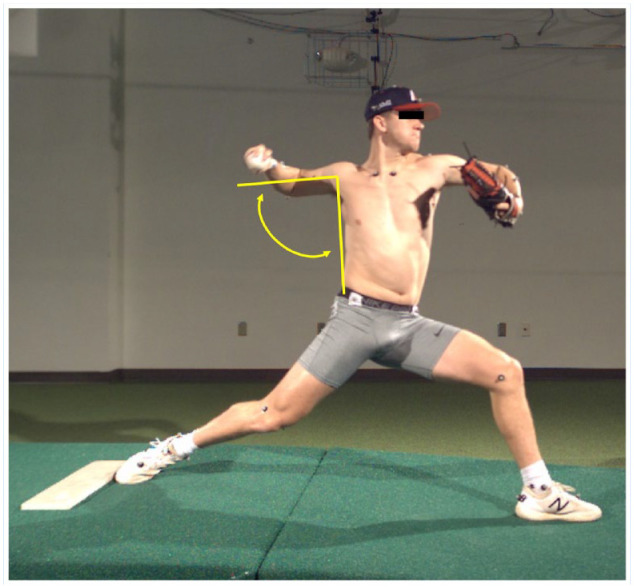
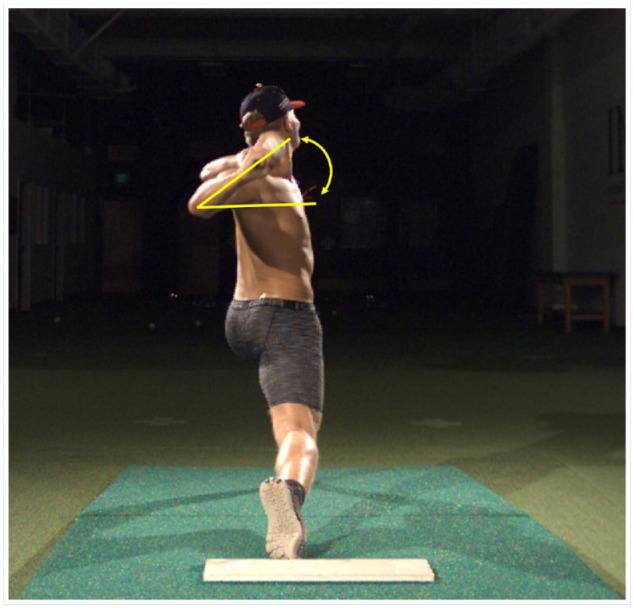
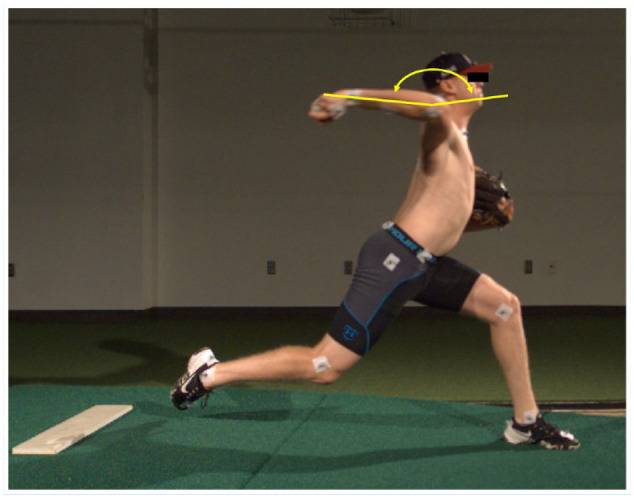
Results: At the instant of lead foot contact, the elbow should be flexed approximately 90° with the shoulder at about 90° abduction, 20° horizontal abduction, and 45° external rotation. The stride length should be about 85% of the pitcher's height with the lead foot in a slightly closed position. The pelvis should be rotated slightly open toward home plate with the upper torso in line with the pitching direction. Improper shoulder external rotation at foot contact is associated with increased elbow and shoulder torques and forces and may be corrected by changing the stride length and/or arm path. From foot contact to maximum shoulder external rotation to ball release, the pitcher should demonstrate a kinematic chain of lead knee extension, pelvis rotation, upper trunk rotation, elbow extension, and shoulder internal rotation. The lead knee should be flexed about 45° at foot contact and 30° at ball release. Corrective strategies for insufficient knee extension may involve technical issues (stride length, lead foot position, lead foot orientation) and/or strength and conditioning of the lower body. Improper pelvis and upper trunk rotation often indicate the need for core strength and flexibility. Maximum shoulder external rotation should be about 170°. Insufficient external rotation leads to low shoulder internal rotation velocity and low ball velocity. Deviation from 90° abduction decreases the ability to achieve maximum external rotation, increases elbow torque, and decreases the dynamic stability in the glenohumeral joint.
Conclusion: Improved pitching biomechanics can increase performance and reduce risk of injury.
Sort: Level C.
Keywords: flaws, elbow; shoulder; throwing.
Conflict of interest statement
The following authors declared potential conflicts of interest: G.S.F. is a paid consultant for Major League Baseball and Dari Motion. E.L.C. is a paid consultant for Arthrex, Smith & Nephew, Biomet, and Theralase; has received lecture payments from Arthrex, Smith & Nephew, and Biomet; and received patent support and royalty payments from Arthrex. J.R.D. is a paid consultant for Arthrex and Theralase; has received lecture payments, patent support, and royalties from Arthrex; and has stock options with Theralase and Topical Gear. K.E.W. is a paid medical advisory board member for AlterG Treadmill, IntelliSkin USA, LiteCure Laser Co, and Hyperice; is a paid consultant for Theralase and WebExercises; has received educational grants from Bauerfeiend Braces, ERMI, and Performance Health; and has received royalty payments from CV Mosby, Elsevier, Human Kinetics, and Slack publishers.
Figures
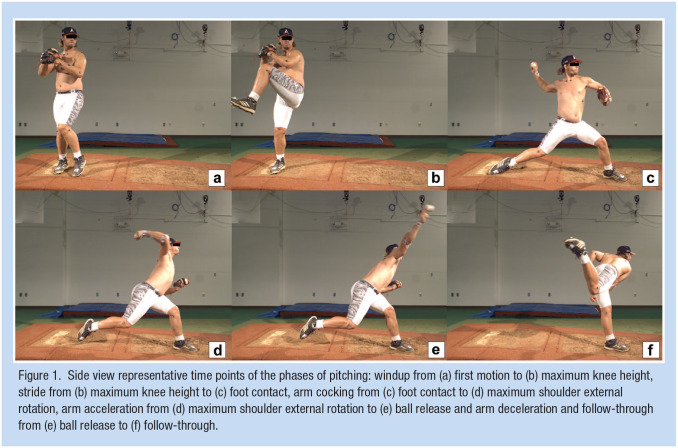
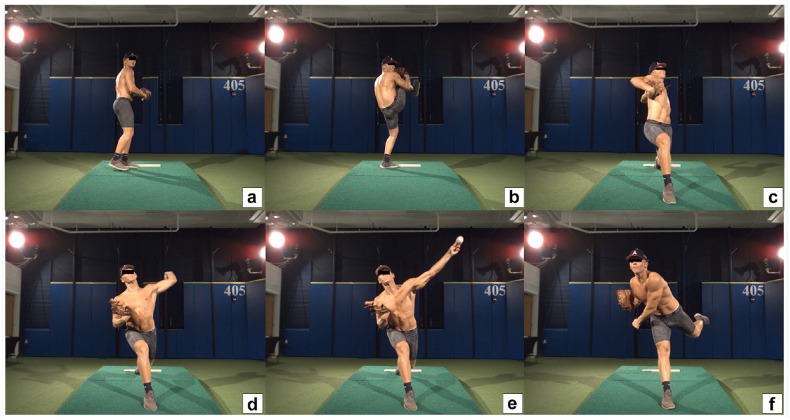
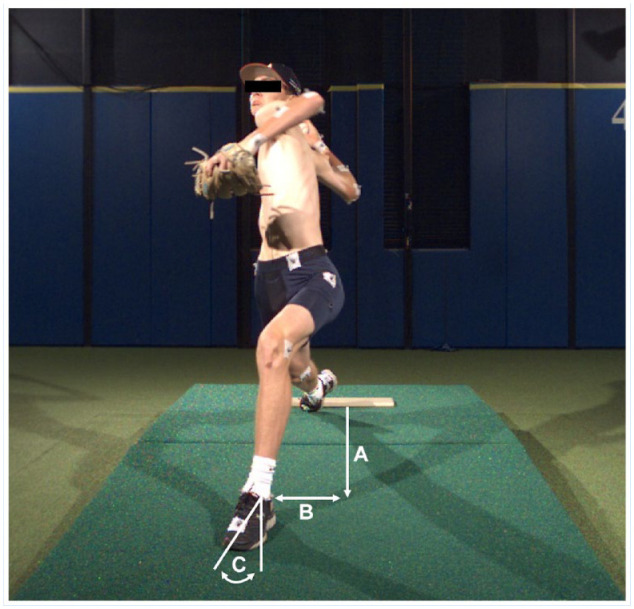
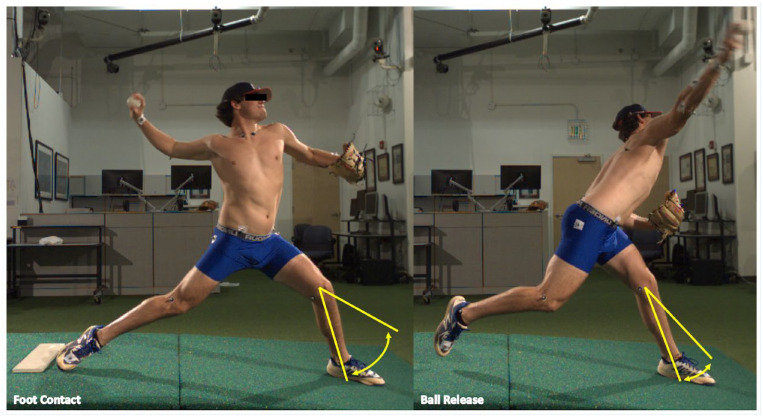
References
-
- Aguinaldo AL, Chambers H. Correlation of throwing mechanics with elbow valgus load in adult baseball pitchers. Am J Sports Med. 2009;37:2043-2048. - PubMed
-
- Beckett M, Hannon M, Ropiak C, Gerona C, Mohr K, Limpisvasti O. Clinical assessment of scapula and hip joint function in preadolescent and adolescent baseball players. Am J Sports Med. 2014;42:2502-2509. - PubMed
-
- Camp CL, Dines JS, van der List JP, et al.. Summative report on time out of play for Major and Minor League Baseball: an analysis of 49,955 injuries from 2011 through 2016. Am J Sports Med. 2018;46:1727-1732. - PubMed
-
- Campbell BM, Stodden DF, Nixon MK. Lower extremity muscle activation during baseball pitching. J Strength Cond Res. 2010;24:964-971. - PubMed
MeSH terms
LinkOut - more resources
Full Text Sources
Research Materials
