


Open-label pilot study of ranolazine for cramps in amyotrophic lateral sclerosis
- PMID: 35466411
- PMCID: PMC9197965
- DOI: 10.1002/mus.27560
Open-label pilot study of ranolazine for cramps in amyotrophic lateral sclerosis
Abstract
Introduction/aims: Neuronal hyperexcitability (manifested by cramps) plays a pathological role in amyotrophic lateral sclerosis (ALS), and drugs affecting it may help symptomatic management and slow disease progression. We aimed to determine safety and tolerability of two doses of ranolazine in patients with ALS and evaluate for preliminary evidence of drug-target engagement by assessing muscle cramp characteristics.
Methods: We performed an open-label dose-ascending study of ranolazine in 14 individuals with ALS in two sequential cohorts: 500 mg (cohort 1) and 1000 mg (cohort 2) orally twice daily. Each had a 2-week run-in period, 4-week drug administration, and 6-week safety follow-up. Primary outcome was safety and tolerability. Exploratory measures included cramp frequency and severity, fasciculation frequency, cramp potential duration, ALS Functional Rating Scale---Revised score, and forced vital capacity.
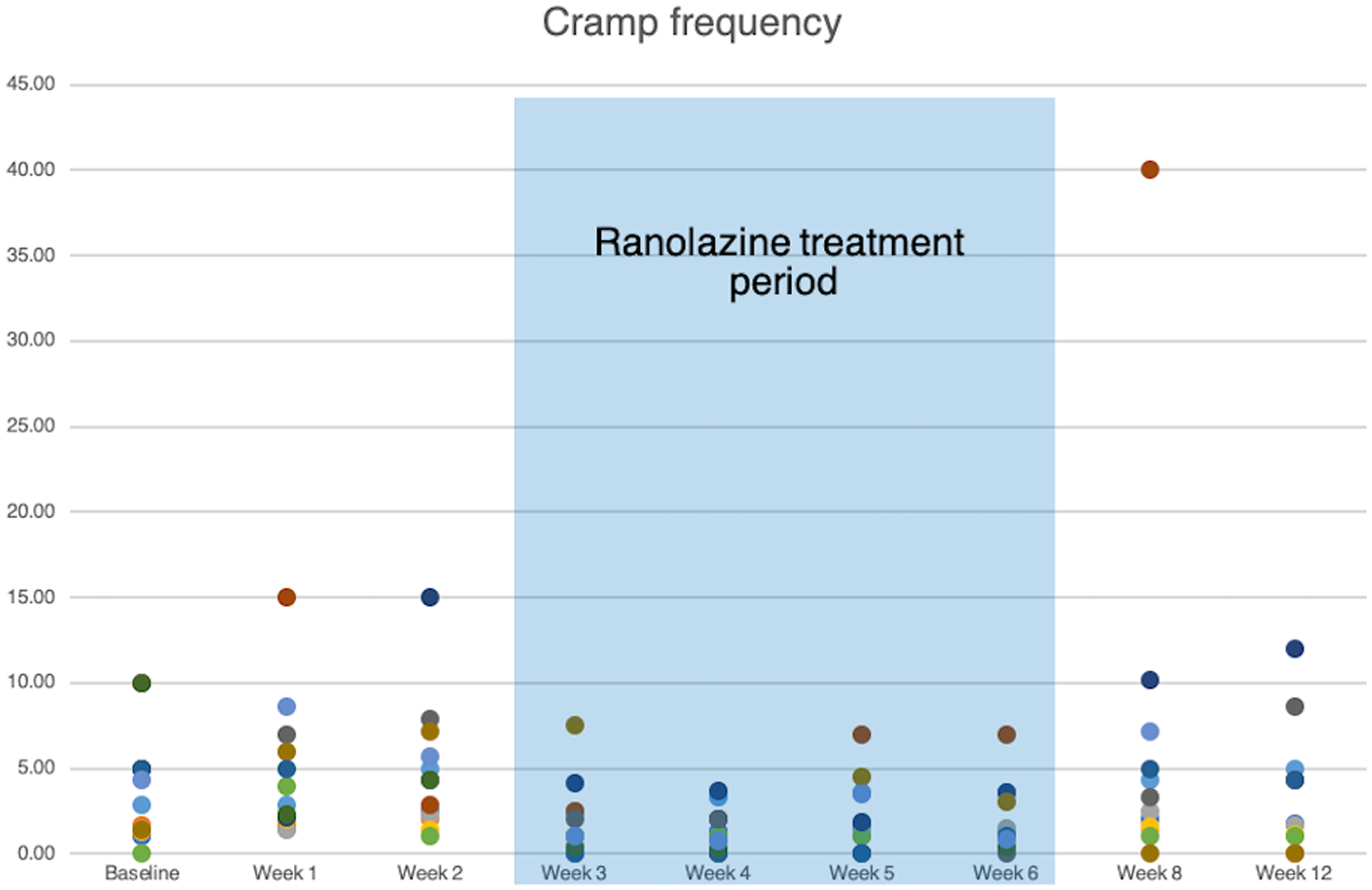
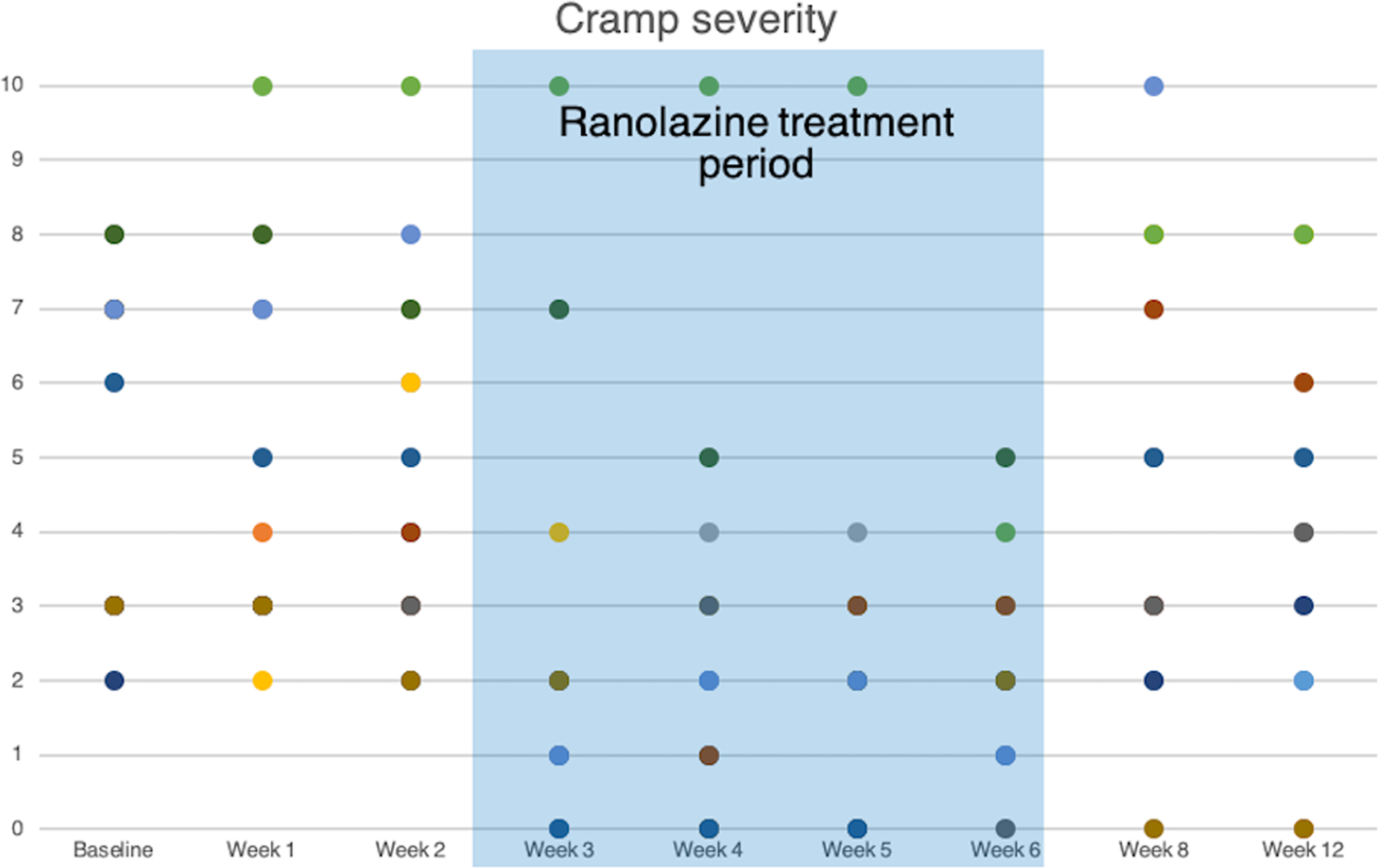
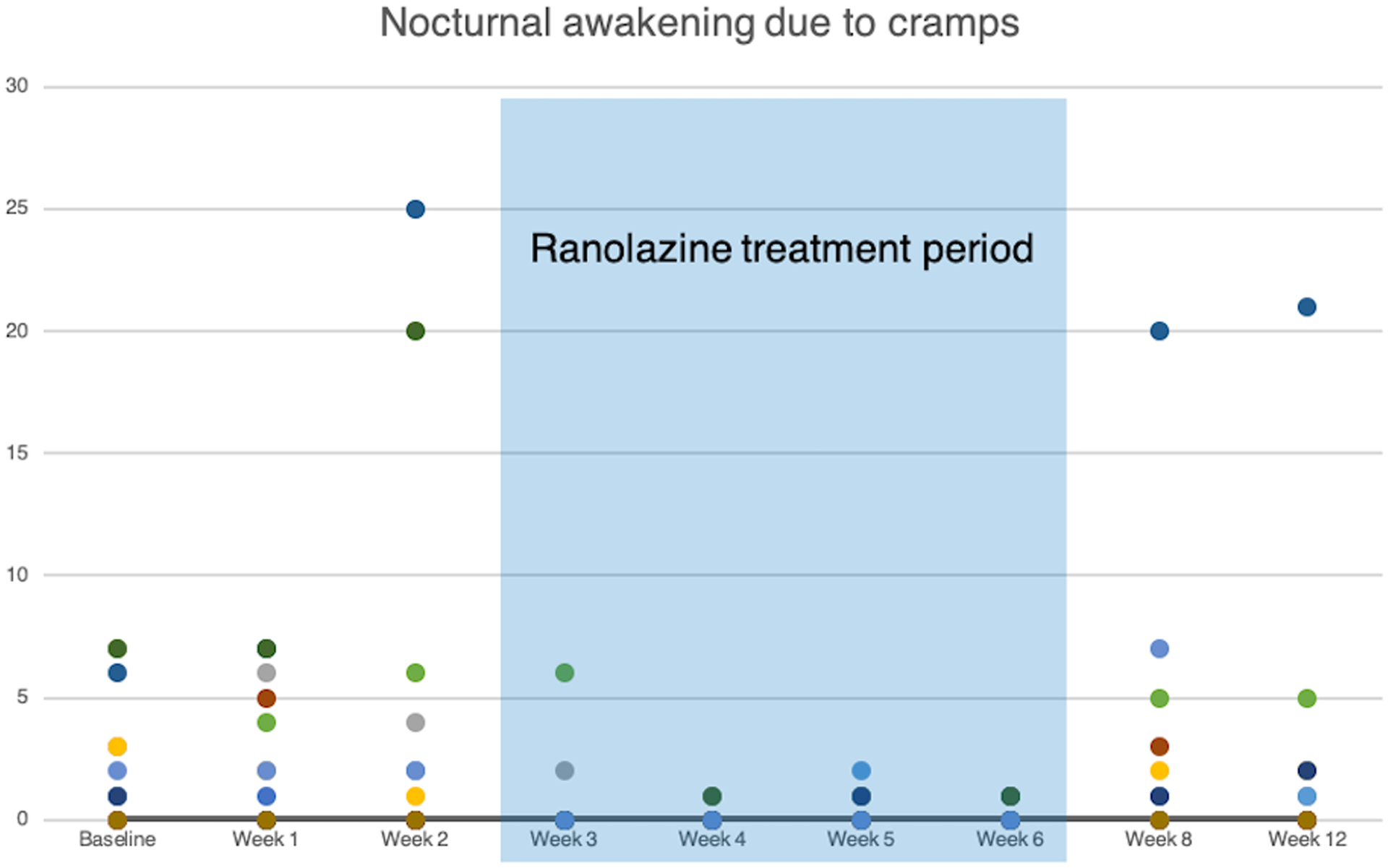
Results: Six and eight participants were enrolled in cohorts 1 and 2, respectively. There were no serious adverse events. Two subjects in cohort 2 discontinued the drug due to constipation. The most frequent drug-related adverse event was gastrointestinal (40%). Cramp frequency decreased by 54.8% (95% confidence interval [CI], 39%-70.8%) and severity decreased by 46.3% (95% CI, 29.5-63.3%), which appeared to be dose-dependent, with decreased awakening due to cramps. Other outcomes showed no change.
Discussion: Ranolazine was well tolerated in ALS up to 2000 mg/day, with gastrointestinal side effects being the most frequent. Ranolazine reduced cramp frequency and severity, supporting its investigation for muscle cramps in a future placebo-controlled trial.
Keywords: ALS; cramps; nerve excitability.
© 2022 Wiley Periodicals LLC.
Conflict of interest statement
Figures
References
Publication types
MeSH terms
Substances
Grants and funding
- UL1 TR002366/TR/NCATS NIH HHS/United States
- #UL1TR002366/National Center for Advancing Translational Sciences (CTSA grant from NCATS awarded to the University of Kansas for Frontiers: University of Kansas Clinical and Translational Science Institute)
- #UL1TR002366/University of Kansas for Frontiers: University of Kansas Clinical and Translational Science Institute)
- Gilead Sciences Inc. provided the study drug/Gilead Sciences
LinkOut - more resources
Full Text Sources
Medical
Miscellaneous
