Review
. 2023 Mar;201(3):1026-1050.
doi: 10.1007/s12011-022-03226-2. Epub 2022 Apr 25.

Human papillomavirus infection, cervical cancer and the less explored role of trace elements

Affiliations
Review

Human papillomavirus infection, cervical cancer and the less explored role of trace elements

Anne Boyina Sravani et al. Biol Trace Elem Res. 2023 Mar.

Abstract

Cervical cancer is an aggressive type of cancer affecting women worldwide. Many affected individuals rely on smear tests for the diagnosis, surgery, chemotherapy, or radiation for their treatment. However, due to a broad set of undesired results and side-effects associated with the existing protocols, the search for better diagnostic and therapeutic interventions is a never-ending pursuit. In the purview, the bio-concentration of trace elements (copper, selenium, zinc, iron, arsenic, manganese, and cadmium) is seen to fluctuate during the occurrence of cervical cancer and its progression from pre-cancerous to metastatic nature. Thus, during the occurrence of cervical cancer, the detection of trace elements and their supplementation will prove to be highly advantageous in developing diagnostic tools and therapeutics, respectively. This review provides a detailed overview of cervical cancer, its encouragement by human papillomavirus infections, the mechanism of pathology, and resistance. Majorly, the review emphasizes the less explored role of trace elements, their contribution to the growth and inhibition of cervical cancer. Numerous clinical trials have been listed, thereby providing a comprehensive reference to the exploration of trace elements in the management of cervical cancer.

Keywords: Cervical cancer; HPV; chemotherapy; diagnosis; trace elements.


Conflict of interest statement

The authors have declared no conflicts of interests.

Figures
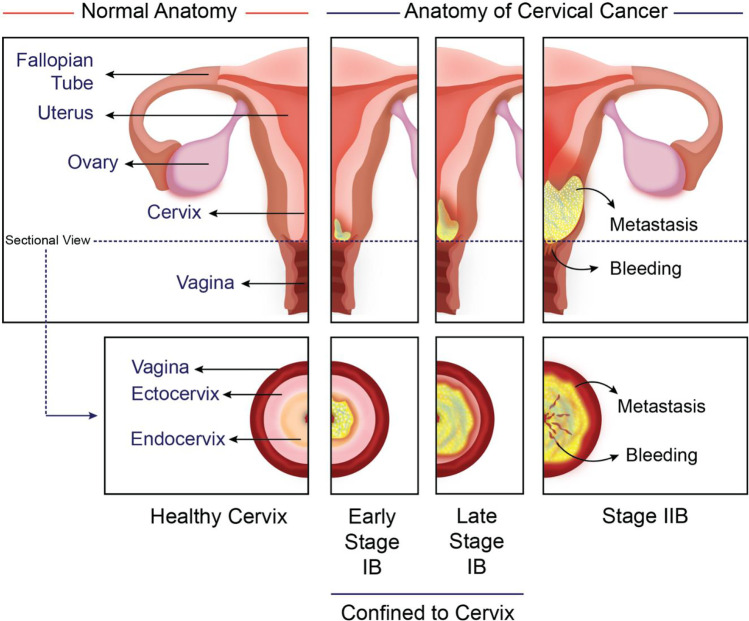
Fig. 1
Fig. 1
Anatomy of healthy cervix and the cancerous tissue showing the stages early and late stage IB, and stage IIB
Fig 2
Fig 2
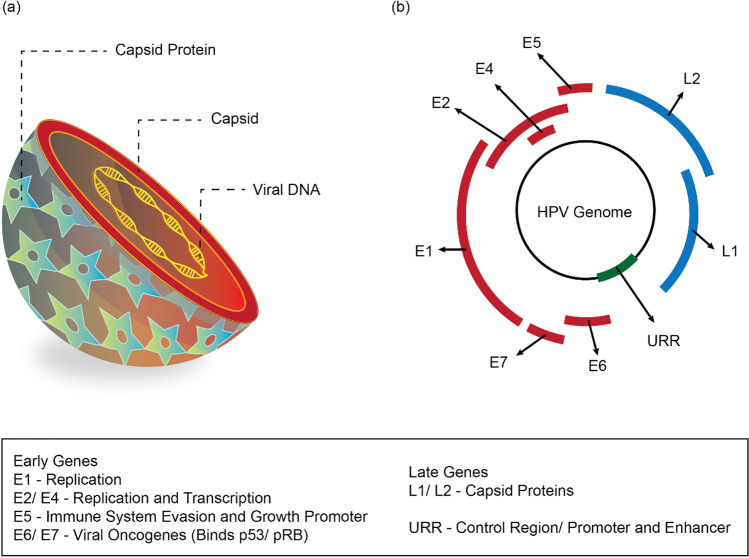
Human Papilloma Virus. Representation of the structure (a), and the genome organization (b)
Fig. 3
Fig. 3
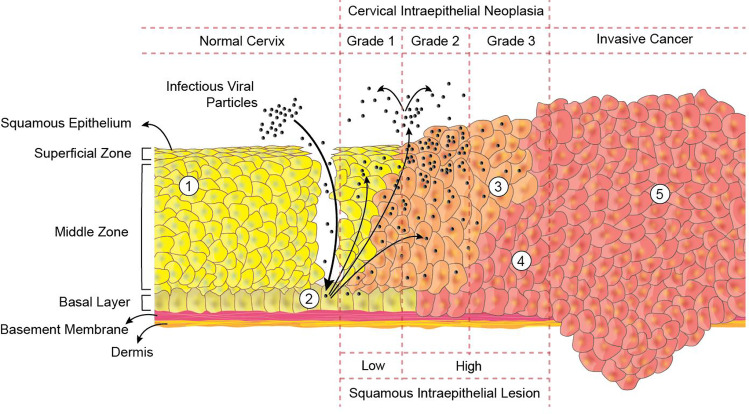
Histological considerations during cervical cancer graded as cervical intraepithelial neoplasia (CIN) and squamous intraepithelial lesion (SIL) depicting (1) the healthy squamous epithelium of the cervix, and observable changes during cancer including (2) the infection by human papillomavirus (HPV) with the episomal viral DNA in the nucleus of the cell, (3) cells expressing the early and late genes, (4) cells overexpressing the oncoproteins E6 and E7, and (5) the metastatic cancer with the complete integration of the viral DNA in the nucleus of the cells
Fig. 4
Fig. 4
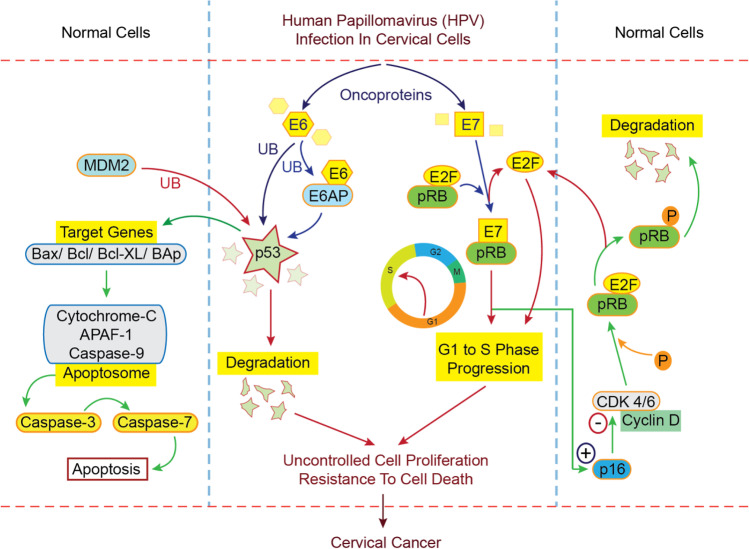
The mechanism of human papillomavirus (HPV) infection of the cervical cells, followed by the overexpression of the oncoproteins E6 and E7, leading to the derangement of the normal protective mechanisms of the cervical cells, resulting in the uncontrolled cell proliferation and resistance to cell death, termed as cervical cancer
Fig. 5
Fig. 5
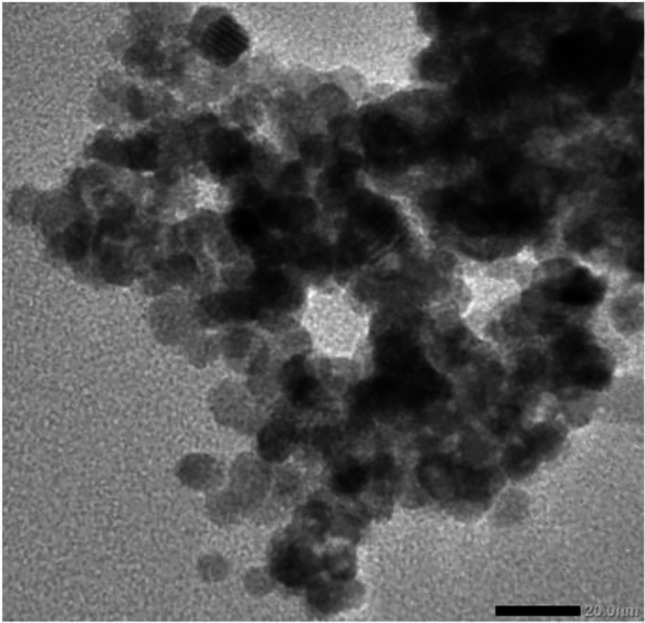
Transmission electron microscopic image of ZnO quantum dots. Reproduced under CC BY 4.0 from [232], Frontiers in Pharmacology
Fig. 6
Fig. 6
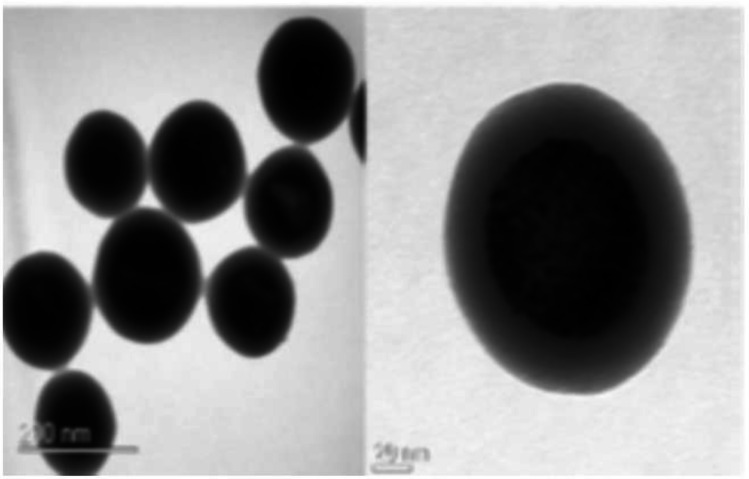
Transmission electron microscopic images of fluorescent gold-nanocrystals-silica hybrid (FLASH) nanocomposites. Scale bar—50 nm. Reproduced from [251] with permission from American Chemical Society (ACS)
Fig. 7
Fig. 7
Microscopic images of Fe5C2-based nanoparticles. a Transmission electron microscopy (TEM) and b high-resolution TEM image of Fe5C2 nanoparticles, c TEM image of Fe5C2-GOD, and d Fe5C2-GOD@MnO2 nanocatalysts. Reproduced from [254] with permission from American Chemical Society (ACS)

References

    1. Bray F, Ferlay J, Soerjomataram I. Global Cancer Statistics 2018 : GLOBOCAN Estimates of Incidence and Mortality Worldwide for 36 Cancers in 185 Countries. CA Cancer J Clin. 2018;68:394–424. doi: 10.3322/caac.21492. - DOI - PubMed
    1. Sung H, Ferlay J, Siegel RL, et al. Global Cancer Statistics 2020 : GLOBOCAN Estimates of Incidence and Mortality Worldwide for 36 Cancers in 185 Countries. CA Cancer J Clin. 2021;0:1–41. doi: 10.3322/caac.21660. - DOI - PubMed
    1. Blackadar CB. Historical review of the causes of cancer. World J Clin Oncol. 2016;7:54–86. - PMC - PubMed
    1. Hassanpour SH, Dehghani M. Review of cancer from perspective of molecular. J Cancer Res Pract. 2017;4:127–129. doi: 10.1016/j.jcrpr.2017.07.001. - DOI
    1. Ferlay J (2019) Estimating the global cancer incidence and mortality in 2018 : GLOBOCAN sources and methods. 10.1002/ijc.31937 - PubMed