


Radiographic measurement of the posterior tibial slope in normal Chinese adults: a retrospective cohort study
- PMID: 35473639
- PMCID: PMC9040249
- DOI: 10.1186/s12891-022-05319-4
Radiographic measurement of the posterior tibial slope in normal Chinese adults: a retrospective cohort study
Abstract
Background: Measurement of the posterior tibial slope (PTS) angle has important applications in total knee replacement surgery, high tibial osteotomy, and anterior cruciate ligament reconstruction. This study aimed to determine the mean PTS of knee joints in healthy Chinese adults, and provide data to guide knee surgery in China.
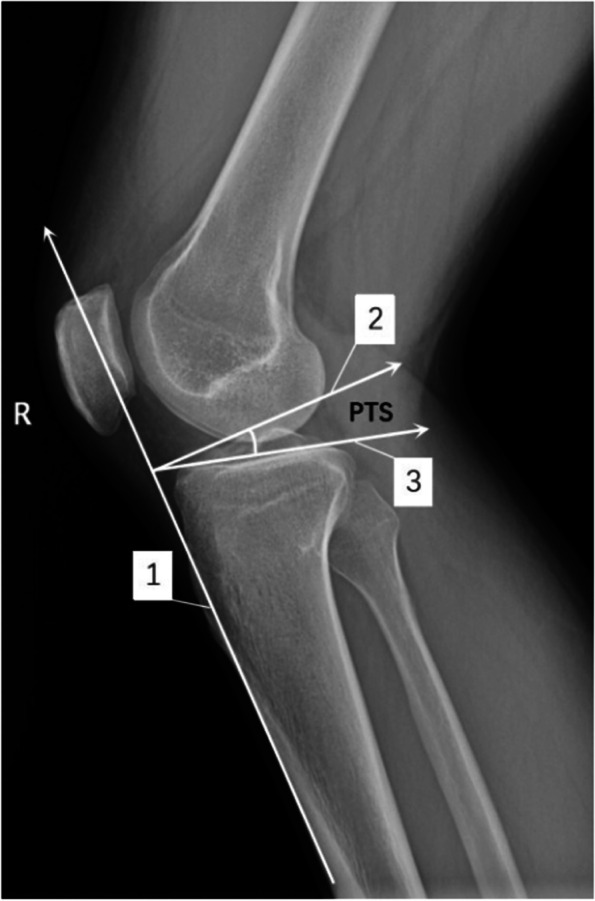
Methods: A retrospective analysis of 1257 (n = 1233, 50.4% male) plain X-ray films of participants aged 25-59 years was performed. The picture archiving and communication system was used for PTS measurement. The PTS was defined as the angle between the vertical line of the tangent of the anterior tibial cortex of the proximal tibia, and the tangent line of the tibial cortex. Two imaging physicians conducted the PTS measurements independently, and both the inter- and intraclass correlation coefficients (ICCs) were calculated.
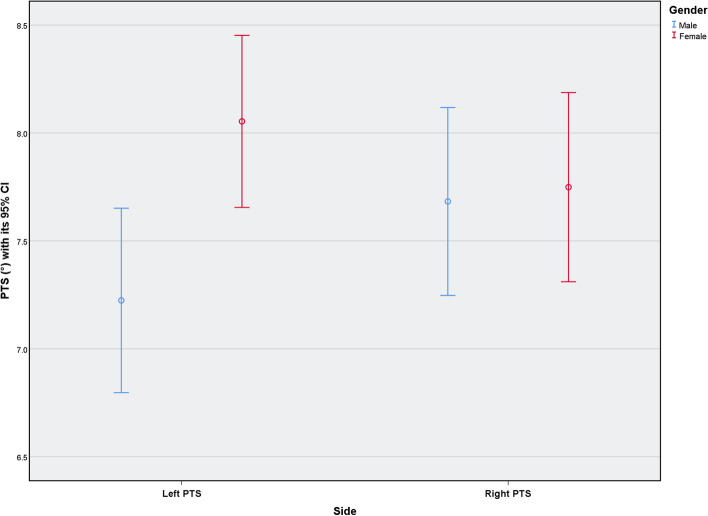
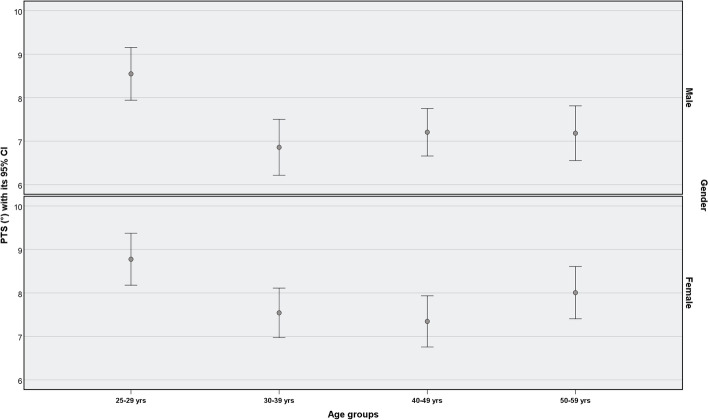
Results: The mean PTS value was 7.68 ± 3.84° (range: 0-21°). The left PTS was significantly smaller in males than in females (7.22 ± 3.89 vs 8.05 ± 3.60; P = 0.005). Additionally, the PTS in participants aged 25-29 years was significantly larger than that in the other age groups (Left side: 8.64 ± 3.73 vs 6.92 ± 3.42, 7.42 ± 3.75, 7.53 ± 3.98; P < 0.001 and Right side: 8.68 ± 3.84 vs 7.48 ± 4.21, 7.13 ± 3.64, 7.66 ± 3.80; P = 0.004). There were no significant differences in PTS between the left and right sides. Two-way analysis of variance suggested that the differences in PTS between age groups were not affected by sex. The interobserver ICC was 0.91 (95% confidence interval [CI]: 0.85-0.94), and the intraobserver ICC was 0.90 (95% CI: 0.82-0.94).
Conclusions: This study demonstrated that there were significant differences in PTS based on sex and age, highlighting the need to provide individualized treatment for knee surgery. It provided valuable information regarding the normal PTS values in Chinese adults and presented regionalised data to guide knee surgery.
Keywords: Anterior cruciate ligament; Arthroplasty; Chinese; Normal value; Posterior tibial slope.
© 2022. The Author(s).
Conflict of interest statement
The authors declare that they have no competing interests.
Figures
References
MeSH terms
Grants and funding
- 2022KY962/Zhejiang medical and health technology project
- 2022KY962/Zhejiang medical and health technology project
- 2022KY962/Zhejiang medical and health technology project
- 2022KY962/Zhejiang medical and health technology project
- 2022KY962/Zhejiang medical and health technology project
- 2022KY962/Zhejiang medical and health technology project
- 2021WJCY053/Hangzhou Biomedicine and Health Industry Development Support Special Program
- 2021WJCY053/Hangzhou Biomedicine and Health Industry Development Support Special Program
- 2021WJCY053/Hangzhou Biomedicine and Health Industry Development Support Special Program
- 2021WJCY053/Hangzhou Biomedicine and Health Industry Development Support Special Program
- 2021WJCY053/Hangzhou Biomedicine and Health Industry Development Support Special Program
- 2021WJCY053/Hangzhou Biomedicine and Health Industry Development Support Special Program
- 2021WJCY053/Hangzhou Biomedicine and Health Industry Development Support Special Program
- 2021WJCY053/Hangzhou Biomedicine and Health Industry Development Support Special Program
- 2021WJCY053/Hangzhou Biomedicine and Health Industry Development Support Special Program
LinkOut - more resources
Full Text Sources
Medical
