COVID-19 vaccine hesitancy in eight European countries: Prevalence, determinants, and heterogeneity
- PMID: 35476432
- PMCID: PMC9045608
- DOI: 10.1126/sciadv.abm9825
COVID-19 vaccine hesitancy in eight European countries: Prevalence, determinants, and heterogeneity
Abstract
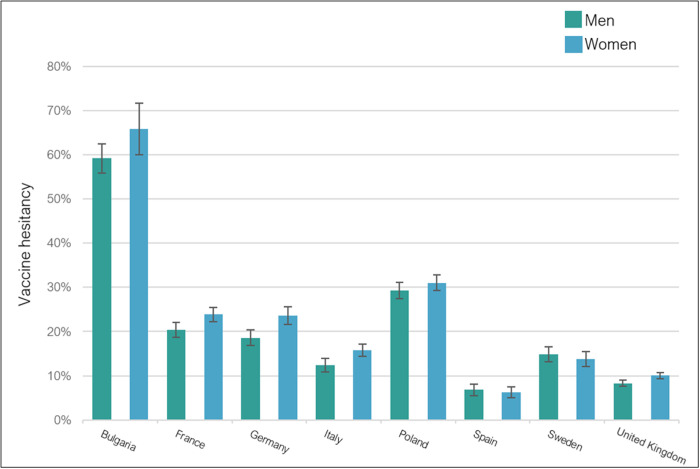
We examine heterogeneity in COVID-19 vaccine hesitancy across eight European countries. We reveal striking differences across countries, ranging from 6.4% of adults in Spain to 61.8% in Bulgaria reporting being hesitant. We experimentally assess the effectiveness of different messages designed to reduce COVID-19 vaccine hesitancy. Receiving messages emphasizing either the medical benefits or the hedonistic benefits of vaccination significantly increases COVID-19 vaccination willingness in Germany, whereas highlighting privileges contingent on holding a vaccination certificate increases vaccination willingness in both Germany and the United Kingdom. No message has significant positive effects in any other country. Machine learning-based heterogeneity analyses reveal that treatment effects are smaller or even negative in settings marked by high conspiracy beliefs and low health literacy. In contrast, trust in government increases treatment effects in some groups. The heterogeneity in vaccine hesitancy and responses to different messages suggests that health authorities should avoid one-size-fits-all vaccination campaigns.
Figures
References
-
- Doherty M., Buchy P., Standaert B., Giaquinto C., Prado-Cohrs D., Vaccine impact: Benefits for human health. Vaccine 34, 6707–6714 (2016). - PubMed
-
- Liu L., Johnson H. L., Cousens S., Perin J., Scott S., Lawn J. E., Rudan I., Campbell H., Cibulskis R., Li M., Mathers C., Black R. E.; Child Health Epidemiology Reference Group of WHO and UNICEF , Global, regional, and national causes of child mortality: An updated systematic analysis for 2010 with time trends since 2000. Lancet 379, 2151–2161 (2012). - PubMed
-
- World Health Organization, The Power of Vaccines: Still not fully utilized (2020); https://www.who.int/publications/10-year-review/chapter-vaccines.pdf.
LinkOut - more resources
Full Text Sources