


pH-responsive viscoelastic supramolecular viscosifiers based on dynamic complexation of zwitterionic octadecylamidopropyl betaine and triamine for hydraulic fracturing applications
- PMID: 35480416
- PMCID: PMC9034271
- DOI: 10.1039/d1ra00257k
pH-responsive viscoelastic supramolecular viscosifiers based on dynamic complexation of zwitterionic octadecylamidopropyl betaine and triamine for hydraulic fracturing applications
Abstract
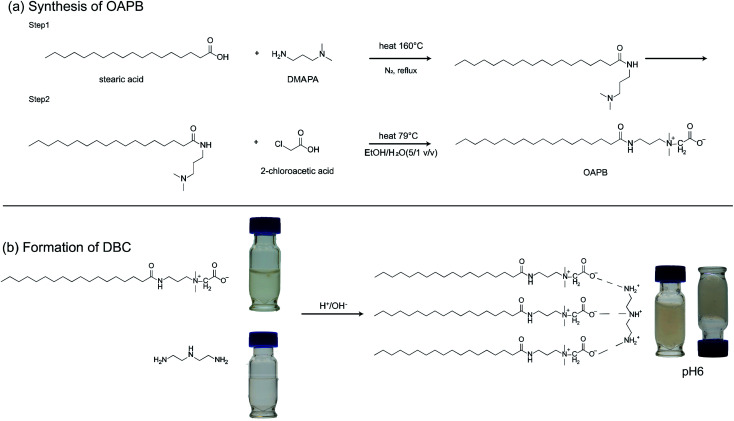
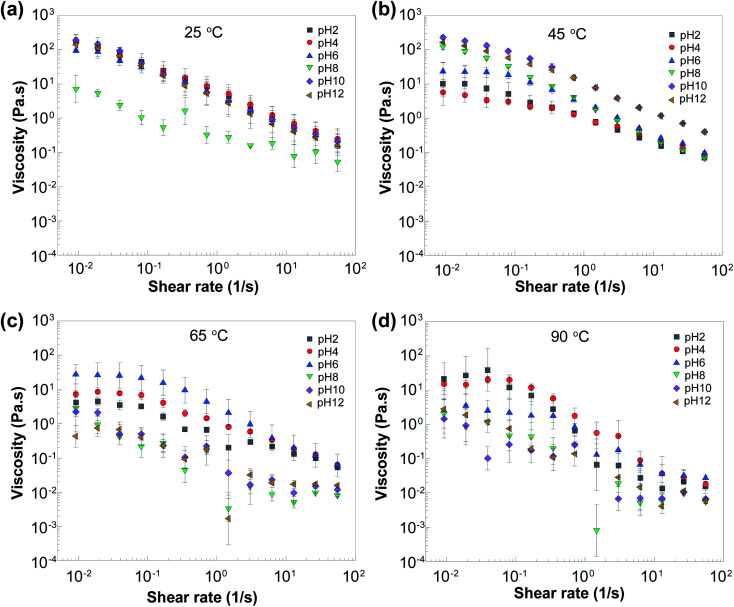
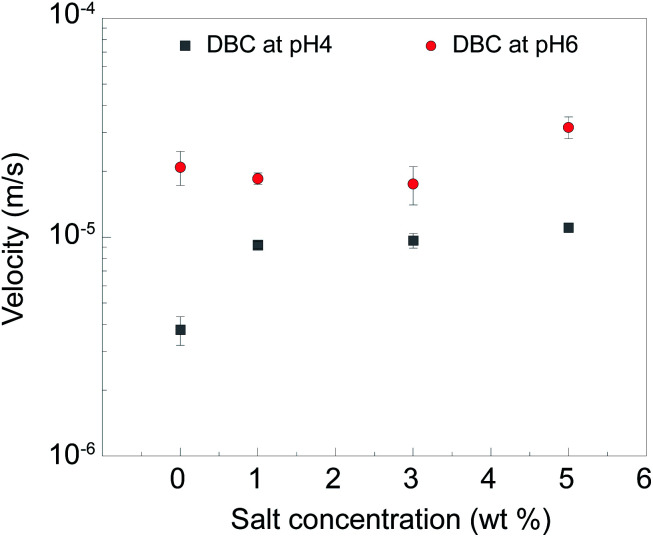
Viscosity modifying agents are one of the most critical components of hydraulic fracturing fluids, ensuring the efficient transport and deposition of proppant into fissures. To improve the productivity index of hydraulic fracturing processes, better viscosifiers with a higher proppant carrying capacity and a lower potential of formation damage are needed. In this work, we report the development of a novel viscoelastic system relying on the complexation of zwitterionic octadecylamidopropyl betaine (OAPB) and diethylenetriamine (DTA) in water. At a concentration of 2 wt%, the zwitterionic complex fluid had a static viscosity of 9 to 200 poise, which could be reversibly adjusted by changing the suspension pH. The degree of pH-responsiveness ranged from 10 to 27 depending on the shear rate. At a given concentration and optimum pH value, the zwitterionic viscosifiers showed a two-orders-of-magnitude reduction in settling velocity of proppant compared to polyacrylamide solution (slickwater). By adjusting the pH between 4 and 8, the networked structure of the gel could be fully assembled and disassembled. The lack of macromolecular residues at the dissembled state can be beneficial for hydraulic fracturing application in avoiding the permeation damage issues encountered in polymer and linear-gel-based fracturing fluids. The reusability and the unnecessary permanent breakers are other important characteristics of these zwitterionic viscosifiers.
This journal is © The Royal Society of Chemistry.
Conflict of interest statement
The authors declare that there is no conflict of interest.
Figures





References
-
- U.S. Energy Information Administration, Dep. Energy, 2021, pp. 1–6, https://www.eia.gov/energyexplained/us-energy-facts/
-
- Looney B., Statistical Review of World Energy, 2020, vol. 69, p. 66
-
- Oil T. R. S., Kuuskraa V. A., Stevens S. H. and Moodhe K., Shale Gas Resources: An Assessment of 137 Shale Formations in 41 Countries Outside the United States, Independent Statistics & Analysis and US Department of Energy, Washington, 2013
-
- U. S. E. I., Administration,Hydraulically fractured wells provide two-thirds of U.S. natural gas production, 2016, pp. 1–2, https://www.eia.gov/todayinenergy/detail.php?id=26112
-
- I. H. S. G. Insight, Hydraulic fracturing accounts for about half of current U.S. crude oil production, https://www.eia.gov/todayinenergy/detail.php?id=25372
LinkOut - more resources
Full Text Sources
