


Transcriptomic Changes of Photoperiodic Response in the Hypothalamus Were Identified in Ovariectomized and Estradiol-Treated Sheep
- PMID: 35480892
- PMCID: PMC9036065
- DOI: 10.3389/fmolb.2022.848144
Transcriptomic Changes of Photoperiodic Response in the Hypothalamus Were Identified in Ovariectomized and Estradiol-Treated Sheep
Abstract
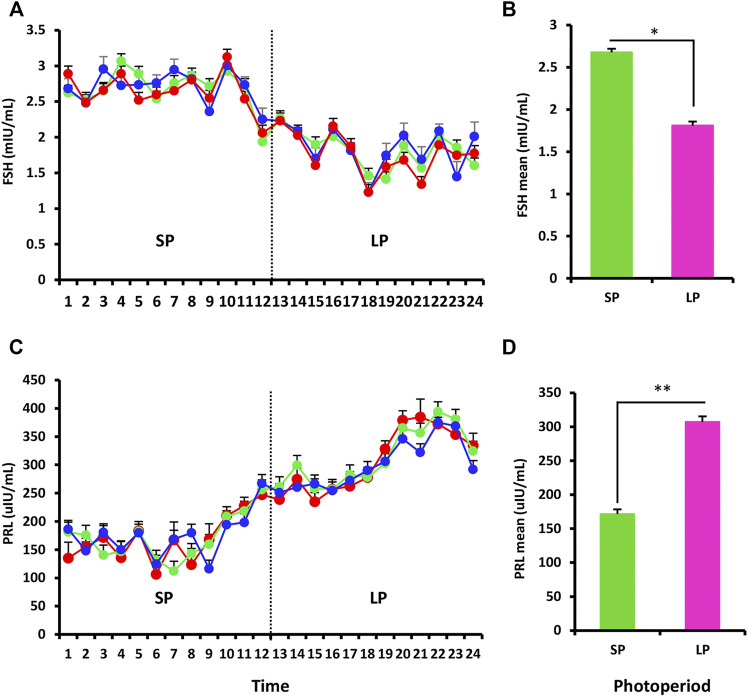
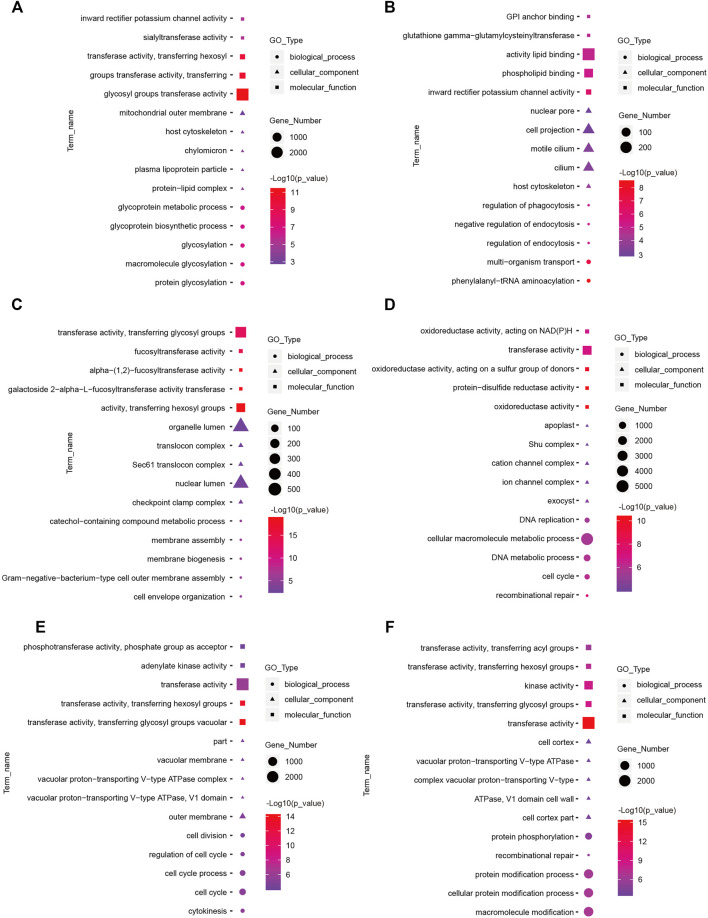
Accurate timing of seasonal changes is an essential ability for an animal's survival, and the change in the photoperiod is the key factor affecting reproductive seasonality in mammals. Emerging evidence has suggested that multiple hypothalamic genes participate in the photoperiod-induced regulation of reproductive activities in sheep, but the mechanism is still unclear. In this study, we initially examined the plasma level of two major reproductive hormones, namely, follicle-stimulating hormone (FSH) and prolactin (PRL), under different photoperiods in ovariectomized and estradiol-treated (OVX + E2) sheep using radioimmunoassay (RIA). Of the two hormones, the concentration of PRL significantly increased with the extension of the photoperiod, while FSH showed the opposite trend. Subsequently, an examination of the transcriptomic variation between the short photoperiod (SP) and long photoperiod (LP) was conducted. Differential expression analyses and functional annotation showed that several key genes in the insulin secretion (VAMP2, PRKACB, PRKCG, and PLCB1), GnRH (MAPK13, CGA, CDC42, ATF4, and LHB) pathways, and circadian entrainment (KCNJ5, PER1, GNB2, MTNR1A, and RASD1), as well as numerous lncRNAs, including XR_173257.3, XR_173415.3, XR_001435315.1, XR_001024596.2, and XR_001023464.2, were shown potentially vital for the hypothalamic photoperiodic response. Four of the differentially expressed mRNAs and lncRNAs were validated by qPCR. The constructed mRNA-mRNA interaction networks further revealed that transcripts potentially participated in hypothalamic thyroid hormone synthesis, endocrine resistance, and neuroactive ligand-receptor interactions. The interactome analysis of lncRNAs and their targets implied that XR_173257.3 and its target arylalkylamine N-acetyltransferase (AANAT) and XR_173415.3 and its target TH might participate in the regulation of seasonal reproduction. Together, the changes in reproductive hormones and transcriptome will help to determine the important photoperiod-induced lncRNAs and mRNAs and provide a valuable resource for further research on reproductive seasonality in sheep.
Keywords: hormone; hypothalamus; lncRNAs; mRNAs; pathways; photoperiodic response.
Copyright © 2022 He, Di, Guo, Cao, Zhou, Li, Xia, Wang, Zhang, Zhang, Liu and Chu.
Conflict of interest statement
The authors declare that the research was conducted in the absence of any commercial or financial relationships that could be construed as a potential conflict of interest.
Figures





References
-
- Bao R., Onishi K. G., Tolla E., Ebling F. J. P., Lewis J. E., Anderson R. L., et al. (2019). Genome Sequencing and Transcriptome Analyses of the Siberian Hamster Hypothalamus Identify Mechanisms for Seasonal Energy Balance. Proc. Natl. Acad. Sci. USA 116, 13116–13121. 10.1073/pnas.1902896116 - DOI - PMC - PubMed
-
- Caraty A., Fabre-Nys C., Delaleu B., Locatelli A., Bruneau G., Karsch F. J., et al. (1998). Evidence that the Mediobasal Hypothalamus Is the Primary Site of Action of Estradiol in Inducing the Preovulatory Gonadotropin Releasing Hormone Surge in the Ewe1. Endocrinology 139, 1752–1760. 10.1210/endo.139.4.5904 - DOI - PubMed
LinkOut - more resources
Full Text Sources
Research Materials
Miscellaneous
