


A systematic literature review of patient perspectives of barriers and facilitators to access, adherence, stigma, and persistence to treatment for substance use disorder
- PMID: 35481114
- PMCID: PMC9029901
- DOI: 10.1016/j.rcsop.2021.100029
A systematic literature review of patient perspectives of barriers and facilitators to access, adherence, stigma, and persistence to treatment for substance use disorder
Abstract
Introduction: The opioid crisis has left a devastating impact on the United States (U.S.) for over 20 years. The over-prescribing of opioid medications and availability of illicit opioids have contributed to the U.S. opioid epidemic. Given the complexity of the epidemic, substance use disorder, and its treatment, there is an urgent need for a thorough review of the qualitative literature which has captured the patient's experiences Such patient-derived qualitative data on lived experiences and perspectives may allow researchers, clinicians, and policy makers to glean new insights into addressing this epidemic.
Objectives: The objective of this paper is to present a systematic literature review of the existing U.S. qualitative research and provide a patient perspective on medications for opioid use disorder (MOUD), including barriers and facilitators to MOUD use.
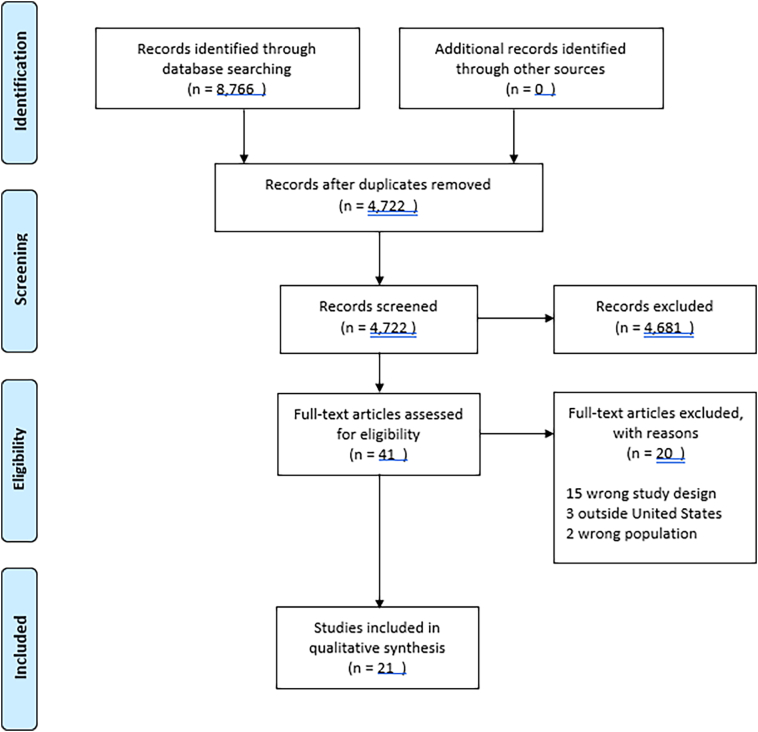
Methods: In November 2019, four electronic databases (PubMed, CINAHL, Scopus, and Web of Science) were searched by a medical librarian using a combination of keywords, Medical Subject Headings (MeSH), and/or CINAHL subject headings. 8766 results were imported into EndNote, then duplicate records were removed, leaving a total of 4722 articles. The unique records were imported into Rayyan QCRI an online platform designed to expedite screening. Blinded screening was undertaken in duplicate by four reviewers. Two researchers abstracted all the articles and used thematic analysis.
Results: The screening in the abstract phase excluded 4681 results, leaving 41 studies for full-text screening to determine their eligibility for inclusion in the review. After screening, 21 articles were included in the study and the analysis is based on these articles Common themes across studies included stigmatization, perceived barriers to MOUD, and MOUD treatment deserts and provider shortages.
Conclusions: Qualitative research studies conducted to date have uncovered substantial MOUD treatment barriers which are both social and structural in nature. Such barriers to treatment may serve to exacerbate the current epidemic and must be taken into consideration in designing policy and treatment solutions for patients with OUD.
Keywords: Buprenorphine; Methadone; Opioid use disorder; Patient; Qualitative; Systematic literature review.
© 2021 The Authors.
Conflict of interest statement
The authors declare that they have no known competing financial interests or personal relationships that could have appeared to influence the work reported in this paper. The authors declare the following financial interests/personal relationships which may be considered as potential competing interests:
References
-
- Center for Disease Control . September 29, 2020. Understanding the epidemic.www.cdc.gov/drugoverdose/epidemic/index.html
-
- Griffin O.H., Miller B.L. OxyContin and a regulation deficiency of the pharmaceutical industry: rethinking state-corporate crime. Crit Criminol. 2011;19(3):213–226. doi: 10.1007/s10612-010-9113-9. - DOI
-
- National Academies of Sciences, Engineering, and Medicine, et al. In: Phillips Jonathan K., et al., editors. National Academies Press; US: 2017. Pain Management and the Opioid Epidemic: Balancing Societal and Individual Benefits and Risks of Prescription Opioid Use. PUBMED ID: 29023083. - DOI - PubMed
Publication types
LinkOut - more resources
Full Text Sources
