


Predictive metabolic networks reveal sex- and APOE genotype-specific metabolic signatures and drivers for precision medicine in Alzheimer's disease
- PMID: 35481667
- PMCID: PMC10402890
- DOI: 10.1002/alz.12675
Predictive metabolic networks reveal sex- and APOE genotype-specific metabolic signatures and drivers for precision medicine in Alzheimer's disease
Abstract
Introduction: Late-onset Alzheimer's disease (LOAD) is a complex neurodegenerative disease characterized by multiple progressive stages, glucose metabolic dysregulation, Alzheimer's disease (AD) pathology, and inexorable cognitive decline. Discovery of metabolic profiles unique to sex, apolipoprotein E (APOE) genotype, and stage of disease progression could provide critical insights for personalized LOAD medicine.
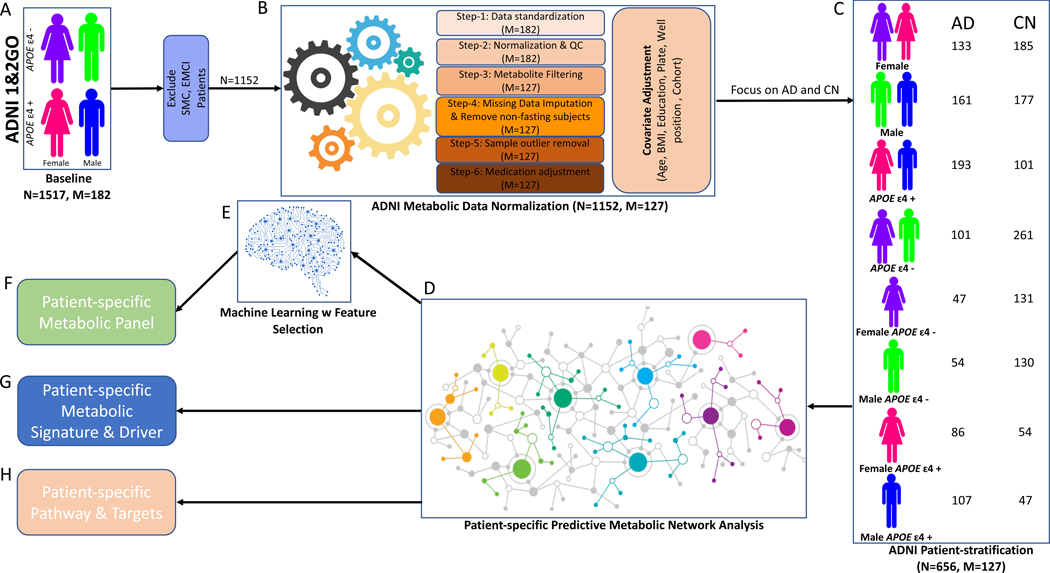
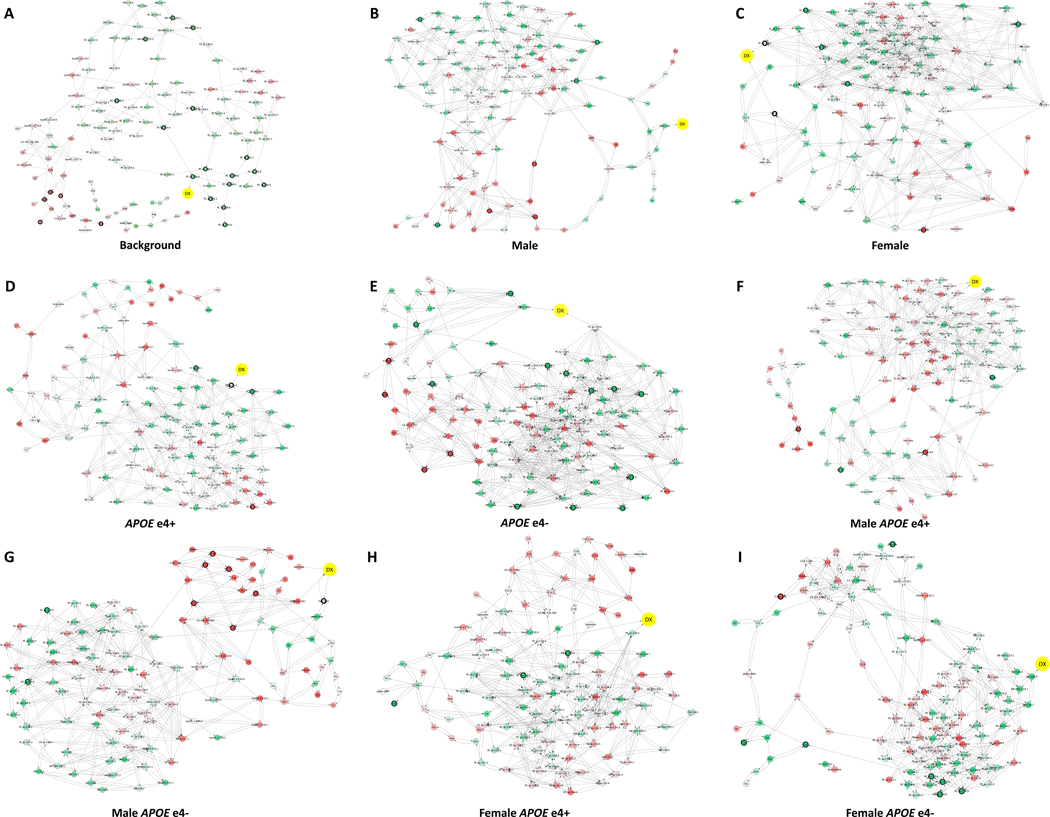
Methods: Sex- and APOE-specific metabolic networks were constructed based on changes in 127 metabolites of 656 serum samples from the Alzheimer's Disease Neuroimaging Initiative cohort.
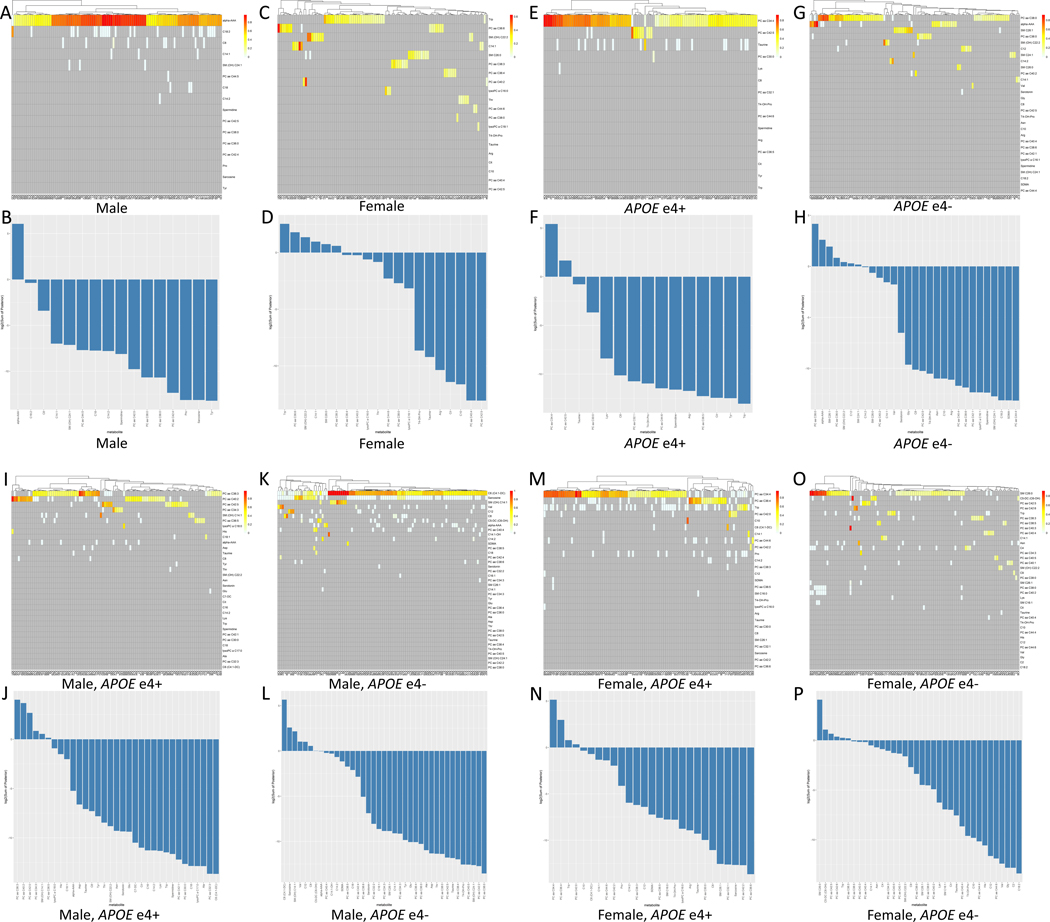
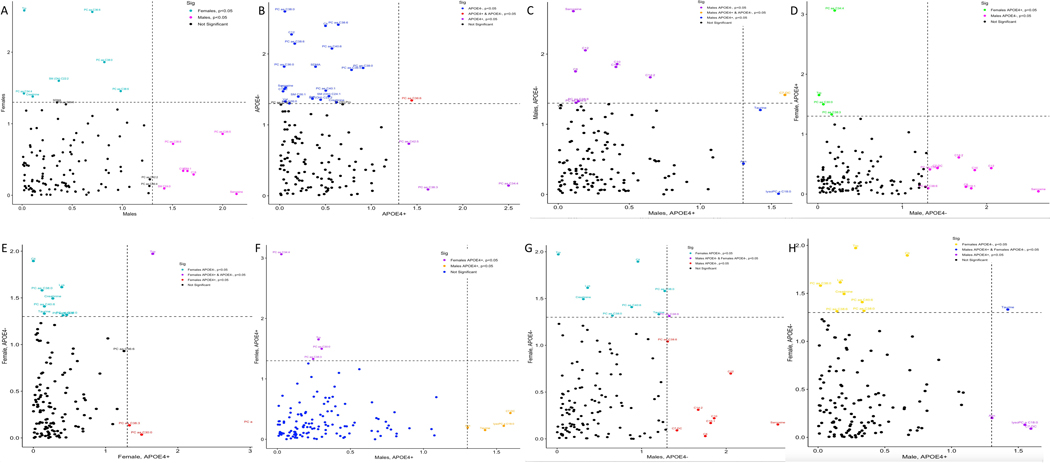
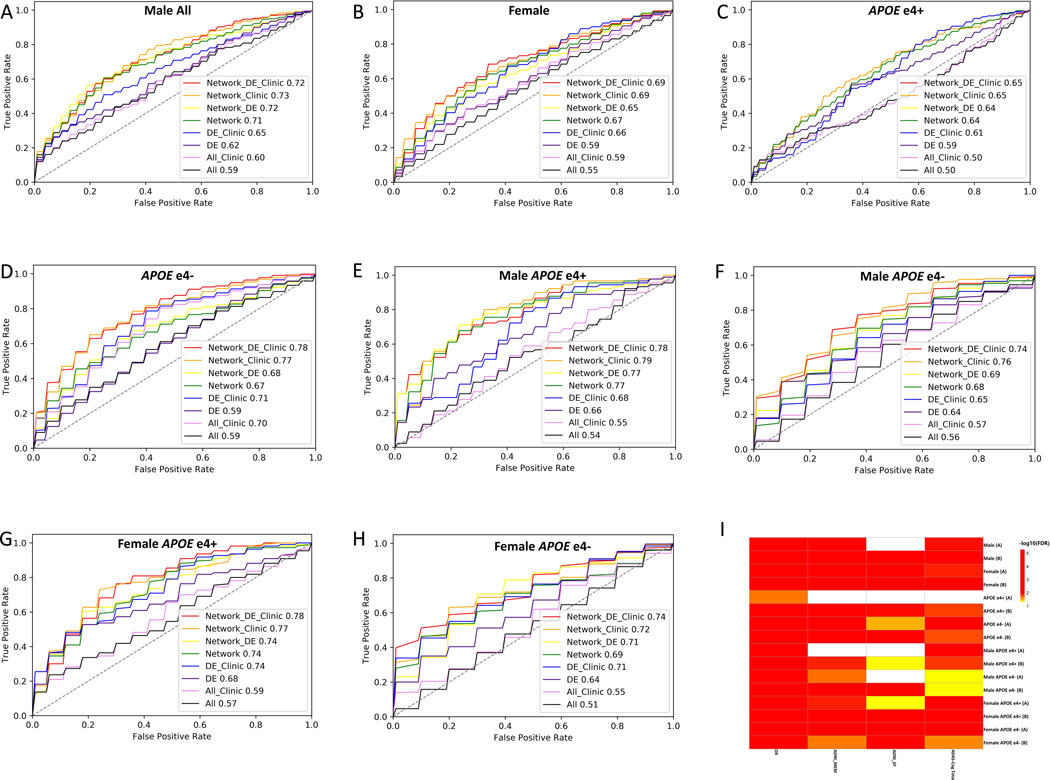
Results: Application of an advanced analytical platform identified metabolic drivers and signatures clustered with sex and/or APOE ɛ4, establishing patient-specific biomarkers predictive of disease state that significantly associated with cognitive function. Presence of the APOE ɛ4 shifts metabolic signatures to a phosphatidylcholine-focused profile overriding sex-specific differences in serum metabolites of AD patients.
Discussion: These findings provide an initial but critical step in developing a diagnostic platform for personalized medicine by integrating metabolomic profiling and cognitive assessments to identify targeted precision therapeutics for AD patient subgroups through computational network modeling.
Keywords: Alzheimer's Disease Neuroimaging Initiative; apolipoprotein E ε4; computational systems biology; late-onset Alzheimer's disease; metabolic biomarkers; metabolic network; metabolomics; precision medicine; sex-specific metabolic changes.
© 2022 The Authors. Alzheimer's & Dementia published by Wiley Periodicals LLC on behalf of Alzheimer's Association.
Conflict of interest statement
Competing interest statement
The other authors declare no competing interests.
Figures
References
-
- Talwar P, et al. , Dissecting Complex and Multifactorial Nature of Alzheimer’s Disease Pathogenesis: a Clinical, Genomic, and Systems Biology Perspective. Mol Neurobiol, 2016. 53(7): p. 4833–64. - PubMed
MeSH terms
Substances
Grants and funding
- R01 AG046171/AG/NIA NIH HHS/United States
- U24 AG021886/AG/NIA NIH HHS/United States
- R01 NS107265/NS/NINDS NIH HHS/United States
- U19 AG063744/AG/NIA NIH HHS/United States
- RF1 AG062135/AG/NIA NIH HHS/United States
- RF1 AG055549/AG/NIA NIH HHS/United States
- R56 AG062620/AG/NIA NIH HHS/United States
- RF1 AG057452/AG/NIA NIH HHS/United States
- RF1 AG057457/AG/NIA NIH HHS/United States
- U01 AG024904/AG/NIA NIH HHS/United States
- R01 AG055909/AG/NIA NIH HHS/United States
- UH3 NS113776/NS/NINDS NIH HHS/United States
- RF1 AG059093/AG/NIA NIH HHS/United States
- R01 AG057931/AG/NIA NIH HHS/United States
- U01 AG061359/AG/NIA NIH HHS/United States
- RF1 AG058942/AG/NIA NIH HHS/United States
- UG3 NS113776/NS/NINDS NIH HHS/United States
- T32 AG061897/AG/NIA NIH HHS/United States
- RF1 AG051550/AG/NIA NIH HHS/United States
LinkOut - more resources
Full Text Sources
Other Literature Sources
Medical
Miscellaneous
