


Food cue reactivity: Neurobiological and behavioral underpinnings
- PMID: 35482137
- PMCID: PMC9307541
- DOI: 10.1007/s11154-022-09724-x
Food cue reactivity: Neurobiological and behavioral underpinnings
Abstract
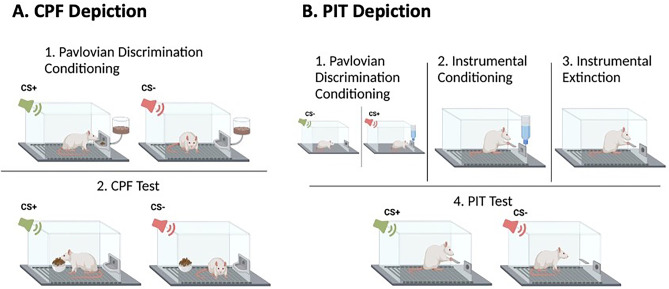
The modern obesogenic environment contains an abundance of food cues (e.g., sight, smell of food) as well cues that are associated with food through learning and memory processes. Food cue exposure can lead to food seeking and excessive consumption in otherwise food-sated individuals, and a high level of food cue responsivity is a risk factor for overweight and obesity. Similar food cue responses are observed in experimental rodent models, and these models are therefore useful for mechanistically identifying the neural circuits mediating food cue responsivity. This review draws from both experimental rodent models and human data to characterize the behavioral and biological processes through which food-associated stimuli contribute to overeating and weight gain. Two rodent models are emphasized - cue-potentiated feeding and Pavlovian-instrumental transfer - that provide insight in the neural circuits and peptide systems underlying food cue responsivity. Data from humans are highlighted that reveal physiological, psychological, and neural mechanisms that connect food cue responsivity with overeating and weight gain. The collective literature identifies connections between heightened food cue responsivity and obesity in both rodents and humans, and identifies underlying brain regions (nucleus accumbens, amygdala, orbitofrontal cortex, hippocampus) and endocrine systems (ghrelin) that regulate food cue responsivity in both species. These species similarities are encouraging for the possibility of mechanistic rodent model research and further human research leading to novel treatments for excessive food cue responsivity in humans.
Keywords: Conditioning; Food cue; Obesity; Overeating; Pavlovian.
© 2022. The Author(s).
Conflict of interest statement
The authors have no conflict of interest.
Figures
References
-
- Fryar C, Carroll M, Afful J, et al. Prevalence of overweight, obesity, and severe obesity among adults aged 20 and over: United States, 1960–1962 through 2017–2018. US National Center for Health Statistics. 2020.
-
- Fryar C, Carroll M, Ogden C. Prevalence of overweight, obesity, and severe obesity among children and adolescents aged 2–19 years: United States, 1963–1965 through 2015–2016. National Center for Health Statistics Health E-Stats. 2018 doi: 10.15585/mmwr.mm6706a3. - DOI
