


New Mutations and Pathogenesis of Pulmonary Hypertension: Progress and Puzzles in Disease Pathogenesis
- PMID: 35482831
- PMCID: PMC9897592
- DOI: 10.1161/CIRCRESAHA.122.320084
New Mutations and Pathogenesis of Pulmonary Hypertension: Progress and Puzzles in Disease Pathogenesis
Abstract
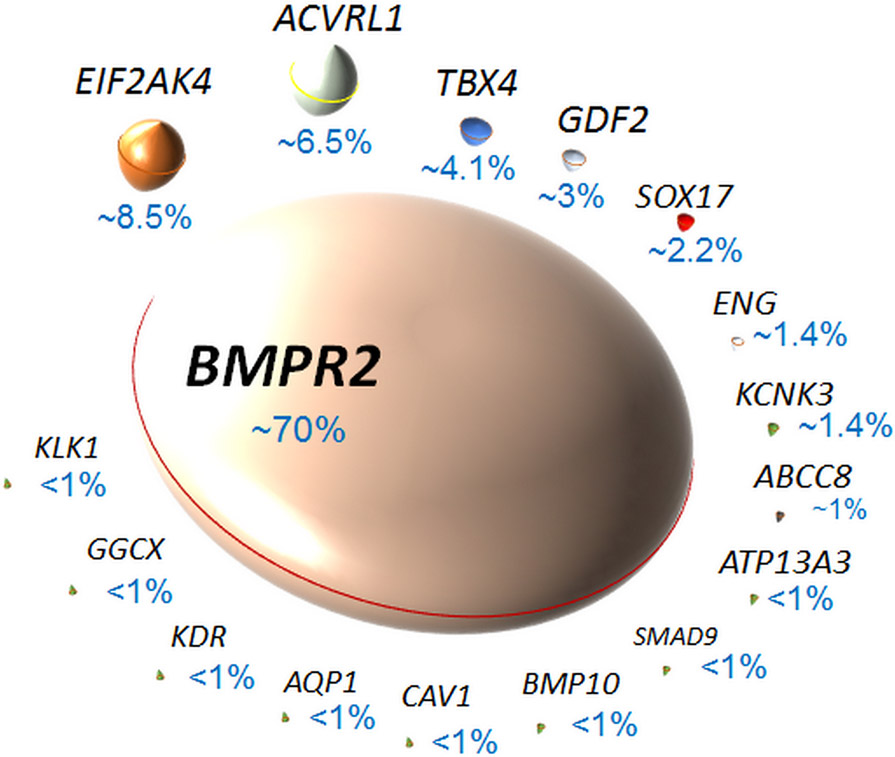
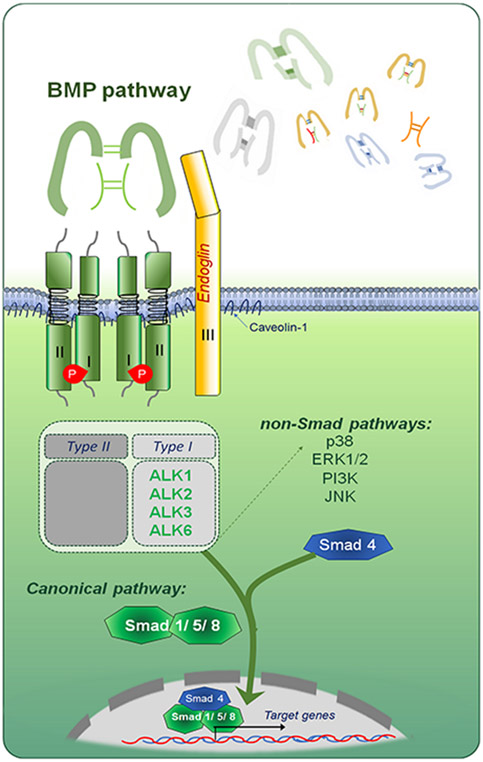
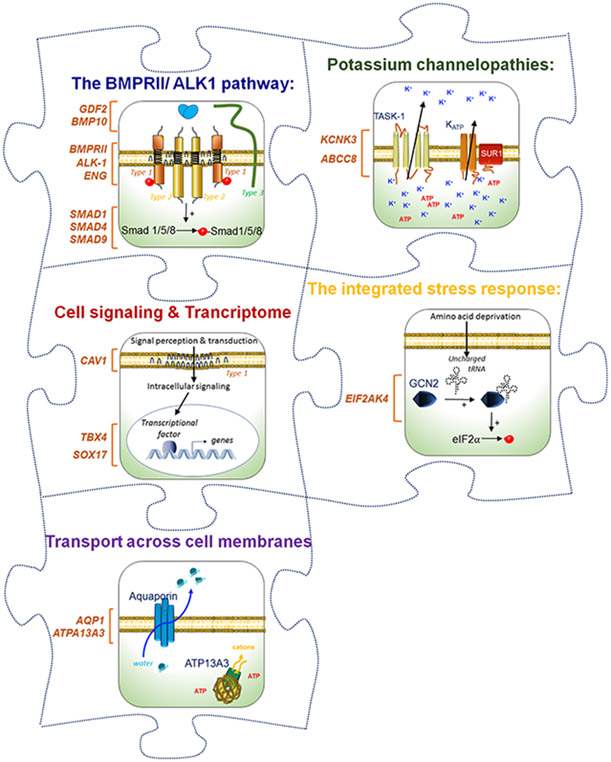
Pulmonary arterial hypertension (PAH) is a complex multifactorial disease with poor prognosis characterized by functional and structural alterations of the pulmonary circulation causing marked increase in pulmonary vascular resistance, ultimately leading to right heart failure and death. Mutations in the gene encoding BMPRII-a receptor for the TGF-β (transforming growth factor-beta) superfamily-account for over 70% of families with PAH and ≈20% of sporadic cases. In recent years, however, less common or rare mutations in other genes have been identified. This review will consider how these newly discovered PAH genes could help to provide a better understanding of the molecular and cellular bases of the maintenance of the pulmonary vascular integrity, as well as their role in the PAH pathogenesis underlying occlusion of arterioles in the lung. We will also discuss how insights into the genetic contributions of these new PAH-related genes may open up new therapeutic targets for this, currently incurable, cardiopulmonary disorder.
Keywords: arterioles; hypertension, pulmonary; lung; mutation; prognosis.
Figures
References
-
- Evans JD, Girerd B, Montani D, Wang XJ, Galie N, Austin ED, Elliott G, Asano K, Grunig E, Yan Y, Jing ZC, Manes A, Palazzini M, Wheeler LA, Nakayama I, Satoh T, Eichstaedt C, Hinderhofer K, Wolf M, Rosenzweig EB, Chung WK, Soubrier F, Simonneau G, Sitbon O, Graf S, Kaptoge S, Di Angelantonio E, Humbert M, Morrell NW. Bmpr2 mutations and survival in pulmonary arterial hypertension: An individual participant data meta-analysis. Lancet Respir Med. 2016;4:129–137 - PMC - PubMed
Publication types
MeSH terms
Substances
Grants and funding
LinkOut - more resources
Full Text Sources
Other Literature Sources
Medical
