Review
. 2022 Jan-Dec;14(1):2068365.
doi: 10.1080/19490976.2022.2068365.

Communication between the gut microbiota and peripheral nervous system in health and chronic disease

Affiliations
Review

Communication between the gut microbiota and peripheral nervous system in health and chronic disease

Tyler M Cook et al. Gut Microbes. 2022 Jan-Dec.

Abstract

Trillions of bacteria reside within our gastrointestinal tract, ideally forming a mutually beneficial relationship between us. However, persistent changes in diet and lifestyle in the western diet and lifestyle contribute to a damaging of the gut microbiota-host symbiosis leading to diseases such as obesity and irritable bowel syndrome. Many symptoms and comorbidities associated with these diseases stem from dysfunctional signaling in peripheral neurons. Our peripheral nervous system (PNS) is comprised of a variety of sensory, autonomic, and enteric neurons which coordinate key homeostatic functions such as gastrointestinal motility, digestion, immunity, feeding behavior, glucose and lipid homeostasis, and more. The composition and signaling of bacteria in our gut dramatically influences how our peripheral neurons regulate these functions, and we are just beginning to uncover the molecular mechanisms mediating this communication. In this review, we cover the general anatomy and function of the PNS, and then we discuss how the molecules secreted or stimulated by gut microbes signal through the PNS to alter host development and physiology. Finally, we discuss how leveraging the power of our gut microbes on peripheral nervous system signaling may offer effective therapies to counteract the rise in chronic diseases crippling the western world.

Keywords: Gut microbiota/ microbiota metabolites/PNS/neuronal sensing/obesity.


Conflict of interest statement

No potential conflict of interest was reported by the author(s).

Figures
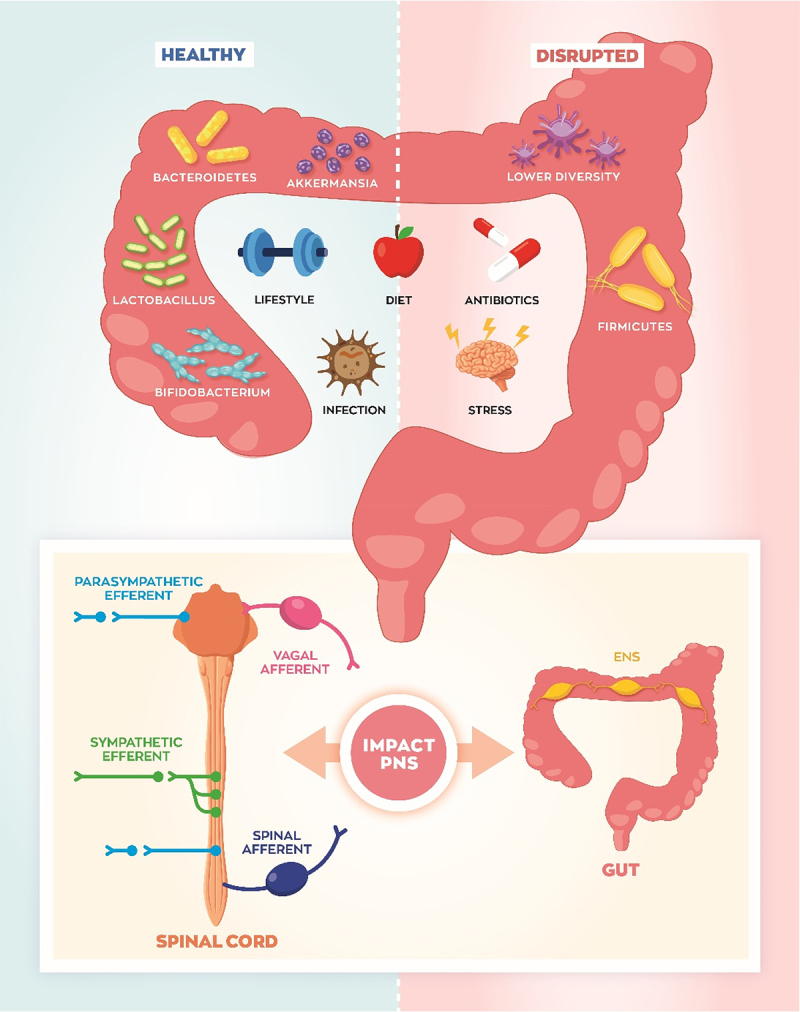
Figure 1.
Figure 1.
The gut microbiome composition is established at birth and is continually shaped by environmental factors such as lifestyle, diet, antibiotic use, infection, and stress. Generally, healthy individuals have a highly diverse microbiome, enriched in Bacteroidetes, Lactobacillus, Bifidobacterium, and Akkermansia. In chronic disease, microbiome diversity is often reduced and Firmicutes are expanded. The composition of gut microbes drastically impacts the peripheral nervous system (PNS) development and function. Vagal and spinal afferent (sensory) neurons relay microbial signals to the brain, and autonomic output is carried by sympathetic and parasympathetic efferent neurons. Enteric neurons form their own network in the gut, and they are ideally positioned to detect gut microbe signaling and reflexively alter gastrointestinal functions. The afferent, efferent, and enteric nervous systems are interconnected to respond to gut microbe signaling and cooperatively control a variety of homeostatic functions such as digestion, immunity, and visceral perception.
Figure 2.
Figure 2.
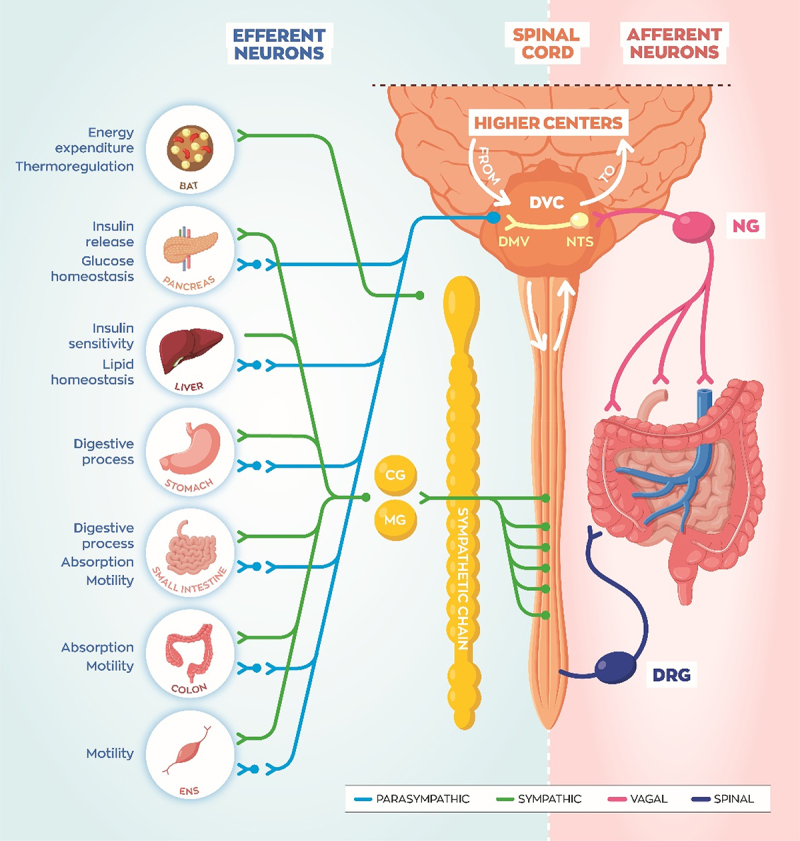
Spinal and vagal sensory neurons innervate the gastrointestinal (GI) tract and portal vein probing activities of the gut microbiota. Vagal sensory neurons with cell bodies in the nodose ganglia (NG) project to the nucleus tractus solitarius (NTS). The NTS and dorsal motor vagus (DMV), as well as the area postrema, comprise the dorsal vagal complex (DVC) in the hindbrain. Spinal sensory neurons with cell bodies in the dorsal root ganglia (DRG) project into the spinal cord to relay visceral signals to the brain. The vagal efferent system is comprised of long preganglionic neurons projecting out from the DMV connecting with short postganglionic neurons which then reach target organs. Short sympathetic efferent neurons leave the spinal cord and connect with postganglionic neurons in the sympathetic chain or discrete peripheral ganglia such as the celiac ganglia (CG) and mesenteric ganglia (MG). Sympathetic projections to brown adipose expends energy to produce heat (thermogenesis) during cold exposure or after a meal. Sympathetic innervation of pancreas and liver mobilizes glucose for energy, while GI innervation halts digestion, during a “fight or flight” state of arousal. Parasympathetic efferent projections generally oppose these actions to return the body back to baseline, during an internal state of “rest and digest”.
Figure 3.
Figure 3.
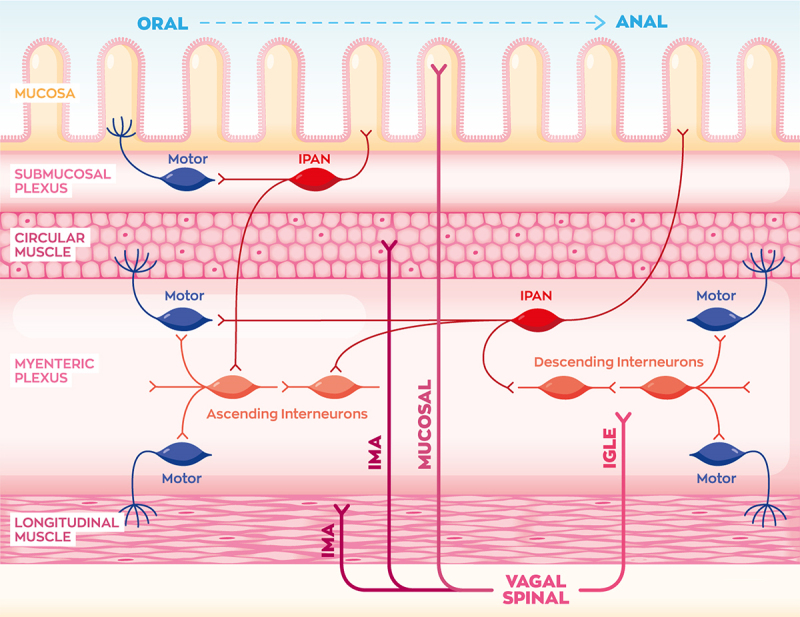
Vagal and spinal afferents are categorized based on their projections within the walls of the gastrointestinal (GI) tract. Intramuscular arrays (IMAs) terminate in the circular and longitudinal muscle, intraganglionic laminar ending (IGLEs) contact the myenteric plexus, and mucosal afferent neurons reach into the mucosa. In the enteric nervous system, intrinsic primary afferent neurons (IPANs) coordinate GI contraction and motility by sensing mechanical distension of the lumen and stimulating motor and interneurons. Motor neurons in the submucosal plexus mainly control blood flow and absorption, while myenteric interneurons and motor neurons control circular and longitudinal muscle contraction to propel food through the gut lumen. Although not shown in this image, parasympathetic and sympathetic efferent neurons also contact enteric neurons to modulate GI function.
Figure 4.
Figure 4.
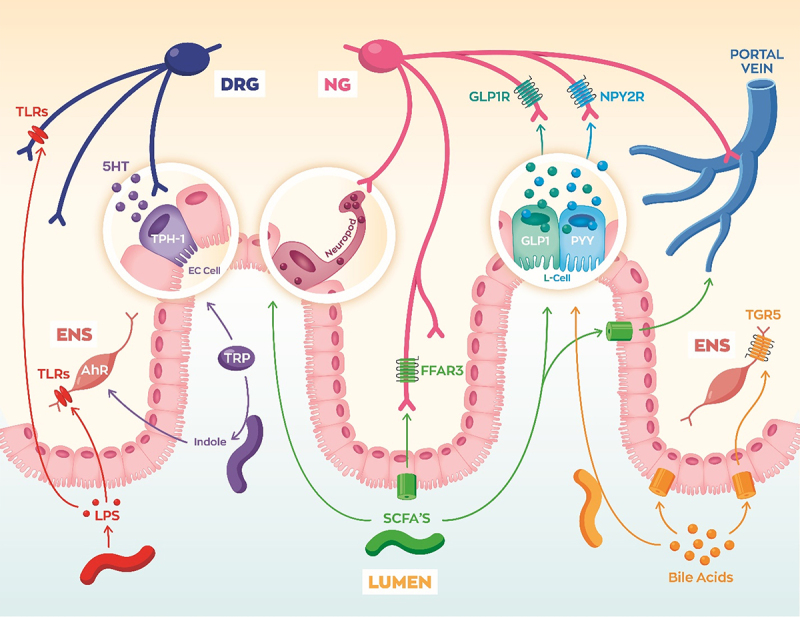
Gut microbes signal to vagal, spinal, and enteric neurons via a variety of mechanisms. Lipopolysaccharide (LPS) from gram-negative bacteria can activate neuronal toll-like receptors (TLRs). Bacteria convert tryptophan (Trp) into indole metabolites which can alter gene programming of enteric neurons via aryl hydrocarbon receptor (Ahr) signaling. Trp can also be converted into serotonin (5-HT), which is release by enterochromaffin cells (EC). Bacterial fermentation of fiber produces short-chain fatty acids (SCFAs) which can bind free fatty acid receptor 3 (FFAR3). SCFAs can also trigger L-cells to release neuropeptides glucagon-like peptide 1 (GLP-1) and peptide YY (PYY). Gut microbe production of secondary bile acids binds Takeda G-protein receptor 5 (TGR5) on L-cells to trigger GLP-1 and PYY release. Secondary bile acids can also signal to TGR5 on enteric neurons to regulate motility.
Figure 5.
Figure 5.
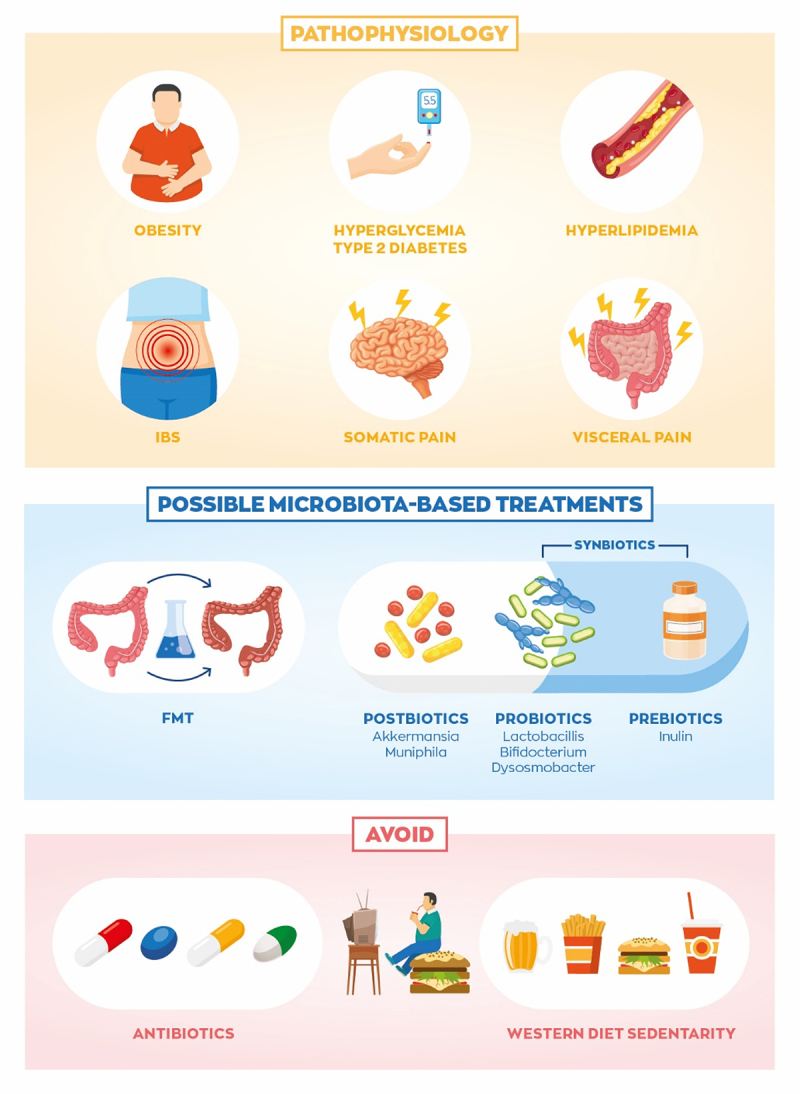
Disrupted gut microbe to peripheral nervous system signaling can lead to obesity, irritable bowel syndrome, and associated comorbidities. Microbiota-targeted therapies such as fecal microbiome transplantation (FMT), postbiotics, probiotics, prebiotics, and combinations may help improve obesity- and IBS-associated complications. Additionally, avoiding antibiotics and western diet may prevent progression of these diseases.

References

    1. Derrien M, Alvarez A-S, De Vos WM.. The Gut Microbiota in the First Decade of Life. Trends in Microbiology. 2019;27(12):997–20. doi:10.1016/j.tim.2019.08.001. - DOI - PubMed
    1. Dominguez-Bello MG, Blaser MJ, Ley RE, Knight R. Development of the Human Gastrointestinal Microbiota and Insights From High-Throughput Sequencing. Gastroenterology. 2011;140(6):1713–1719. doi:10.1053/j.gastro.2011.02.011. - DOI - PMC - PubMed
    1. Lynch SV, Pedersen O, Phimister EG. The Human Intestinal Microbiome in Health and Disease. New England Journal of Medicine. 2016;375(24):2369–2379. doi:10.1056/nejmra1600266. - DOI - PubMed
    1. Rothschild D, Weissbrod O, Barkan E, Kurilshikov A, Korem T, Zeevi D, Costea PI, Godneva A, Kalka IN, Bar N, et al. Environment dominates over host genetics in shaping human gut microbiota. Nature. 2018;555:210–215. doi:10.1038/nature25973. - DOI - PubMed
    1. Derrien M, Veiga P. Rethinking Diet to Aid Human-Microbe Symbiosis. Trends Microbiol. 2017;25(2):100–112. doi:10.1016/j.tim.2016.09.011. - DOI - PubMed

Publication types

LinkOut - more resources