


Photonics enabled intelligence system to identify SARS-CoV 2 mutations
- PMID: 35484414
- PMCID: PMC9050350
- DOI: 10.1007/s00253-022-11930-1
Photonics enabled intelligence system to identify SARS-CoV 2 mutations
Abstract
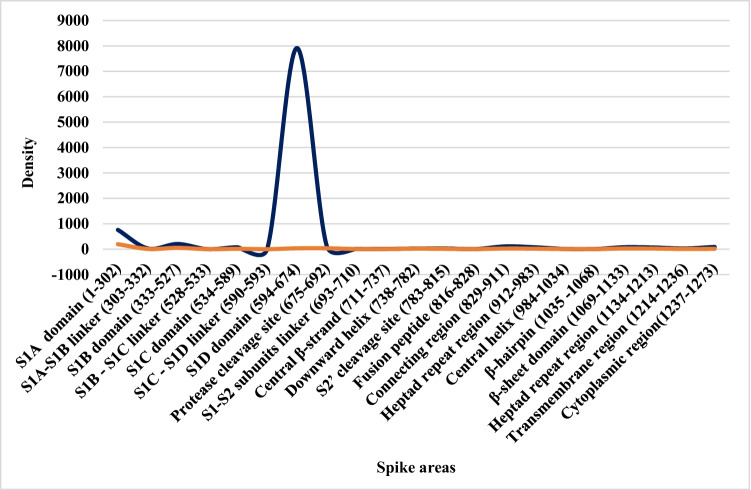
The COVID-19, MERS-CoV, and SARS-CoV are hazardous epidemics that have resulted in many deaths which caused a worldwide debate. Despite control efforts, SARS-CoV-2 continues to spread, and the fast spread of this highly infectious illness has posed a grave threat to global health. The effect of the SARS-CoV-2 mutation, on the other hand, has been characterized by worrying variations that modify viral characteristics in response to the changing resistance profile of the human population. The repeated transmission of virus mutation indicates that epidemics are likely to occur. Therefore, an early identification system of ongoing mutations of SARS-CoV-2 will provide essential insights for planning and avoiding future outbreaks. This article discussed the following highlights: First, comparing the omicron mutation with other variants; second, analysis and evaluation of the spread rate of the SARS-CoV 2 variations in the countries; third, identification of mutation areas in spike protein; and fourth, it discussed the photonics approaches enabled with artificial intelligence. Therefore, our goal is to identify the SARS-CoV 2 virus directly without the need for sample preparation or molecular amplification procedures. Furthermore, by connecting through the optical network, the COVID-19 test becomes a component of the Internet of healthcare things to improve precision, service efficiency, and flexibility and provide greater availability for the evaluation of the general population. KEY POINTS: • A proposed framework of photonics based on AI for identifying and sorting SARS-CoV 2 mutations. • Comparative scatter rates Omicron variant and other SARS-CoV 2 variations per country. • Evaluating mutation areas in spike protein and AI enabled by photonic technologies for SARS-CoV 2 virus detection.
Keywords: COVID-19 variant; Intelligence system; Mutations; Photonic; SARS-CoV 2; Spike protein.
© 2022. The Author(s), under exclusive licence to Springer-Verlag GmbH Germany, part of Springer Nature.
Conflict of interest statement
The authors declare no competing interests.
Figures



References
-
- Ballard Z, Brown C, Madni AM, Ozcan A. Machine learning and computation-enabled intelligent sensor design. Nat Mach Intell. 2021;3(7):556–565. doi: 10.1038/s42256-021-00360-9. - DOI
-
- Bammes B, Bilhorn R. A novel event-based active pixel sensor for cryo-EM electron counting. Microsc Microanal. 2021;27(S1):1334–1336. doi: 10.1017/S1431927621004979. - DOI
Publication types
MeSH terms
Substances
Supplementary concepts
LinkOut - more resources
Full Text Sources
Medical
Miscellaneous
