


Potential impacts of synthetic food dyes on activity and attention in children: a review of the human and animal evidence
- PMID: 35484553
- PMCID: PMC9052604
- DOI: 10.1186/s12940-022-00849-9
Potential impacts of synthetic food dyes on activity and attention in children: a review of the human and animal evidence
Abstract
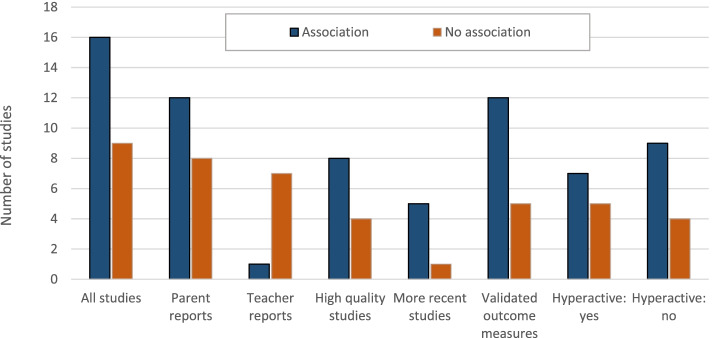
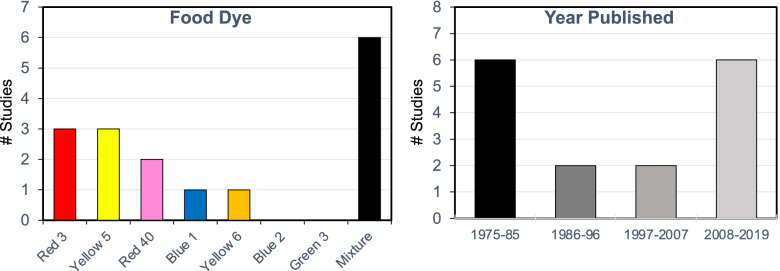
Concern that synthetic food dyes may impact behavior in children prompted a review by the California Office of Environmental Health Hazard Assessment (OEHHA). OEHHA conducted a systematic review of the epidemiologic research on synthetic food dyes and neurobehavioral outcomes in children with or without identified behavioral disorders (particularly attention and activity). We also conducted a search of the animal toxicology literature to identify studies of neurobehavioral effects in laboratory animals exposed to synthetic food dyes. Finally, we conducted a hazard characterization of the potential neurobehavioral impacts of food dye consumption. We identified 27 clinical trials of children exposed to synthetic food dyes in this review, of which 25 were challenge studies. All studies used a cross-over design and most were double blinded and the cross-over design was randomized. Sixteen (64%) out of 25 challenge studies identified some evidence of a positive association, and in 13 (52%) the association was statistically significant. These studies support a relationship between food dye exposure and adverse behavioral outcomes in children. Animal toxicology literature provides additional support for effects on behavior. Together, the human clinical trials and animal toxicology literature support an association between synthetic food dyes and behavioral impacts in children. The current Food and Drug Administration (FDA) acceptable daily intakes are based on older studies that were not designed to assess the types of behavioral effects observed in children. For four dyes where adequate dose-response data from animal and human studies were available, comparisons of the effective doses in studies that measured behavioral or brain effects following exposure to synthetic food dyes indicate that the basis of the ADIs may not be adequate to protect neurobehavior in susceptible children. There is a need to re-evaluate exposure in children and for additional research to provide a more complete database for establishing ADIs protective of neurobehavioral effects.
Keywords: Animal toxicology; Behavior; Children; Clinical trials; Synthetic food dyes.
© 2022. The Author(s).
Conflict of interest statement
AB is a volunteer member of the Board of Trustees for The Organic Center, a non-profit organization addressing scientific issues about organic food and agriculture, and is a member of the USDA National Organic Standards Board. The rest of the authors declare that they have no competing interests.
Figures
References
-
- OEHHA. Potential neurobehavioral effects of synthetic food dyes in children.: Children's environmental health center, Office of Environmental Health Hazard Assessment. California Environmental Protection Agency. 2021; [Available from: https://oehha.ca.gov/media/downloads/risk-assessment/report/healthefftsa....
-
- Goyette GH, Connors CK, Petti TA, Curtis LE. Effects of artificial colors on hyperkinetic children: a double-blind challenge study [proceedings] Psychopharmacol Bull. 1978;14(2):39–40. - PubMed
