


Clinical and socioeconomic burden of rhinoviruses/enteroviruses in the community
- PMID: 35485187
- PMCID: PMC9343330
- DOI: 10.1111/irv.12989
Clinical and socioeconomic burden of rhinoviruses/enteroviruses in the community
Abstract
Background: The epidemiology, clinical features, and socioeconomic burden associated with detection of rhinoviruses (RV)/enteroviruses (EV) from individuals in the community with acute respiratory infections (ARIs) are not fully understood.
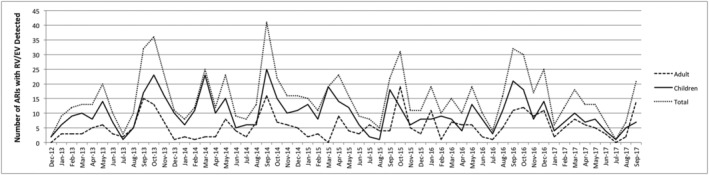
Methods: To assess the clinical and socioeconomic burden associated with RV/EV, a secondary analysis of data collected during a prospective, community-based ARI surveillance study was performed. From December 2012 to September 2017, adult and pediatric participants with ARIs had nasopharyngeal specimens obtained and tested by multiplex polymerase chain reaction assay. Characteristics and socioeconomic burden including missed school or work and/or antibiotic use among participants who did and did not seek medical care and among participants with and without co-detection of another respiratory pathogen with RV/EV were compared.
Results: Throughout the study period, RV/EV was detected in 54.7% (885/1617) of ARIs with a respiratory pathogen detected. Most ARI episodes associated with RV/EV occurred in females (59.1%) and children ≤17 years old (64.2%). Those ≤17 years were more likely to seek medical care. Compared to those not seeking medical care (n = 686), those seeking medical care (n = 199) had a longer duration of illness (5 vs. 7 days) and were more likely to miss work/school (16.4% vs. 47.7%) and/or use antibiotics (3.6% vs. 34.2%). Co-detection occurred in 8% of ARIs of which 81% occurred in children. Co-detection was not associated with longer illness, more missed work/or school, or antibiotic use.
Conclusion: Non-medically attended and medically attended ARIs associated with RV/EV resulted in clinical and socioeconomic burden, regardless of co-detection of other respiratory pathogens.
Keywords: antibiotic stewardship; clinical burden; community surveillance; enterovirus; rhinovirus; socioeconomic burden.
© 2022 The Authors. Influenza and Other Respiratory Viruses published by John Wiley & Sons Ltd.
Figures
References
Publication types
MeSH terms
Substances
Grants and funding
LinkOut - more resources
Full Text Sources
