


Exploring the applications of hyaluronic acid-based nanoparticles for diagnosis and treatment of bacterial infections
- PMID: 35485247
- PMCID: PMC9539990
- DOI: 10.1002/wnan.1799
Exploring the applications of hyaluronic acid-based nanoparticles for diagnosis and treatment of bacterial infections
Abstract
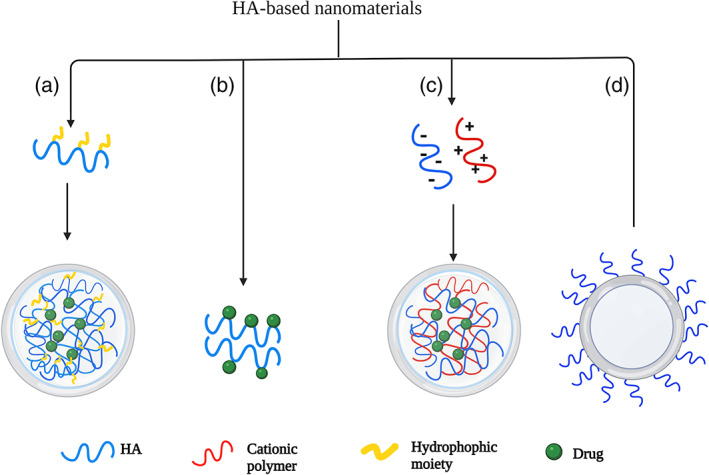
Hyaluronic acid (HA) has become a topic of significant interest in drug delivery research due to its excellent properties, including biosafety, biodegradability, and nonimmunogenicity. Moreover, due to its ease of modification, HA can be used to prepare several HA-based nanosystems using various approaches. These approaches involve conjugating/grafting of hydrophobic moieties, polyelectrolytes complexation with cationic polymers, or surface modification of various nanoparticles using HA. These nanoparticles are able to selectively deliver antibacterial drugs or diagnostic molecules into the site of infections. In addition, HA can bind with overexpressed cluster of differentiation 44 (CD44) receptors in macrophages and also can be degraded by a family of enzymes called hyaluronidase (HAase) to release drugs or molecules. By binding with these receptors or being degraded at the infection site by HAase, HA-based nanoparticles allow enhanced and targeted antibacterial delivery. Herein, we present a comprehensive and up-to-date review that highlights various techniques of preparation of HA-based nanoparticles that have been reported in the literature. Furthermore, we also discuss and critically analyze numerous types of HA-based nanoparticles that have been employed in antibacterial delivery to date. This article offers a critical overview of the potential of HA-based nanoparticles to overcome the challenges of conventional antibiotics in the treatment of bacterial infections. Moreover, this review identifies further avenues of research for developing multifunctional and biomimetic HA-based nanoparticles for the treatment, prevention, and/or detection of pathogenic bacteria. This article is categorized under: Therapeutic Approaches and Drug Discovery > Nanomedicine for Infectious Disease Nanotechnology Approaches to Biology > Nanoscale Systems in Biology Therapeutic Approaches and Drug Discovery > Emerging Technologies.
Keywords: bacterial infection; drug conjugate; hyaluronic acid; surface modification; targeted nano-drug delivery.
© 2022 The Authors. WIREs Nanomedicine and Nanobiotechnology published by Wiley Periodicals LLC.
Conflict of interest statement
The authors have declared no conflicts of interest for this article.
Figures
References
-
- Abdel‐Mohsen, A. M. , Hrdina, R. , Burgert, L. , Abdel‐Rahman, R. M. , Hašová, M. , Šmejkalová, D. , Kolář, M. , Pekar, M. , & Aly, A. S. (2013). Antibacterial activity and cell viability of hyaluronan fiber with silver nanoparticles. Carbohydrate Polymers, 92(2), 1177–1187. 10.1016/j.carbpol.2012.08.098 - DOI - PubMed
-
- Almalik, A. , Benabdelkamel, H. , Masood, A. , Alanazi, I. O. , Alradwan, I. , Majrashi, M. A. , Alfadda, A. A. , Alghamdi, W. M. , Alrabiah, H. , Tirelli, N. , & Alhasan, A. H. (2017). Hyaluronic acid coated chitosan nanoparticles reduced the immunogenicity of the formed protein Corona. Scientific Reports, 7(1), 1–9. 10.1038/s41598-017-10836-7 - DOI - PMC - PubMed
-
- Almalik, A. , Karimi, S. , Ouasti, S. , Donno, R. , Wandrey, C. , Day, P. J. , & Tirelli, N. (2013). Hyaluronic acid (HA) presentation as a tool to modulate and control the receptor‐mediated uptake of HA‐coated nanoparticles. Biomaterials, 34(21), 5369–5380. 10.1016/j.biomaterials.2013.03.065 - DOI - PubMed
Publication types
MeSH terms
Substances
LinkOut - more resources
Full Text Sources
Medical
Miscellaneous
