


Targeting CC chemokine ligand (CCL) 20 by miR-143-5p alleviate lead poisoning-induced renal fibrosis by regulating interstitial fibroblasts excessive proliferation and dysfunction
- PMID: 35485286
- PMCID: PMC9208521
- DOI: 10.1080/21655979.2022.2062106
Targeting CC chemokine ligand (CCL) 20 by miR-143-5p alleviate lead poisoning-induced renal fibrosis by regulating interstitial fibroblasts excessive proliferation and dysfunction
Abstract
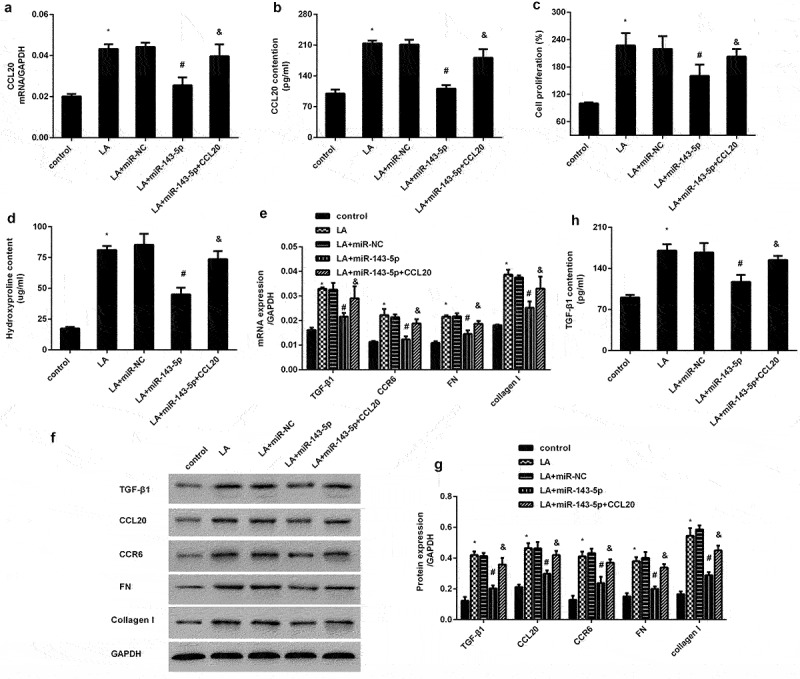
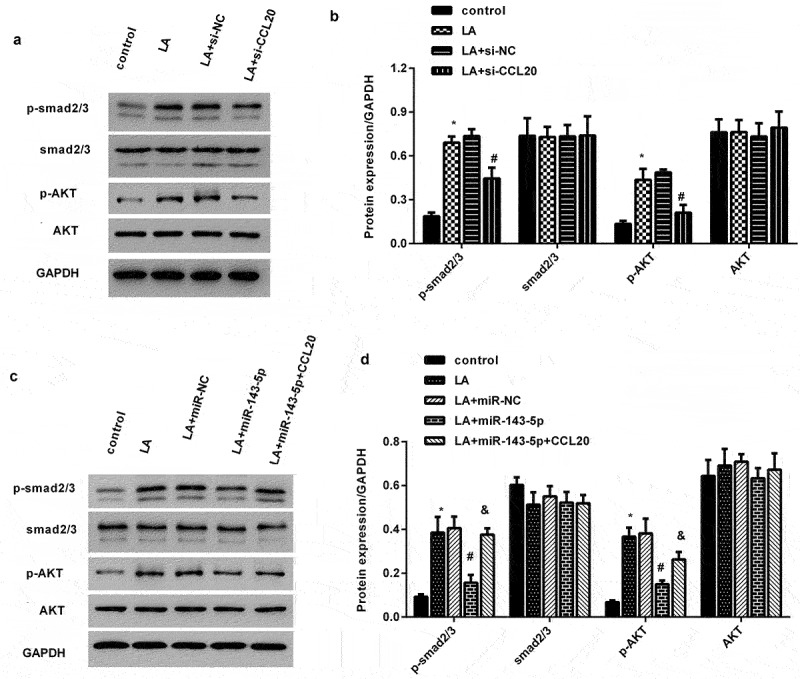
Environmental lead contamination can cause chronic renal disease with a common clinical manifestation of renal fibrosis and constitutes a major global public health threat. Aberrant proliferation and extracellular matrix (ECM) accumulation in renal interstitial fibroblasts are key pathological causes of renal fibrosis. However, the mechanism underlying lead-induced kidney fibrosis remains unclear. The present study analyzed gene expression prolifes in lead acetate-treated primary mice renal interstitial fibroblasts and confirmed the aberrant expression of CC chemokine ligand (CCL) 20, one of the most obvious up-regulated genes. Analogously, lead acetate exposure dose-dependently increased CCL20 transcription, protein expression and release. Knockdown of CCL20 suppressed lead acetate-induced fibroblast proliferation, hydroxyproline contents, transforming growth factor-beta production and ECM-related protein (Collagen I and fibronectin) expression. Bioinformatics analysis predicted five top miRNAs targeting CCL20. Among them, miR-143-5p expression was dose-dependently decreased in lead acetate-treated fibroblasts. Mechanistically, miR-143-5p directly targeted CCL20. Elevation of miR-143-5p antagonized lead acetate-induced fibroblast proliferation, hydroxyproline and ECM-related protein expression, which were reversed by CCL20 overexpression. Additionally, CCL20 knockdown suppressed lead acetate-mediated Smad2/3 and AKT pathway activation. Notably, miR-143-5p overexpression attenuated the activation of the Smad2/3 and AKT pathway in lead acetate-exposed fibroblasts, which was counteracted by CCL20 elevation. miR-143-5p injection ameliorated renal fibrosis progression in mice in vivo. Thus, targeting CCL20 by miR-143-5p could alleviate renal fibrosis progression by regulating fibroblast proliferation and ECM deposition via the Smad2/3 and AKT signaling, providing a potential therapeutic target for environmental lead contamination-evoked fibrotic kidney disease.
Keywords: CCL20; Renal fibrosis; lead contamination; miR-143; renal interstitial fibroblast.
Conflict of interest statement
No potential conflict of interest was reported by the author(s).
Figures



References
-
- Lv JC, Zhang LX.. Prevalence and disease burden of chronic kidney disease. Adv Exp Med Biol. 2019;1165:3–15. - PubMed
-
- Glassock RJ, Warnock DG, Delanaye P. The global burden of chronic kidney disease: estimates, variability and pitfalls. Nat Rev Nephrol. 2017;13:104–114. - PubMed
-
- Djudjaj S, Boor P. Cellular and molecular mechanisms of kidney fibrosis. Mol Aspects Med. 2019;65:16–36. - PubMed
-
- Humphreys BD. Mechanisms of renal fibrosis. Annu Rev Physiol. 2018;80:309–326. - PubMed
MeSH terms
Substances
LinkOut - more resources
Full Text Sources
Other Literature Sources
Medical
