


Role of inflammatory markers in the diagnosis of vascular contributions to cognitive impairment and dementia: a systematic review and meta-analysis
- PMID: 35486344
- PMCID: PMC9213626
- DOI: 10.1007/s11357-022-00556-w
Role of inflammatory markers in the diagnosis of vascular contributions to cognitive impairment and dementia: a systematic review and meta-analysis
Abstract
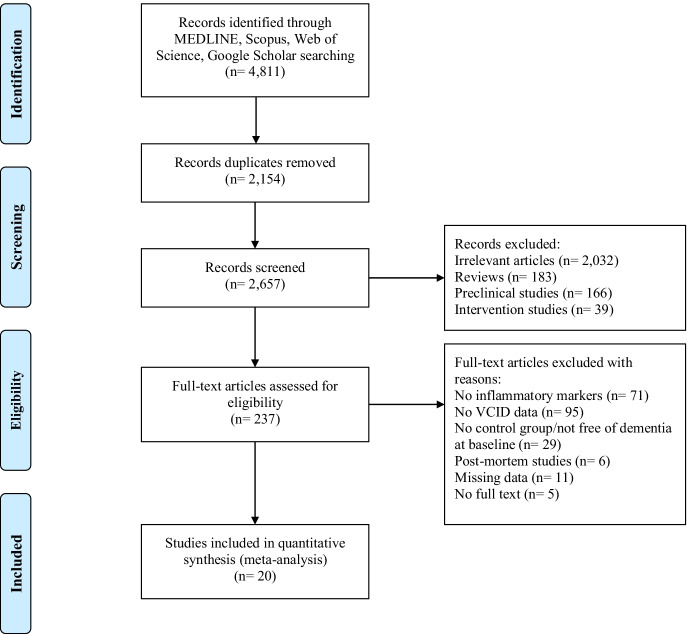
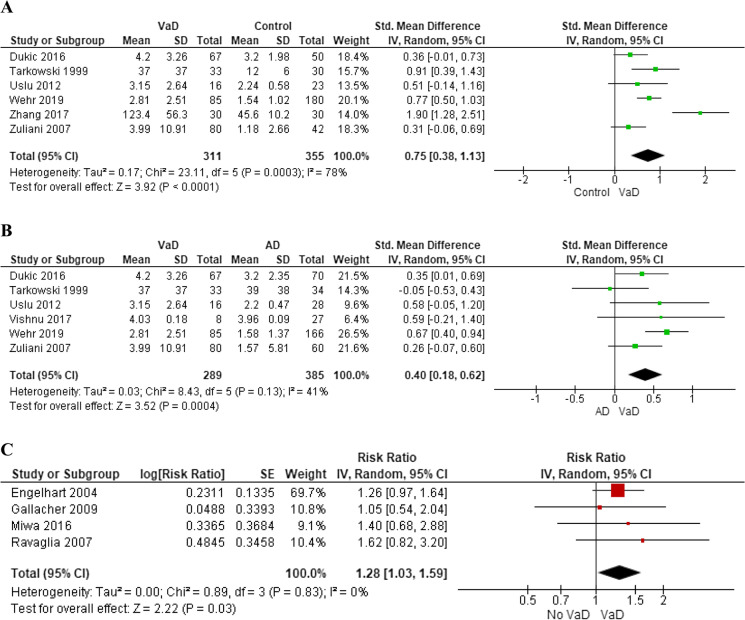
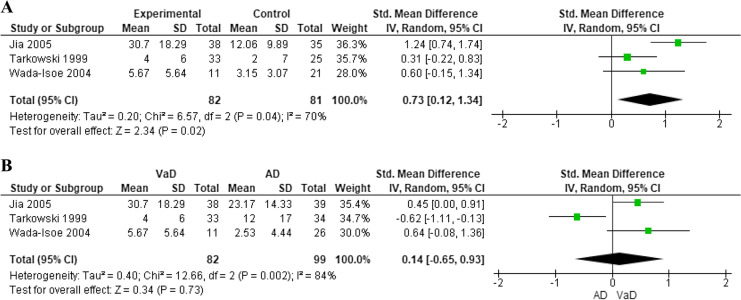
Vascular contribution to cognitive impairment and dementia (VCID) is a clinical label encompassing a wide range of cognitive disorders progressing from mild to major vascular cognitive impairment (VCI), which is also defined as vascular dementia (VaD). VaD diagnosis is mainly based on clinical and imaging findings. Earlier biomarkers are needed to identify subjects at risk to develop mild VCI and VaD. In the present meta-analysis, we comprehensively evaluated the role of inflammatory biomarkers in differential diagnosis between VaD and Alzheimer's disease (AD), and assessed their prognostic value on predicting VaD incidence. We collected literature until January 31, 2021, assessing three inflammatory markers [interleukin(IL)-6, C-reactive protein (CRP), tumor necrosis factor (TNF)-α] from blood or cerebrospinal fluid (CSF) samples. Thirteen cross-sectional and seven prospective studies were included. Blood IL-6 levels were cross-sectionally significantly higher in people with VaD compared to AD patients (SMD: 0.40, 95% CI: 0.18 to 0.62) with low heterogeneity (I2: 41%, p = 0.13). Higher IL-6 levels were also associated to higher risk of incident VaD (relative risk: 1.28, 95% CI: 1.03 to 1.59, I2: 0%). IL-6 in CSF was significantly higher in people with VaD compared to healthy subjects (SMD: 0.77, 95% CI: 0.17 to 1.37, I2: 70%), and not compared to AD patients, but due to limited evidence and high inconsistency across studies, we could not draw definite conclusion. Higher blood IL-6 levels might represent a useful biomarker able to differentiate people with VaD from those with AD and might be correlated with higher risk of future VaD.
Keywords: Alzheimer’s disease; C-reactive protein; Interleukin-6; Tumor necrosis factor-α; Vascular contributions to cognitive impairment and dementia.
© 2022. The Author(s).
Conflict of interest statement
The authors declare no competing interests.
Figures


References
-
- Skrobot OA, Black SE, Chen C, DeCarli C, Erkinjuntti T, Ford GA, et al. Progress toward standardized diagnosis of vascular cognitive impairment: guidelines from the vascular impairment of cognition classification consensus study. Alzheimers Dement J Alzheimers Assoc. 2018;14(3):280–292. doi: 10.1016/j.jalz.2017.09.007. - DOI - PubMed
-
- Gorelick PB, Scuteri A, Black SE, Decarli C, Greenberg SM, Iadecola C, et al. Vascular contributions to cognitive impairment and dementia: a statement for healthcare professionals from the American Heart Association/American Stroke Association. Stroke. 2011;42(9):2672–2713. doi: 10.1161/STR.0b013e3182299496. - DOI - PMC - PubMed
Publication types
MeSH terms
Substances
LinkOut - more resources
Full Text Sources
Medical
Research Materials
Miscellaneous
