


The Impact of Vitamin A Deficiency on Tuberculosis Progression
- PMID: 35486953
- PMCID: PMC10200303
- DOI: 10.1093/cid/ciac326
The Impact of Vitamin A Deficiency on Tuberculosis Progression
Abstract
Background: Although previous studies have shown that vitamin A deficiency is associated with incident tuberculosis (TB) disease, the direction of the association has not been established. We investigated the impact of vitamin A deficiency on TB disease progression.
Methods: We conducted a longitudinal cohort study nested within a randomized clinical trial among HIV-infected patients in Haiti. We compared serial vitamin A levels in individuals who developed TB disease to controls matched on age, gender, follow-up time, and time to antiretroviral therapy initiation. We also evaluated histopathology, bacterial load, and immune outcomes in TB infection in a guinea pig model of dietary vitamin A deficiency.
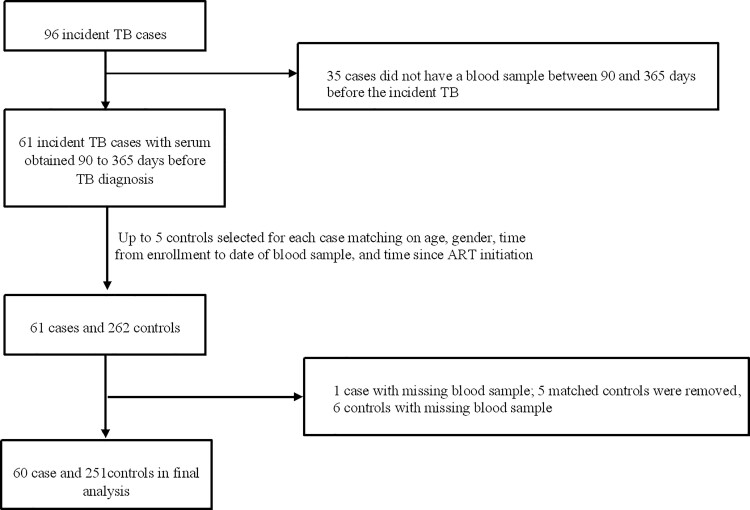
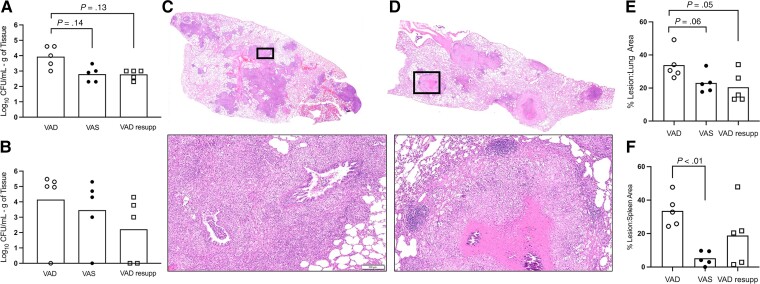
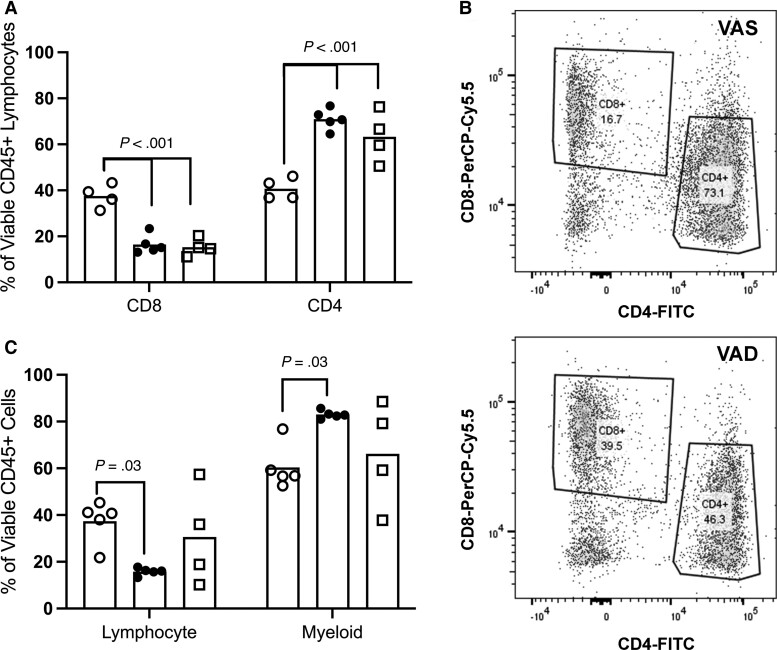
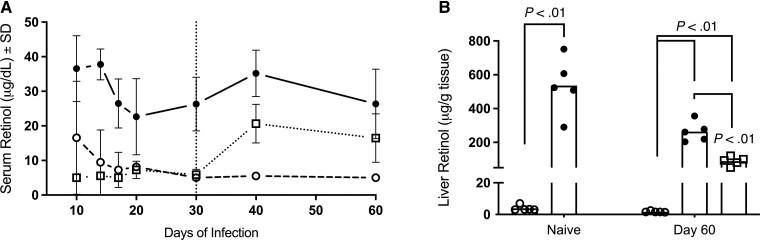
Results: Among 773 participants, 96 developed incident TB during follow-up, 62.5% (60) of whom had stored serum samples obtained 90-365 days before TB diagnosis. In age- and sex- adjusted and multivariate analyses, respectively, incident TB cases were 3.99 times (95% confidence interval [CI], 2.41 to 6.60) and 3.59 times (95% CI, 2.05 to 6.29) more likely to have been vitamin A deficient than matched controls. Vitamin A-deficient guinea pigs manifested more extensive pulmonary pathology, atypical granuloma morphology, and increased bacterial growth after experimental TB infection. Reintroduction of dietary vitamin A to deficient guinea pigs after established TB disease successfully abrogated severe disease manifestations and altered cellular immune profiles.
Conclusions: Human and animal studies support the role of baseline vitamin A deficiency as a determinant of future TB disease progression.
Keywords: Mycobacterium tuberculosis; nutritional deficiency; retinol; vitamin A.
© The Author(s) 2022. Published by Oxford University Press on behalf of the Infectious Diseases Society of America. All rights reserved. For permissions, please e-mail: journals.permissions@oup.com.
Conflict of interest statement
Potential conflicts of interest. The authors: No reported conflicts of interest. All authors have submitted the ICMJE Form for Disclosure of Potential Conflicts of Interest.
Figures
References
-
- Lonnroth K, Williams BG, Cegielski P, Dye C. A consistent log-linear relationship between tuberculosis incidence and body mass index. Int J Epidemiol 2010; 39:149–55. - PubMed
-
- Cegielski JP, McMurray DN. The relationship between malnutrition and tuberculosis: evidence from studies in humans and experimental animals. Int J Tuberc Lung Dis 2004; 8:286–98. - PubMed
-
- Larange A, Cheroutre H. Retinoic acid and retinoic acid receptors as pleiotropic modulators of the immune system. Annu Rev Immunol 2016; 34:369–94. - PubMed
-
- Stevens GA, Bennett JE, Hennocq Q, et al. Trends and mortality effects of vitamin A deficiency in children in 138 low-income and middle-income countries between 1991 and 2013: a pooled analysis of population-based surveys. Lancet Glob Health 2015; 3:e528–36. - PubMed
Publication types
MeSH terms
Substances
Grants and funding
LinkOut - more resources
Full Text Sources
Medical
