. 2022 Jun;298(6):101984.
doi: 10.1016/j.jbc.2022.101984. Epub 2022 Apr 26.

Positively charged amino acids at the N terminus of select mitochondrial proteins mediate early recognition by import proteins αβ'-NAC and Sam37

Affiliations

Positively charged amino acids at the N terminus of select mitochondrial proteins mediate early recognition by import proteins αβ'-NAC and Sam37

Maria Clara Avendaño-Monsalve et al. J Biol Chem. 2022 Jun.

Abstract

A major challenge in eukaryotic cells is the proper distribution of nuclear-encoded proteins to the correct organelles. For a subset of mitochondrial proteins, a signal sequence at the N terminus (matrix-targeting sequence [MTS]) is recognized by protein complexes to ensure their proper translocation into the organelle. However, the early steps of mitochondrial protein targeting remain undeciphered. The cytosolic chaperone nascent polypeptide-associated complex (NAC), which in yeast is represented as the two different heterodimers αβ-NAC and αβ'-NAC, has been proposed to be involved during the early steps of mitochondrial protein targeting. We have previously described that the mitochondrial outer membrane protein Sam37 interacts with αβ'-NAC and together promote the import of specific mitochondrial precursor proteins. In this work, we aimed to detect the region in the MTS of mitochondrial precursors relevant for their recognition by αβ'-NAC during their sorting to the mitochondria. We used targeting signals of different mitochondrial proteins (αβ'-NAC-dependent Oxa1 and αβ'-NAC-independent Mdm38) and fused them to GFP to study their intracellular localization by biochemical and microscopy methods, and in addition followed their import kinetics in vivo. Our results reveal the presence of a positively charged amino acid cluster in the MTS of select mitochondrial precursors, such as Oxa1 and Fum1, which are crucial for their recognition by αβ'-NAC. Furthermore, we explored the presence of this cluster at the N terminus of the mitochondrial proteome and propose a set of precursors whose proper localization depends on both αβ'-NAC and Sam37.

Keywords: Saccharomyces cerevisiae; chaperone; mitochondria; mitochondrial transport; protein import.


Conflict of interest statement

Conflict of interest The authors declare that they have no conflicts of interest with the contents of this article.

Figures
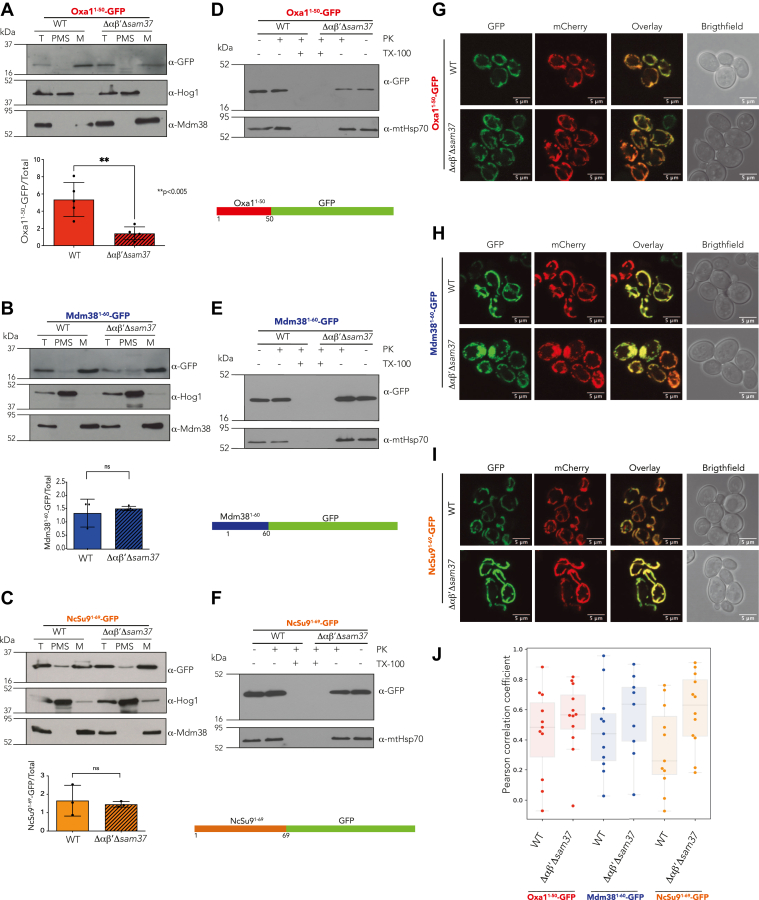
Figure 1
Figure 1
The Oxa1 N terminus 50 amino acids are relevant for αβ′-NAC recognition. Mitochondria were purified from a WT strain or a mutant lacking αβ′-NAC and SAM37 (Δαβ′Δsam37), transformed with plasmids containing the indicated constructs, and the presence of the chimeric protein within the organelle or in the postmitochondrial supernatant (PMS) was analyzed by Western blotting (left panels). Endogenous Mdm38 was used as mitochondrial marker and Hog1 as cytosolic marker. The signals were quantified, and the amount of the corresponding chimera found in mitochondria was compared with the total fraction (T) (left panels, bottom). To further explore if the chimeric protein was internalized into mitochondria, the samples were treated with proteinase K (PK) and 0.5% Triton X-100 (Tx), where indicated (middle panel). The cultures were also analyzed by confocal microscopy after labeling mitochondria with the fluorescent protein mt-mCherry (right panels). A, D, and G, the first 50 amino acids of Oxa1 fused to GFP. B, E, and H, the first 60 amino acids of Mdm38 fused to GFP. C, F, and I, the first 69 amino acids of Neurospora crassa ATPase 9 fused to GFP. J, colocalization analysis was evaluated using spatial correlation analysis calculating the Pearson's correlation coefficient. ∗∗p < 0.005. NAC, nascent polypeptide–associated complex.
Figure 2
Figure 2
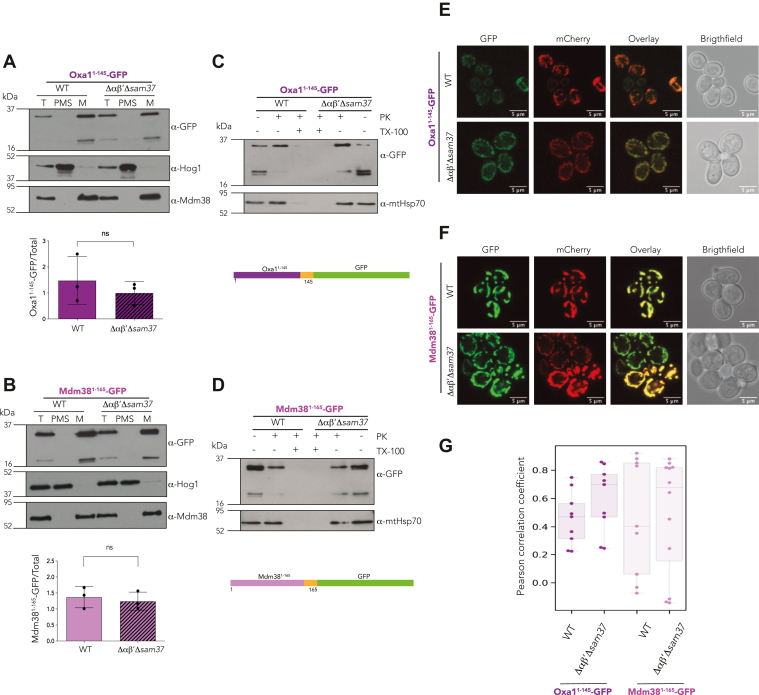
The Oxa1 first hydrophobic transmembrane segment does not increase αβ′-NAC dependence during mitochondrial import. Mitochondria were purified from a WT strain or a mutant lacking αβ′-NAC and SAM37 (Δαβ′Δsam37), transformed with plasmids containing the indicated constructs, and the presence of the chimeric protein within the organelle or in the postmitochondrial supernatant (PMS) was analyzed by Western blotting (left panels). Endogenous Mdm38 was used as mitochondrial marker and Hog1 as cytosolic marker. The signals were quantified, and the amount of the corresponding chimera found in mitochondria was compared with the total fraction (T) (left panels, bottom). To further explore if the chimeric protein was internalized within mitochondria, the samples were treated with proteinase K (PK) and 0.5% Triton X-100 (Tx), where indicated (middle panel). The cultures were also analyzed by confocal microscopy where mitochondria were labeled with the fluorescent protein mCherry that was targeted to the organelles by the means of the NcSu9 MTS (right panels). A, C, and E, import of the first 145 amino acids of Oxa1 fused to GFP. B, D, and F, import of the first 165 amino acids of Mdm38 fused to GFP. G, colocalization analysis was evaluated using spatial correlation analysis calculating the Pearson's correlation coefficient. MTS, matrix-targeting sequence; NAC, nascent polypeptide–associated complex.
Figure 3
Figure 3
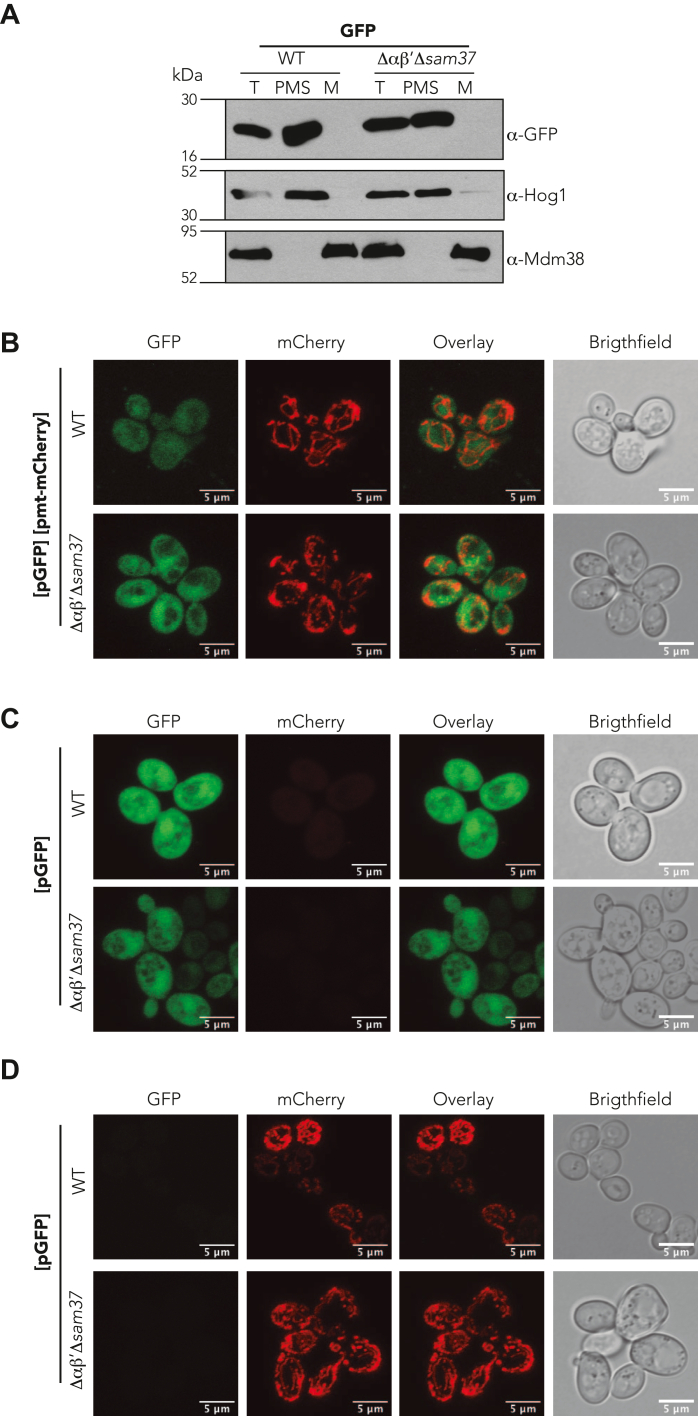
GFP without a signal sequence is localized in the cytosol.A, mitochondria were purified from a WT strain or a mutant lacking αβ′-NAC and SAM37 (Δαβ′Δsam37), transformed with plasmid encoding a GFP lacking an MTS, the presence of the protein within the organelle or in the postmitochondrial supernatant (PMS) was analyzed by Western blotting. Endogenous Mdm38 was used as mitochondrial marker and Hog1 as cytosolic marker. BD, the proper localization of GFP lacking an MTS and of the mt-mCherry was evaluated by confocal microscopy in both strains studied WT and Δαβ′Δsam37. MTS, matrix-targeting sequence; NAC, nascent polypeptide–associated complex.
Figure 4
Figure 4
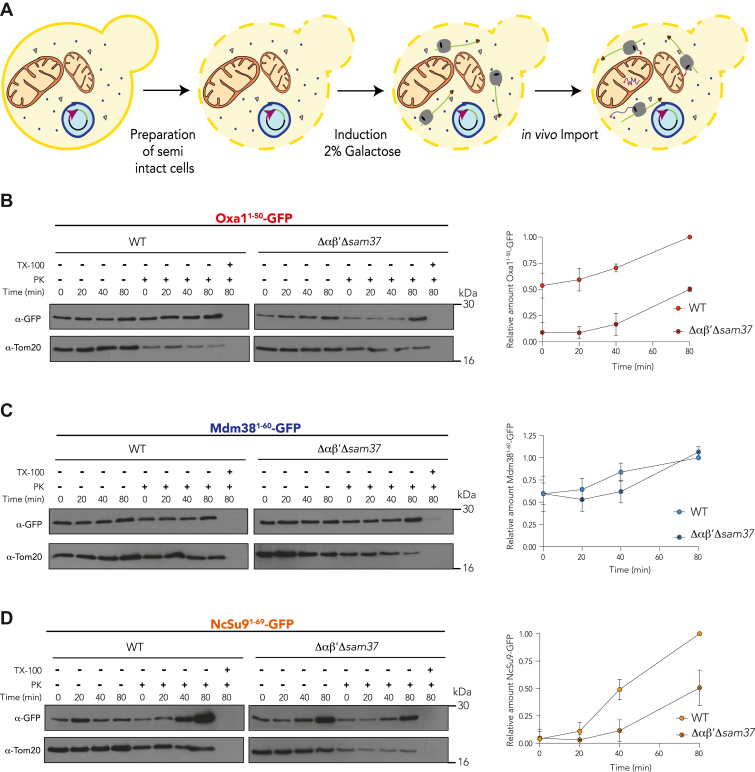
In vivo import guided by the Oxa1 first 50 amino acids is delayed in αβ′-NAC and Sam37 absence.A, whole cells of the indicated strains, transformed with plasmids encoding the chimeric Oxa11–50, Mdm381–60, or NcSu9 fused to GFP under an inducible promoter GAL1 or GAL10, were grown in rich media with raffinose and permeabilized with zymolyase to produce semi-intact cells, transferred to import buffer before adding 2% galactose to induce the expression of the chimeric proteins, and follow the import of the corresponding proteins at 20, 40, and 80 min. Tom20 was used as a control for the digestion of the proteins exposed or contained within the cytosol. Samples were treated with proteinase K (PK) and 3% Triton X-100 (Tx), where indicated. Samples were analyzed by Western blot, and the signals were quantified: the 80 min sample obtained in the WT strain was considered as 1.0 as it represents the maximum amount of imported protein, and the 0, 20, 40, and 80 min samples were analyzed as a fraction of that reference sample. B, import kinetics of the first 50 amino acids of Oxa1 fused to GFP. C, import kinetics of the first 60 amino acids of Mdm38 fused to GFP. D, import kinetics of the first 69 amino acids of Neurospora crassa ATPase 9 fused to GFP. NAC, nascent polypeptide–associated complex.
Figure 5
Figure 5
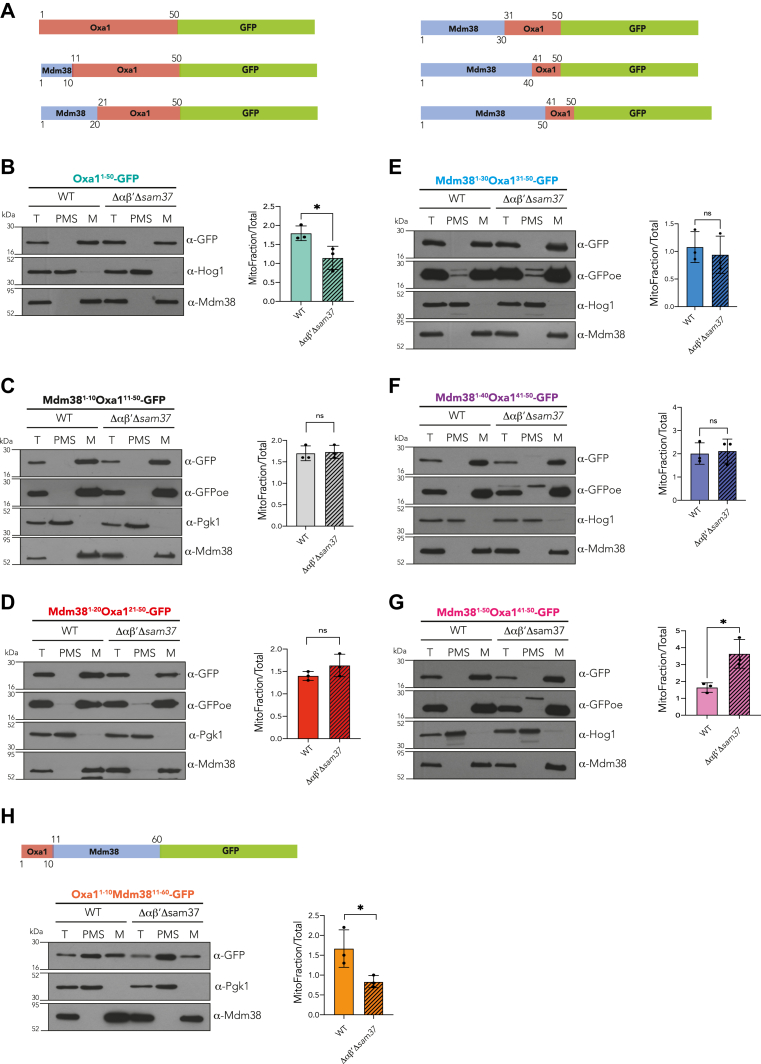
The Oxa1 first 10 amino acids contain relevant information for αβ′-NAC recognition.A, schematic representation of the chimeric proteins used. Red boxes represent fractions of the Oxa1 MTS, blue boxes represent fractions of the Mdm38 MTS, and green boxes represent the sequence corresponding to GFP. Numbers indicate the amino acid position in the protein according to the Saccharomyces cerevisiae genome annotation. BH, mitochondria were purified from a WT strain or the Δαβ′Δsam37 mutant, transformed with plasmids encoding the indicated constructs, and the presence of the chimeric protein within the organelle or in the postmitochondrial supernatant (PMS) was analyzed by Western blotting. Endogenous Mdm38 was used as mitochondrial marker, and Hog1 or Pgk1 was used as cytosolic marker. The signals were quantified, and the amount of the corresponding chimera found in mitochondria was compared with the total fraction (T). Asterisks represent p < 0.05. MTS, matrix-targeting sequence; NAC, nascent polypeptide–associated complex; ns, nonsignificant; OE, overexposure.
Figure 6
Figure 6
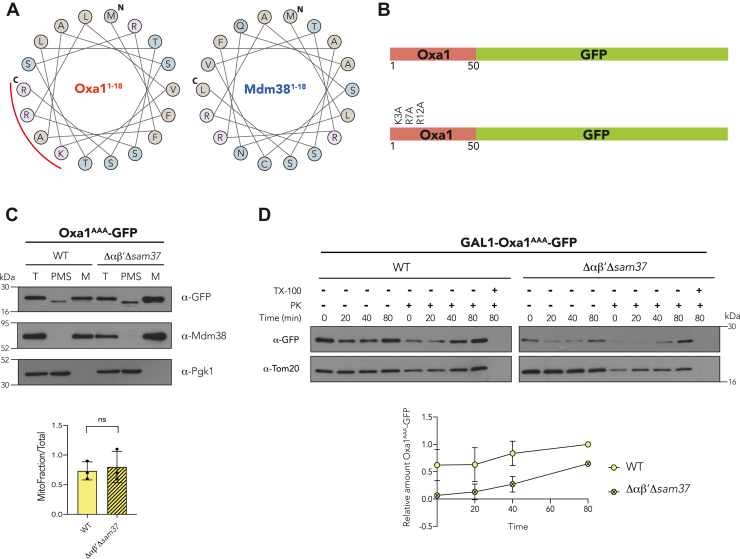
The Oxa1 first 18 amino acids harbor a cluster of positive amino acids important for αβ′-NAC recognition.A, helical wheel diagram of the first 18 amino acids of Oxa1 and Mdm38: N indicates the first methionine and C indicates the last amino acid of the analyzed sequence; the red curved line shows a positive amino acid cluster found in the Oxa1 MTS. B, schematic representation of the Oxa11–50-GFP construct (up) and the location of the amino acid residues that were changed for alanines (K3A, R7A, and R12A). C, mitochondria were purified from a WT strain or a mutant lacking αβ′-NAC and SAM37 (Δαβ′Δsam37), transformed with the Oxa1AAA-GFP construct plasmid, and the presence of the chimeric protein within the organelle or in the postmitochondrial supernatant (PMS) was analyzed by Western blotting. Endogenous Mdm38 was used as mitochondrial marker and Pgk1 as cytosolic marker. The signals were quantified, and the amount of the corresponding chimera found in mitochondria was compared with the total fraction (T). D, import kinetics of Oxa1AAA-GFP followed in semipermeabilized cells of a WT or a Δαβ′Δsam37 as for Figure 4. MTS, matrix-targeting sequence; NAC, nascent polypeptide–associated complex.
Figure 7
Figure 7
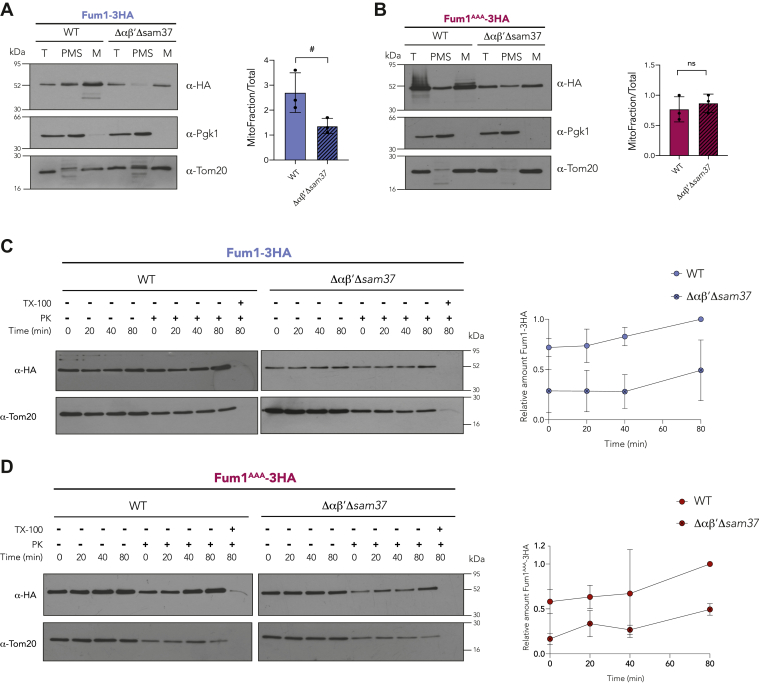
The mitochondrial protein Fum1 follows an import mediated by αβ′-NAC and Sam37.A and B, mitochondria were purified from a WT strain or a mutant lacking αβ′-NAC and SAM37 (Δαβ′Δsam37), transformed with a plasmid harboring either Fum1-3HA or Fum1AAA-3HA constructs; the presence of the protein within the organelle (M) or in the postmitochondrial supernatant (PMS) was analyzed by Western blotting. Tom20 was used as mitochondrial marker and Pgk1 as cytosolic marker. The signals were quantified, and the amount of the corresponding chimera found in mitochondria was compared with the total fraction (T), #p = 0.05. C and D, import kinetics of Fum1-3HA and Fum1AAA-3HA followed in semipermeabilized cells of a WT or a Δαβ′Δsam37 as for Figure 4. NAC, nascent polypeptide–associated complex.
Figure 8
Figure 8
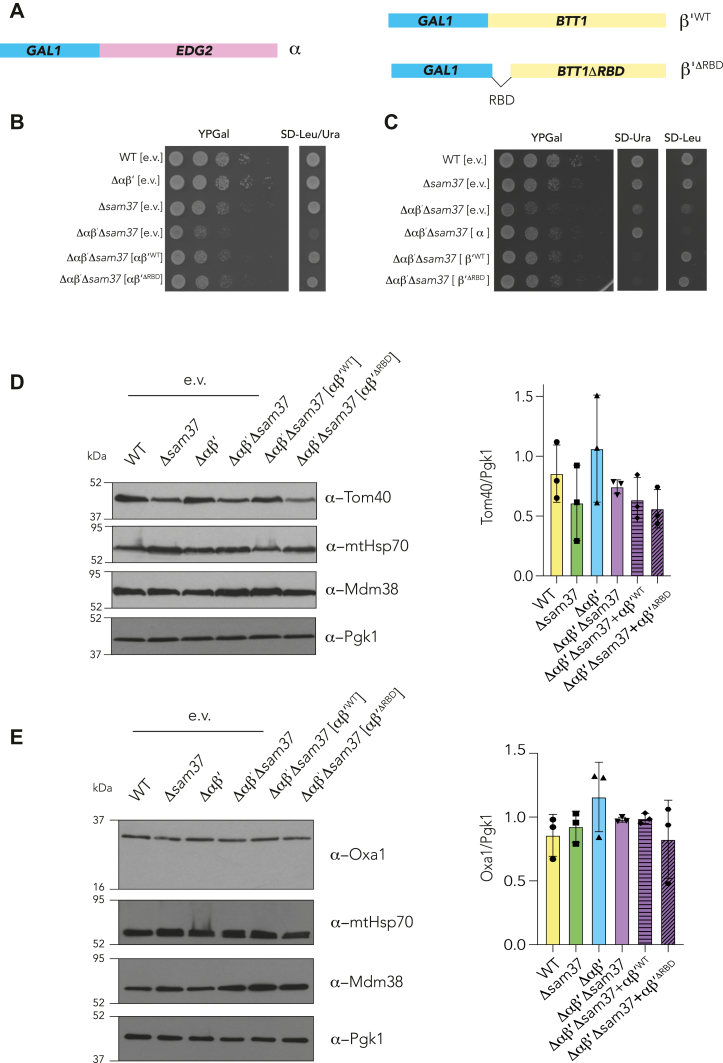
The ribosome-binding domain of β′-NAC is important during the mitochondrial protein import.A, schematic representation of NAC subunits regulated by the GAL promoter used in these experiments. β′ΔRBD represents the construct where amino acids 2 to 11 of β′-NAC have been deleted. B and C, indicated strains were transformed with combinations of plasmids expressing either αβ′WT-NAC, αβ′ΔRBD-NAC, or the individual subunits, under the regulation of the GAL promoter. Strains were grown to logarithmic phase, and serial 1:10 dilutions were spotted on rich media with galactose as carbon source. Plates were incubated at 30 °C. Synthetic media were used to confirm either both plasmids (SD-Leu/Ura) or individual ones (SD-Ura or SD-Leu) were present. D and E, whole cell extracts (25 μg of protein) of the indicated strains harboring plasmids expressing either αβ′WT-NAC or αβ′ΔRBD-NAC were grown in SRaf-Leu/Ura until an absorbance of 1 at 600 nm followed by galactose induction for 3 h. Protein extracts were separated by electrophoresis on denaturing SDS-PAGE. Samples were transferred to nitrocellulose membranes and decorated with the specific antibodies as indicated. Cytosolic Pgk1 was analyzed as loading control. e.v., empty vector; NAC, nascent polypeptide–associated complex; RBD, ribosomal-binding domain.
Figure 9
Figure 9
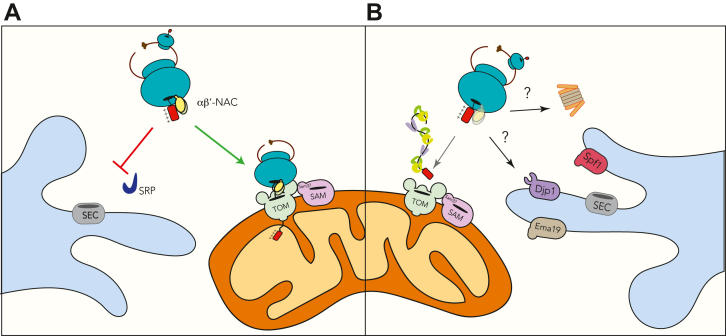
Final model.A, the αβ′-NAC mediates some mitochondrial protein import because of the recognition of a positive amino acid cluster present at the N terminus of precursors that are being actively translated. In addition, αβ′-NAC prevents recognition by other factors such as SRP that would lead to mistargeting to the endoplasmic reticulum. B, in the absence of αβ′-NAC, mitochondrial precursors are still able to arrive to mitochondria with the help of other chaperones such as Hsp70s and Hsp90s or other signals present in the mRNA. They can also be mistargeted to the endoplasmic reticulum, where some factors like Ema19, Djp1, or Spf1 may redirect the precursors to the mitochondria or toward its degradation. Hsp, heat shock protein; NAC, nascent polypeptide–associated complex; SRP, signal recognition particle.

References

    1. Eme L., Spang A., Lombard J., Stairs C.W., Ettema T.J.G. Archaea and the origin of eukaryotes. Nat. Rev. Microbiol. 2017;15:711–723. - PubMed
    1. Sagan L. On the origin of mitosing cells. 1967. J. NIH Res. 1993;5:65–72. - PubMed
    1. Chacinska A., Koehler C.M., Milenkovic D., Lithgow T., Pfanner N. Importing mitochondrial proteins: machineries and mechanisms. Cell. 2009;138:628–644. - PMC - PubMed
    1. Karakaidos P., Rampias T. Mitonuclear interactions in the maintenance of mitochondrial integrity. Life (Basel) 2020;10:173. - PMC - PubMed
    1. Avendano-Monsalve M.C., Ponce-Rojas J.C., Funes S. From cytosol to mitochondria: the beginning of a protein journey. Biol. Chem. 2020;401:645–661. - PubMed

Publication types

MeSH terms

LinkOut - more resources