


Hyponatremia in Cirrhosis
- PMID: 35487602
- PMCID: PMC9060324
- DOI: 10.1016/j.cld.2022.01.001
Hyponatremia in Cirrhosis
Abstract
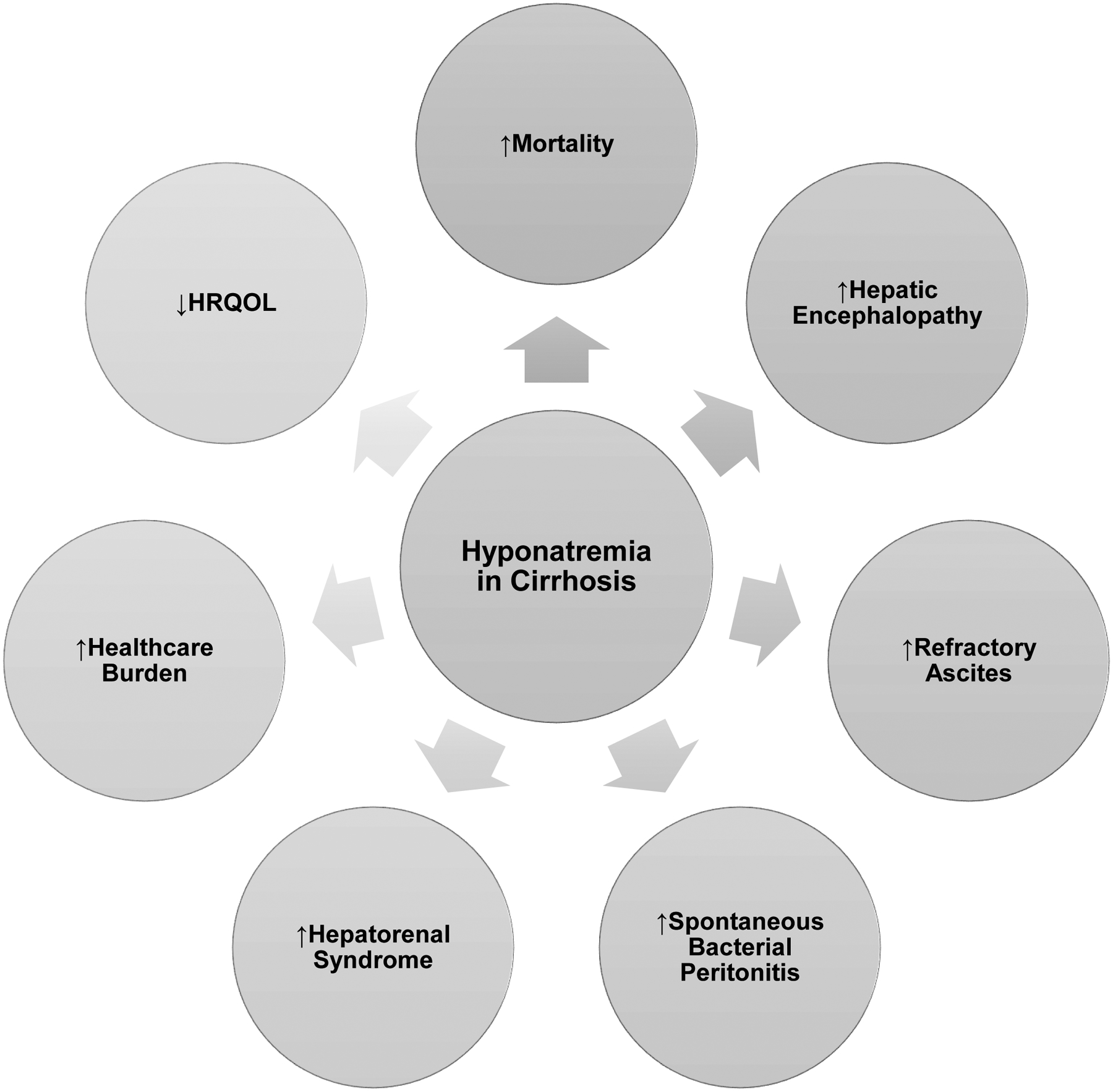
Hyponatremia is the most common electrolyte disorder encountered in clinical practice, and it is a common complication of cirrhosis reflecting an increase in nonosmotic secretion of arginine vasopressin as a result of of the circulatory dysfunction that is characteristic of advanced liver disease. Hyponatremia in cirrhosis has been associated with poor clinical outcomes including increased risk of morbidity and mortality, poor quality of life, and heightened health care utilization. Despite this, the treatment of hyponatremia in cirrhosis remains challenging as conventional therapies such as fluid restriction are frequently ineffective. In this review, we discuss the epidemiology, clinical outcomes, pathogenesis, etiology, evaluation, and management of hyponatremia in cirrhosis.
Keywords: Albumin; Arginine vasopressin; Ascites; Central pontine myelinolysis; Cirrhosis; Hyponatremia; Liver transplantation; Osmotic demyelination syndrome.
Copyright © 2022 Elsevier Inc. All rights reserved.
Figures


References
-
- Ennaifer R, Cheikh M, Romdhane H, et al. Hyponatremia in cirrhosis: Risk factors and prognostic value. Tunis Med. May 2016;94(5):401–405. - PubMed
Publication types
MeSH terms
Grants and funding
LinkOut - more resources
Full Text Sources
