


Transcriptional lockdown during acute proteotoxic stress
- PMID: 35487807
- PMCID: PMC9041648
- DOI: 10.1016/j.tibs.2022.03.020
Transcriptional lockdown during acute proteotoxic stress
Abstract
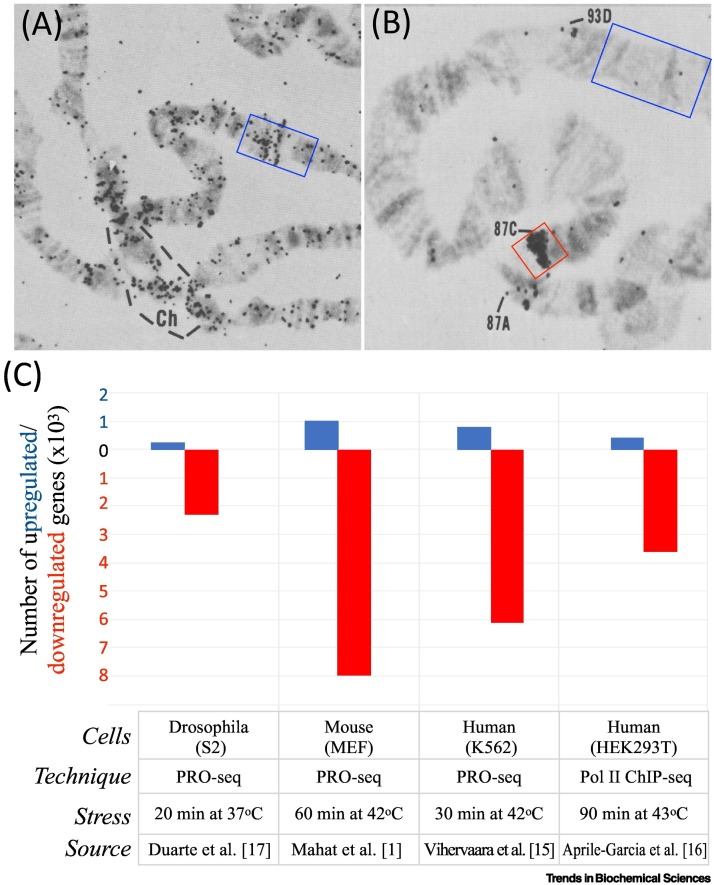
Cells experiencing proteotoxic stress downregulate the expression of thousands of active genes and upregulate a few stress-response genes. The strategy of downregulating gene expression has conceptual parallels with general lockdown in the global response to the coronavirus disease 2019 (COVID-19) pandemic. The mechanistic details of global transcriptional downregulation of genes, termed stress-induced transcriptional attenuation (SITA), are only beginning to emerge. The reduction in RNA and protein production during stress may spare proteostasis capacity, allowing cells to divert resources to control stress-induced damage. Given the relevance of translational downregulation in a broad variety of diseases, the role of SITA in diseases caused by proteotoxicity should be investigated in future, paving the way for potential novel therapeutics.
Keywords: NELF; RNA polymerase II; heat shock; proteostasis; transcription.
Copyright © 2022 Elsevier Ltd. All rights reserved.
Conflict of interest statement
Declaration of interests No interests are declared.
Figures
References
-
- Shalgi R., et al. Widespread inhibition of posttranscriptional splicing shapes the cellular transcriptome following heat shock. Cell Rep. 2014;7:1362–1370. - PubMed
-
- Kose S., et al. Hikeshi, a nuclear import carrier for Hsp70s, protects cells from heat shock-induced nuclear damage. Cell. 2012;149:578–589. - PubMed
-
- Harding H.P., et al. Regulated translation initiation controls stress-induced gene expression in mammalian cells. Mol. Cell. 2000;6:1099–1108. - PubMed
Publication types
MeSH terms
Substances
Grants and funding
LinkOut - more resources
Full Text Sources
Medical
