Review
. 2022 May;23(5):671-678.
doi: 10.1038/s41590-022-01194-2. Epub 2022 Apr 29.

TCF-1: a maverick in T cell development and function

Affiliations
Review

TCF-1: a maverick in T cell development and function

Fotini Gounari et al. Nat Immunol. 2022 May.

Abstract

The T cell-specific DNA-binding protein TCF-1 is a central regulator of T cell development and function along multiple stages and lineages. Because it interacts with β-catenin, TCF-1 has been classically viewed as a downstream effector of canonical Wnt signaling, although there is strong evidence for β-catenin-independent TCF-1 functions. TCF-1 co-binds accessible regulatory regions containing or lacking its conserved motif and cooperates with other nuclear factors to establish context-dependent epigenetic and transcription programs that are essential for T cell development and for regulating immune responses to infection, autoimmunity and cancer. Although it has mostly been associated with positive regulation of chromatin accessibility and gene expression, TCF-1 has the potential to reduce chromatin accessibility and thereby suppress gene expression. In addition, the binding of TCF-1 bends the DNA and affects the chromatin conformation genome wide. This Review discusses the current understanding of the multiple roles of TCF-1 in T cell development and function and their mechanistic underpinnings.


Figures

Figure 1:
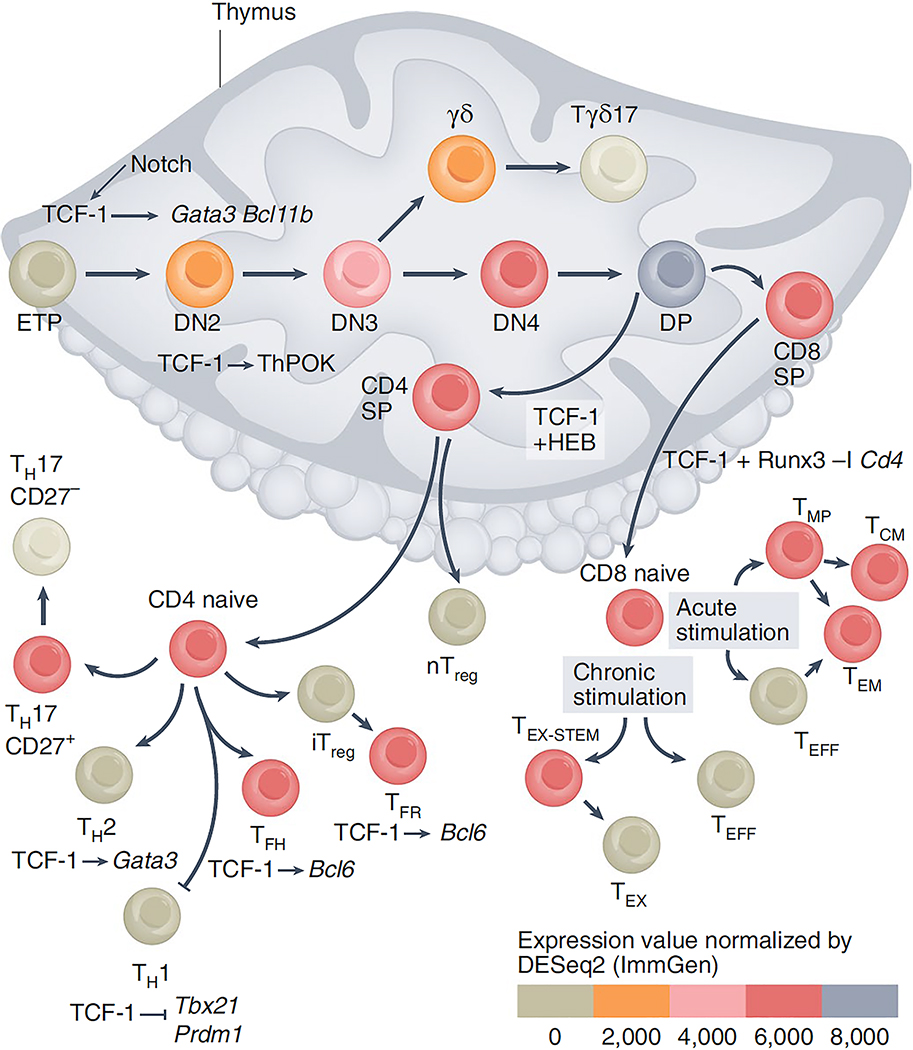
Figure 1:. T cell development and the stages of TCF-1 implication.
Notch signaling upregulates Tcf7 expression in early ETPs . TCF-1 induces the expression of genes encoding transcription factors critical for T cell specification, including Gata3 and Bcl11b. The levels of TCF-1 increases progressively up to the CD4+CD8+ (DP) stage. In CD4+CD8+ (DP) thymocytes TCF-1 cooperates with HEB to define their epigenetic landscape and trasncription profile . Following thymic selection the DP cells become either CD4+ or CD8+ SP cells. TCF-1 fosters the CD4+ T cell fate by promoting Zbtb7b (TH-POK) expression, and although TCF-1 is not required for commitment to the CD8+ T cell lineage it ensures CD8+ T cell stability by cooperating with RUNX3 to suppress Cd4 gene expression . TCF-1 also suppresses Rorc (RORγT) and Il17 expression in DP thymocytes preventing their conversion to CD4+ TH17 and CD8+ TC17 cells ,. After thymic egress CD4+ T cells differentiate into TH subsets. TCF-1 promotes TFH differentiation by inducing Bcl6 and supressing Prdm1 (BLIMP-1) expression and limits TH1 differentiation by suppressing Tbx21 (T-bet) expression . TCF-1 promotes TH2 differentiation by directly upregulating Gata3 . TCF-1 is expressed by stem cell-like CD27+ TH17 cells, which persist in models of MS . In TREG cell subsets, TCF-1 cooperates with Foxp3 to limit expression of T cell activation and TH17 differentiation genes. It also enhances Bcl6 expression to promote TFR differentiation. CD8+ T cells are critical for defense against acute and chronic viral infections and cancers. In acute viral infection TCF-1 is important in driving the development of TMP and TMEM cells. Both in acute and chronic LCMV infection downregulation of TCF-1 is needed for the differentiation of TEFF and TEX cells. In chronic viral infections and cancer, TCF-1 and BCL-6 support the differentiation and maintenance of TEX-STEM cells that express PD-1 and can respond to anti-PD-1 therapy.
Figure 2.
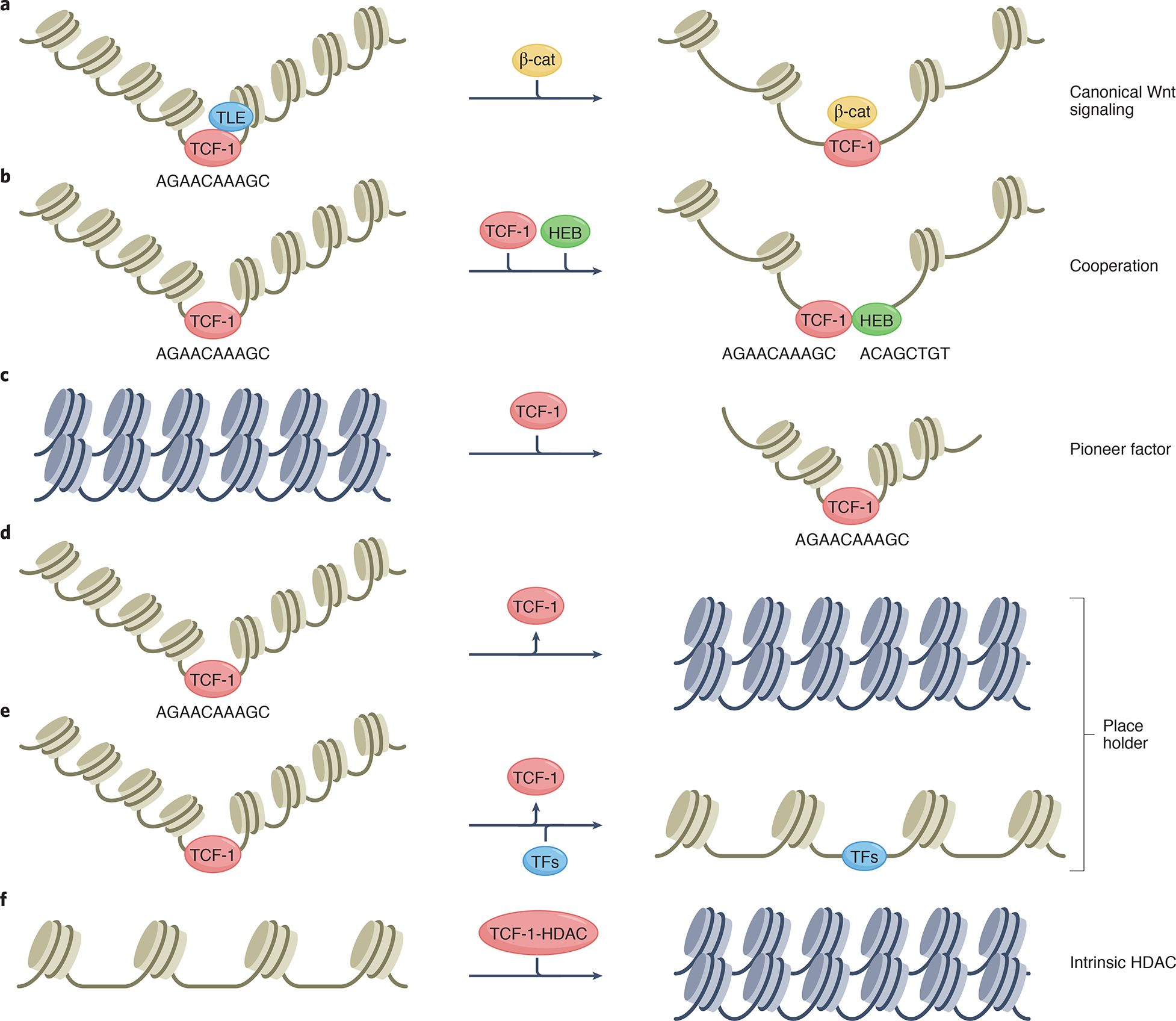
Figure 2.. Understanding the fundamental molecular functions of TCF-1.
TCF-1 has multiple molecular functions that are superimposed on its’ ability to bend the DNA upon binding and regulate the 3D chromatin conformation. (a) In the absence of β-catenin, TCF-1 can bind with the repressors of the Grg/TLE family at a region proximal to the HMG DNA binding domain , to reduce chromatin accessibility, and suppress gene transcription . Extracellular Wnts stabilize β-catenin by disrupting its’ degradatioin complex, allowing its’ nuclear translocation and interaction with the full-length TCF-1 protein. This results in the recruitment of epigenetic and transcription regulators that enhance chromatin accessibility and gene transcription. (b) TCF-1 cooperates with other transcription factors to establish context and developmental stage-specific epigenetic and transcription profiles through co-binding to common DNA sites. (c) TCF-1 could function as a pioneer-like factor and initiates changes in the chromatin landscape that establish the T cell lineage identity. (d,e) TCF-1 may function as a “Place Holder”, to promote/maintain T cell-specific chromatin accessibility, independently of Wnt signals. (f) TCF-1 has intrinsic histone deacetylase activity (HDAC) and can directly reduce chromatin accessibility.

References

    1. Hosokawa H & Rothenberg EV How transcription factors drive choice of the T cell fate. Nat Rev Immunol 21, 162–176, doi: 10.1038/s41577-020-00426-6 (2021). - DOI - PMC - PubMed
    1. Yang Q et al. T cell factor 1 is required for group 2 innate lymphoid cell generation. Immunity 38, 694–704, doi: 10.1016/j.immuni.2012.12.003 (2013). - DOI - PMC - PubMed
    1. Ishizuka IE, Constantinides MG, Gudjonson H & Bendelac A The Innate Lymphoid Cell Precursor. Annu Rev Immunol 34, 299–316, doi: 10.1146/annurev-immunol-041015-055549 (2016). - DOI - PubMed
    1. Kasal DN & Bendelac A Multi-transcription factor reporter mice delineate early precursors to the ILC and LTi lineages. J Exp Med 218, doi: 10.1084/jem.20200487 (2021). - DOI - PMC - PubMed
    1. Zhao X, Shan Q & Xue HH TCF1 in T cell immunity: a broadened frontier. Nat Rev Immunol, doi: 10.1038/s41577-021-00563-6 (2021). - DOI - PubMed

Publication types