. 2022 Apr 29;20(1):206.
doi: 10.1186/s12951-022-01421-w.

Oral administration of turmeric-derived exosome-like nanovesicles with anti-inflammatory and pro-resolving bioactions for murine colitis therapy

Affiliations

Oral administration of turmeric-derived exosome-like nanovesicles with anti-inflammatory and pro-resolving bioactions for murine colitis therapy

Cui Liu et al. J Nanobiotechnology. .

Abstract

Background: Ulcerative colitis (UC) is an inflammatory bowel disease (IBD) characterized by diffuse inflammation of the colonic mucosa and a relapsing and remitting course. The current therapeutics are only modestly effective and carry risks for unacceptable adverse events, and thus more effective approaches to treat UC is clinically needed.

Results: For this purpose, turmeric-derived nanoparticles with a specific population (TDNPs 2) were characterized, and their targeting ability and therapeutic effects against colitis were investigated systematically. The hydrodynamic size of TDNPs 2 was around 178 nm, and the zeta potential was negative (- 21.7 mV). Mass spectrometry identified TDNPs 2 containing high levels of lipids and proteins. Notably, curcumin, the bioactive constituent of turmeric, was evidenced in TDNPs 2. In lipopolysaccharide (LPS)-induced acute inflammation, TDNPs 2 showed excellent anti-inflammatory and antioxidant properties. In mice colitis models, we demonstrated that orally administrated of TDNPs 2 could ameliorate mice colitis and accelerate colitis resolution via regulating the expression of the pro-inflammatory cytokines, including TNF-α, IL-6, and IL-1β, and antioxidant gene, HO-1. Results obtained from transgenic mice with NF-κB-RE-Luc indicated that TDNPs 2-mediated inactivation of the NF-κB pathway might partially contribute to the protective effect of these particles against colitis.

Conclusion: Our results suggest that TDNPs 2 from edible turmeric represent a novel, natural colon-targeting therapeutics that may prevent colitis and promote wound repair in colitis while outperforming artificial nanoparticles in terms of low toxicity and ease of large-scale production.

Keywords: NF-κB pathway; Nanotherapeutics; Oral administration; Turmeric-derived nanoparticles; Ulcerative colitis.


Conflict of interest statement

The authors have declared that no competing interest exists.

Figures
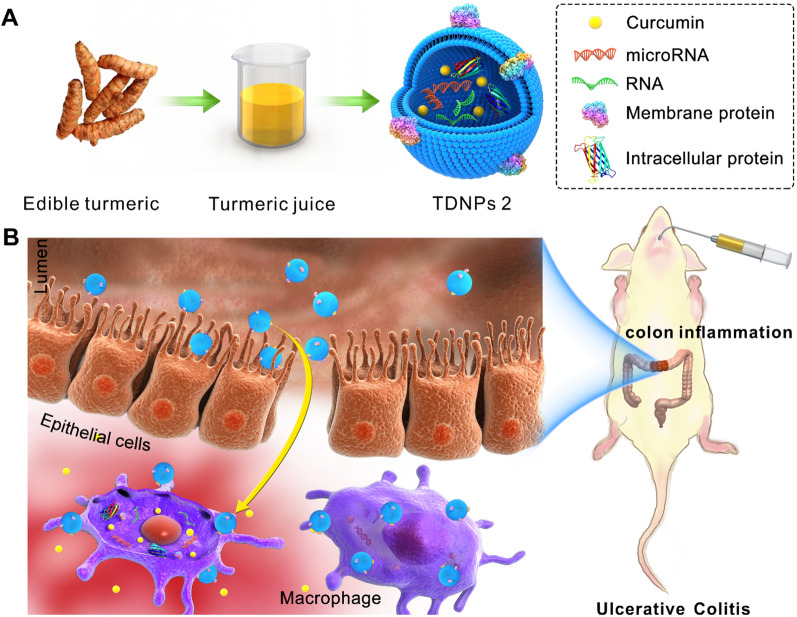
Fig. 1
Fig. 1
Schematic illustration of turmeric-derived nanoparticles (TDNPs 2) isolation and targeted ulcerative colitis (UC) therapy via oral administration. A TDNPs 2 were isolated and purified from edible turmeric by ultracentrifugation and sucrose gradient centrifugation. B By oral administration, TDNPs 2 accumulated at inflamed colon and exerted UC therapeutic effect
Fig. 2
Fig. 2
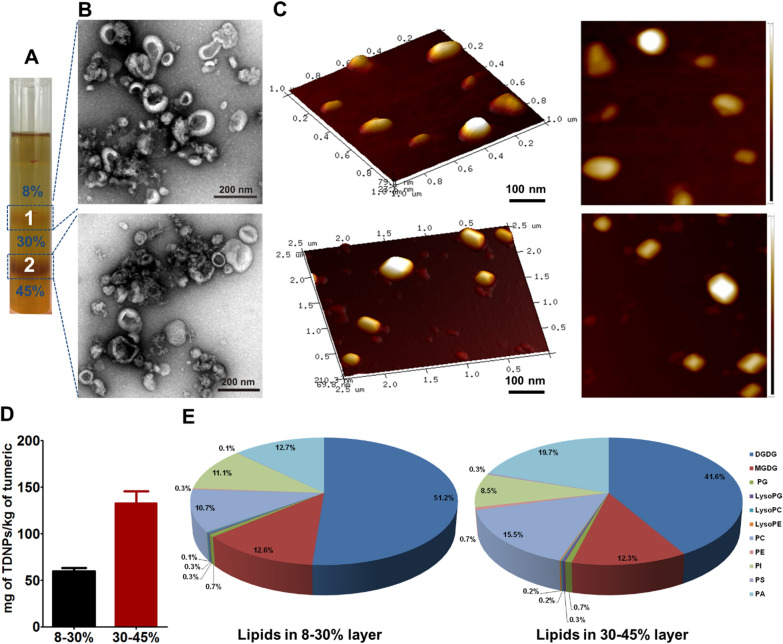
Characterization of TDNPs. A TDNPs were isolated and purified by sucrose gradient ultracentrifugation, band 1 from 8%/30% interface was named TDNPs 1, and band 2 from 30%/45% interface was named TDNPs 2. B Transmission Electron Microscopy (TEM) to characterize the morphology and size. C TDNPs were also identified by Atomic Force Microscopy (AFM). D Yields of TDNPs 1 and TDNPs 2 from turmeric were calculated and compared (n = 5). E Putative lipid species between TDNPs 1 and TDNPs 2 were compared
Fig. 3
Fig. 3
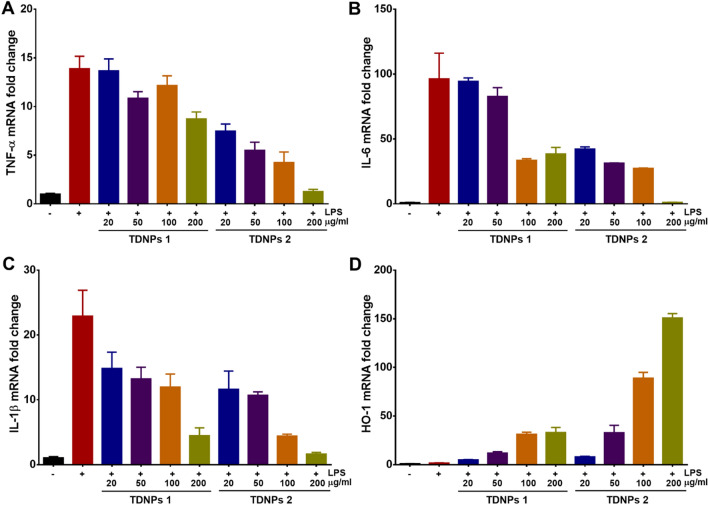
TDNPs prevent LPS-induced macrophage inflammation. A–C mRNAs expression of pro-inflammatory cytokines, TNF-α, IL-6 and IL-1β, respectively (n = 5). D mRNA expression of HO-1 (n = 5)
Fig. 4
Fig. 4
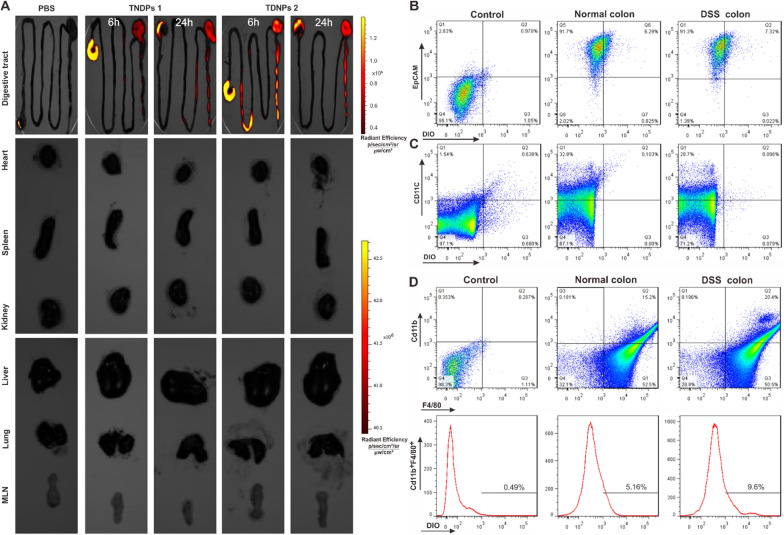
TDNPs 2 preferentially localized to the inflamed colon. A Digestive tract, mesenteric lymph nodes (MLN), and vital organs (Heart, liver, spleen, lung, kidney, and) were imaged by IVIS® Spectrum imaging system. B–D FACS was used to determine the population of cells to uptake DiO labeled TNDPs 2 (n = 3)
Fig. 5
Fig. 5
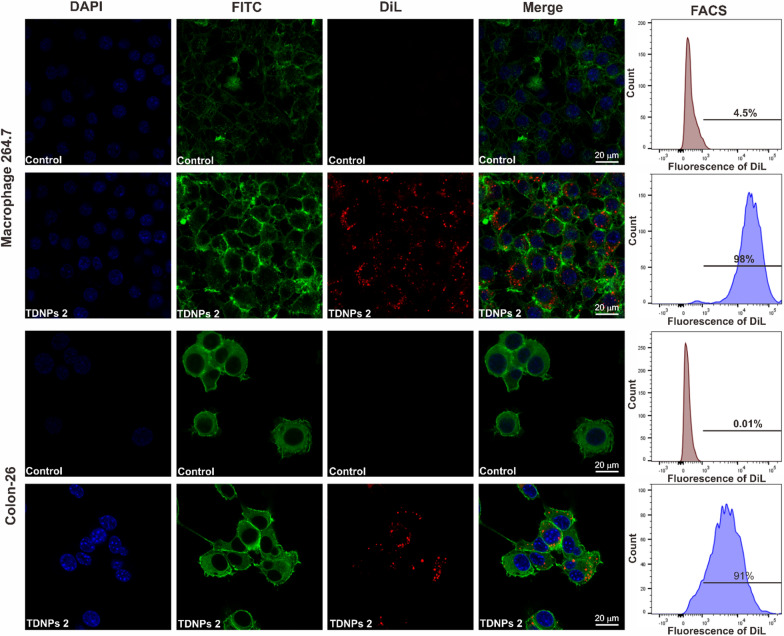
Cellular uptake of TNDPs 2 by macrophage 264.7 and colon-26 cells. The cell nucleus was stained by DAPI (Blue), the cytoskeleton was stained by FITC-phalloidin (Green), and TDNPs 2 were labeled by lipophilic carbocyanine dye, DiL (Red), scale bar: 20 μm
Fig. 6
Fig. 6
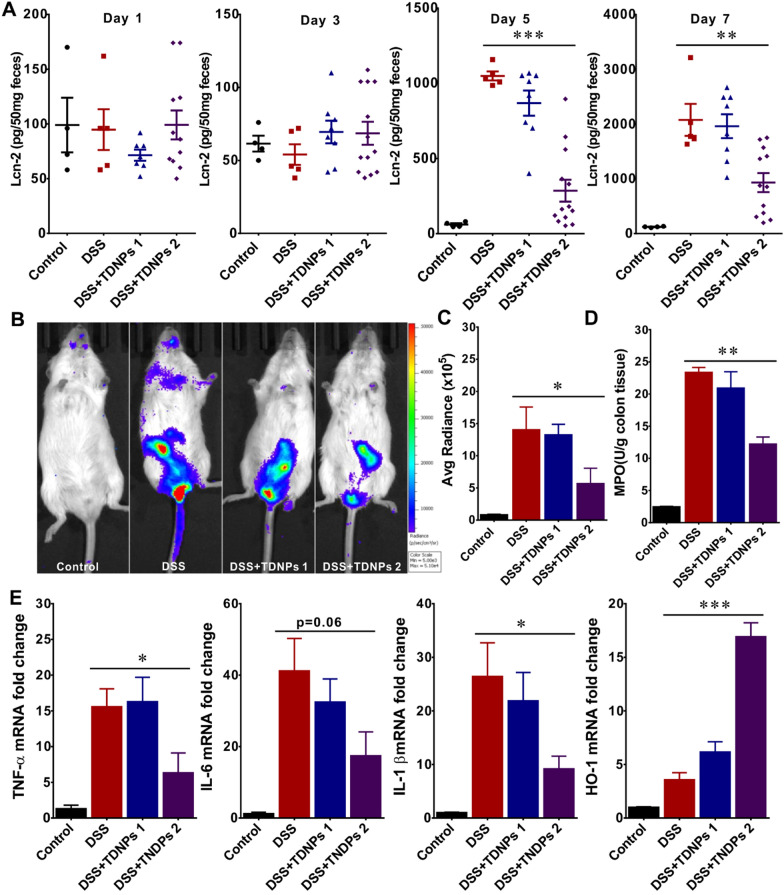
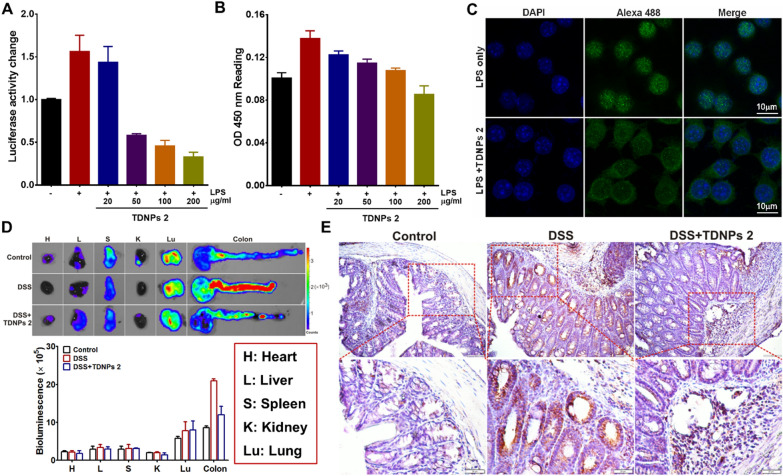
Oral administration of TDNPs 2 alleviated DSS-induced colitis. A Lipocalin-2 quantification (n = 5). B Colon inflammation was monitored by XenoLight RediJect inflammation probe via chemiluminescence imaging (n = 3). C Average radiance was captured and compared between groups (n = 5). D MPO quantification (n = 5). E Real-time PCR to quantify miRNA expression (n = 5), *p < 0.05, **p < 0.01, ***p < 0.001
Fig. 7
Fig. 7
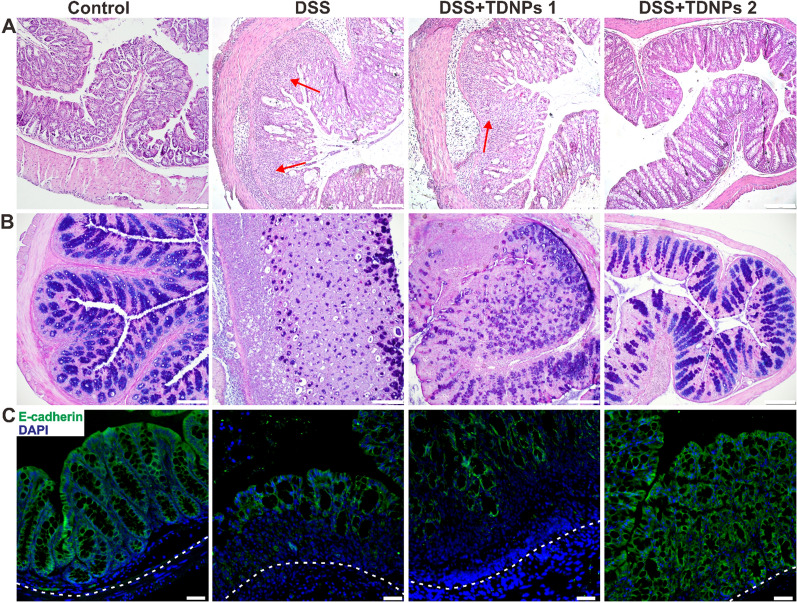
Histological stain to evaluate the protective effect of TDNPs 2 on colitis. A Representative H&E-stained colon. Inflammatory cell infiltration was indicated by arrowheads. B Colonic goblet cells were stained by Alcian blue. As goblet cells produce mucins, Alcian blue was used to highlight the goblet cell population. C E-cadherin expression was detected by immunofluorescence. Scale bar: 50 μm
Fig. 8
Fig. 8
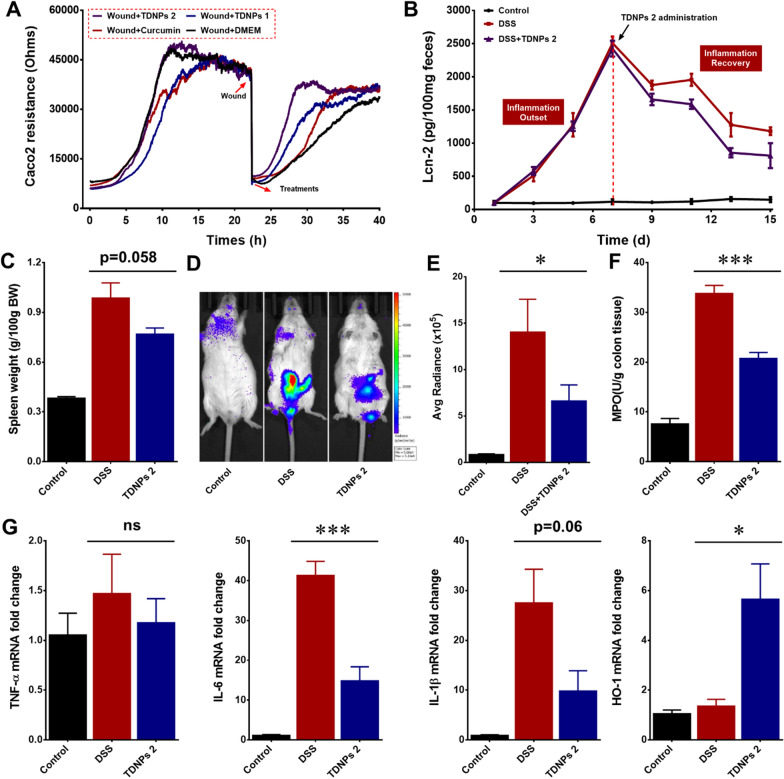
Oral administration of TDNPs 2 accelerated inflammation resolution of colitis. A ECIS wound healing assay. B Lcn-2 quantification (n = 5). C Spleen weight (n = 5). D Colon inflammation was monitored by XenoLight RediJect inflammation probe via chemiluminescence imaging. E Average radiance (n = 5). F MPO quantification (n = 5). G Real-time PCR to quantify miRNA expression (n = 5). *p < 0.05, ***p < 0.001 and ns represent no significant difference
Fig. 9
Fig. 9
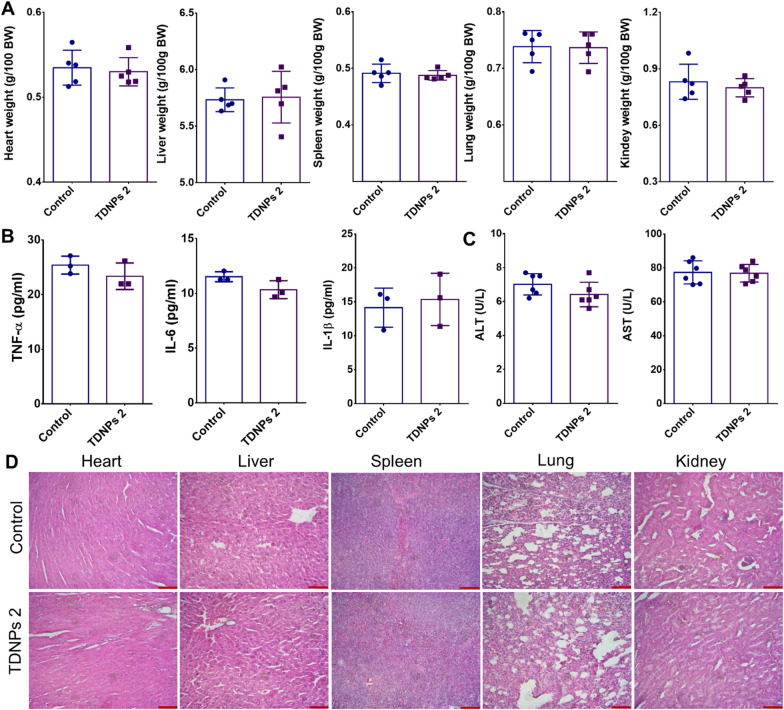
Biocompatibility evaluation of TDNPs 2. A Vital organs weights (n = 5). B Pro-inflammatory cytokines (n = 5). C Indicators reflected the physiological function of the liver were evaluated. D H&E staining, scale bar: 50 μm
Fig. 10
Fig. 10
TDNPs 2 exerted a protective effect by inactivating the NF-κB pathway. A NF-κB activity evaluation (n = 5). B Phospho-NF-κB p65 expression was evaluated by ELISA assay (n = 5). C The translocation of NF-kB-p65 to the nucleus was assessed by immunofluorescence, scale bar = 10 μm. D NF-κB-RE-Luc transgenic mice was used to investigate NF-κB activity in vivo (n = 5). E NF-κB expression in the colon was evaluated by IHC

References

    1. Shivaji UN, Nardone OM, Cannatelli R, Smith SC, Ghosh S, Iacucci M. Small molecule oral targeted therapies in ulcerative colitis. Lancet Gastroenterol. 2020;5:850–861. - PubMed
    1. Prados ME, Garcia-Martin A, Unciti-Broceta JD, Palomares B, Collado JA, Minassi A, et al. Betulinic acid hydroxamate prevents colonic inflammation and fibrosis in murine models of inflammatory bowel disease. Acta Pharmacol Sin. 2021;42:1124–1138. - PMC - PubMed
    1. Kobayashi T, Siegmund B, Le Berre C, Wei SC, Ferrante M, Shen B, et al. Ulcerative colitis. Nat Rev Dis Primers. 2020;6:74. - PubMed
    1. Chung CH, Jung W, Keum H, Kim TW, Jon S. Nanoparticles derived from the natural antioxidant rosmarinic acid ameliorate acute inflammatory bowel disease. ACS Nano. 2020;14:6887–6896. - PubMed
    1. Neurath MF. Cytokines in inflammatory bowel disease. Nat Rev Immunol. 2014;14:329–342. - PubMed

MeSH terms