


Population genomics and phylogeography of Colletes gigas, a wild bee specialized on winter flowering plants
- PMID: 35494503
- PMCID: PMC9035574
- DOI: 10.1002/ece3.8863
Population genomics and phylogeography of Colletes gigas, a wild bee specialized on winter flowering plants
Abstract
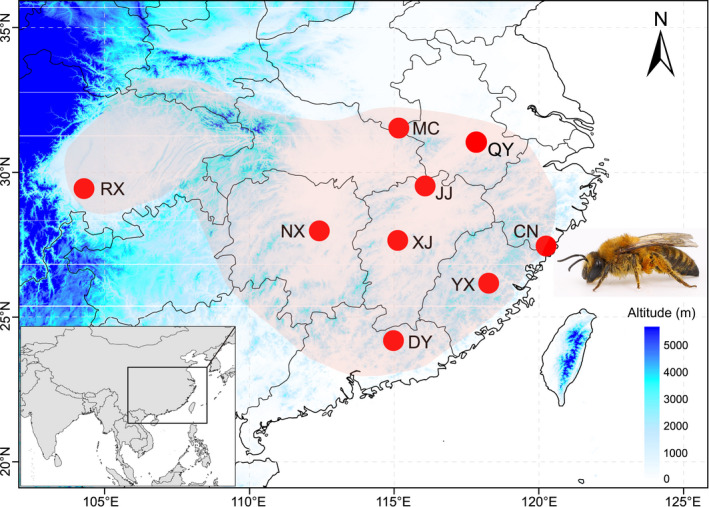
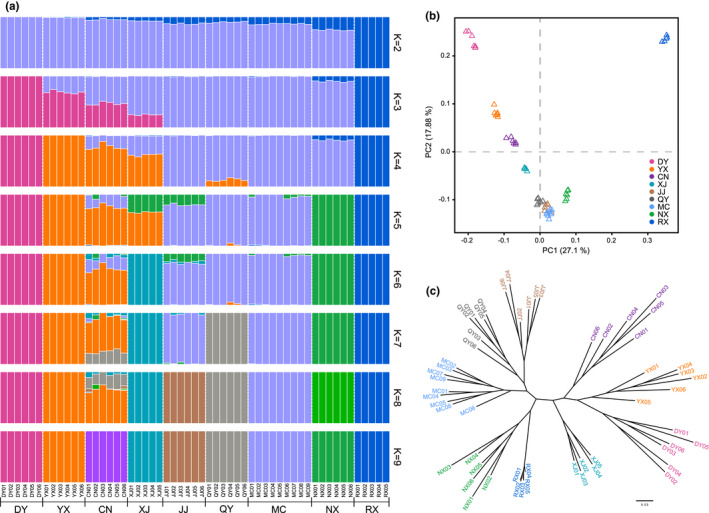
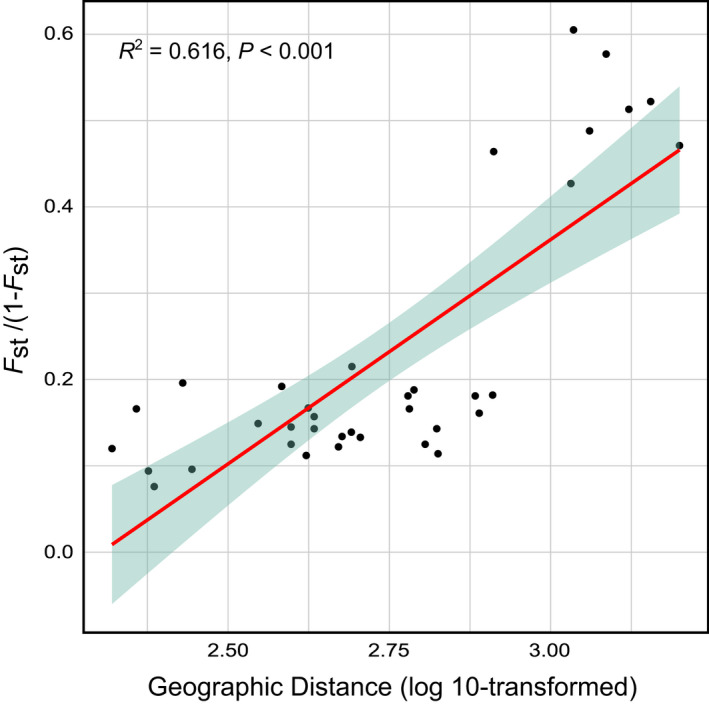
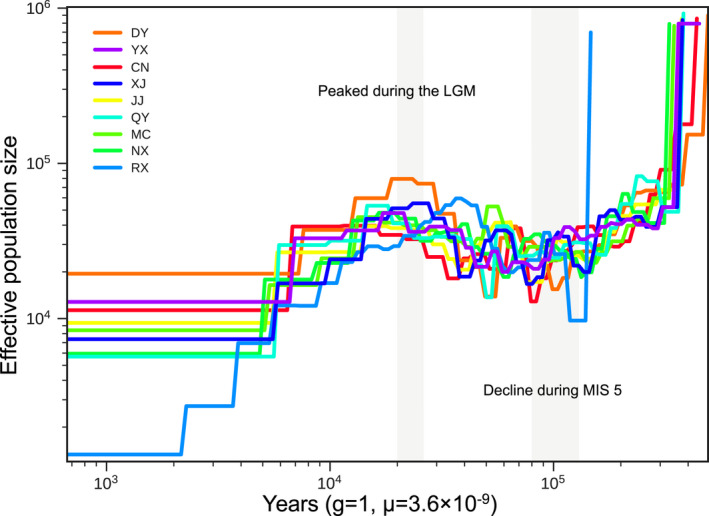
Diet specialization may affect the population genetic structure of pollinators by reducing gene flow and driving genetic differentiation, especially in pollen-specialist bees. Colletes gigas is a pollen-specialist pollinator of Camellia oleifera, one of the most important staple oil crops in China. Ca. oleifera blooms in cold climates and contains special compounds that make it an unusable pollen source to other pollinators. Thus, C. gigas undoubtedly plays a key role as the main pollinator of Ca. oleifera, with biological and economic significance. Here, we use a population genomic approach to analyze the roles of geography and climate on the genetic structure, genetic diversity, and demographic history of C. gigas. A total of 1,035,407 SNPs were identified from a 582.77 Gb dataset. Clustering and phylogenetic analyses revealed a marked genetic structure, with individuals grouped into nine local clusters. A significant isolation by distance was detected by both the Mantel test (R = .866, p = .008) and linear regression (R 2 = .616, p < .001). Precipitation and sunshine duration were positively and significantly (R ≥ .765, p ≤ .016) correlated with observed heterozygosity (H o) and expected heterozygosity (H e). These results showed that C. gigas populations had a distinct phylogeographic pattern determined by geographical distance and environmental factors (precipitation and sunshine duration). In addition, an analysis of paleogeographic dynamics indicated that C. gigas populations exhibited patterns of glacial expansion and interglacial contraction, likely resulting from post-glacial habitat contraction and fragmentation. Our results indicated that the peculiar phylogeographic patterns in C. gigas populations may be related to their specialization under long-term adaptation to host plants. This work improves our understanding of the population genetics in pollen-specialist bees. The distinct genetic clusters identified in this study should be taken into consideration for the protection and utilization of this specialized crop pollinator.
Keywords: colletid bees; demographic history; genetic variation; population genomics; population structure; specialist pollinator.
© 2022 The Authors. Ecology and Evolution published by John Wiley & Sons Ltd.
Conflict of interest statement
The authors have no conflict of interest to declare.
Figures
References
-
- Allendorf, F. W. , & Luikart, G. (2006). Conservation and the genetics of populations (1st ed.). Wiley‐Blackwell.
-
- Biesmeijer, J. C. , Roberts, S. P. M. , Reemer, M. , Ohlemüller, R. , Edwards, M. , Peeters, T. , Schaffers, A. P. , Potts, S. G. , Kleukers, R. , Thomas, C. D. , Settele, J. , & Kunin, W. E. (2006). Parallel declines in pollinators and insect‐pollinated plants in Britain and the Netherlands. Science, 313(5785), 351–354. 10.1126/science.1127863 - DOI - PubMed
Associated data
LinkOut - more resources
Full Text Sources
