


Pseudomonas mendocina Urinary Tract Infection: A Case Report and Literature Review
- PMID: 35495004
- PMCID: PMC9045790
- DOI: 10.7759/cureus.23583
Pseudomonas mendocina Urinary Tract Infection: A Case Report and Literature Review
Abstract
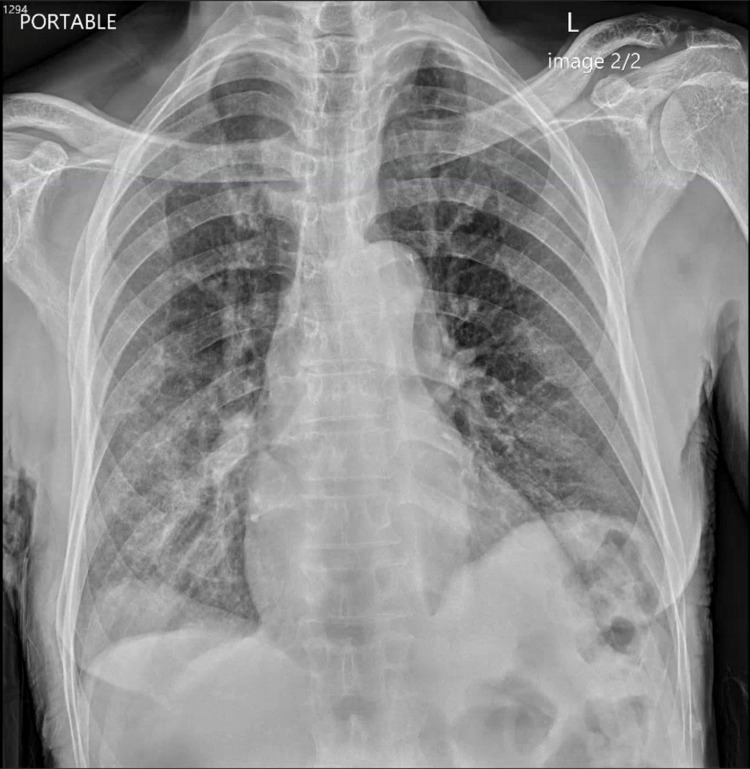
Pseudomonas mendocina is a Gram-negative bacillus from the family Pseudomonadaceae. The first P. mendocina-related infection was reported in 1992. Although a rare cause of infections, P. mendocina has been known to cause severe infections that require intensive treatment. We present the first documented case of urinary tract infection caused by P. mendocina. An 83-year-old male with a past medical history of diabetes, hypertension, coronary artery disease, and prostate cancer with bone metastases, currently being treated with abiraterone and prednisone, presented with subjective fever, fatigue, altered mental status, dysuria, and hematuria of one-week duration. He was found to have a complicated urinary tract infection with an incidental asymptomatic COVID-19 infection on admission. The patient was empirically treated with ceftriaxone and switched to cefepime for broader coverage on day two of hospitalization. Urine culture reported the presence of P. mendocina with resistance only to fluoroquinolones. Ceftriaxone was reinstated. The patient was successfully treated with a seven-day course of ceftriaxone (days 1-3, days 6-7) and cefepime (days 4-5) but continued to remain inpatient for a later symptomatic COVID-19 pneumonia with discharge on day 15. The majority of P. mendocina infections present as skin and soft tissue infections, infective endocarditis, meningitis, and bacteremia. Ours is the first documented case of urinary tract infection caused by P. mendocina, particularly in an immunocompromised COVID-19 patient, and the second to report P. mendocina with resistance to fluoroquinolones. This report contributes to the growing literature regarding P. mendocina-related infections.
Keywords: mendocina; pseudomonas; pseudomonas infections; pseudomonas mendocina; urinary tract infection.
Copyright © 2022, Vo et al.
Conflict of interest statement
The authors have declared that no competing interests exist.
Figures
References
-
- Taxonomy of the aerobic pseudomonads: the properties of the Pseudomonas stutzeri group. Palleroni NJ, Doudoroff M, Stanier RY, Solánes RE, Mandel M. J Gen Microbiol. 1970;60:215–231. - PubMed
-
- Pseudomonas mendocina spondylodiscitis: a case report and literature review. Chi CY, Lai CH, Fung CP, Wang JH. Scand J Infect Dis. 2005;37:950–953. - PubMed
-
- A case of unusual Gram-negative bacilli septic arthritis in an immunocompetent patient. Chiu LQ, Wang W. Singapore Med J. 2013;54:0–8. - PubMed
Publication types
LinkOut - more resources
Full Text Sources
Miscellaneous