


The Effectiveness of Plaza Dancing on Psychological Well-Being and Ill-Being: A Systematic Review and Meta-Analysis
- PMID: 35496162
- PMCID: PMC9051395
- DOI: 10.3389/fpsyg.2022.864327
The Effectiveness of Plaza Dancing on Psychological Well-Being and Ill-Being: A Systematic Review and Meta-Analysis
Abstract
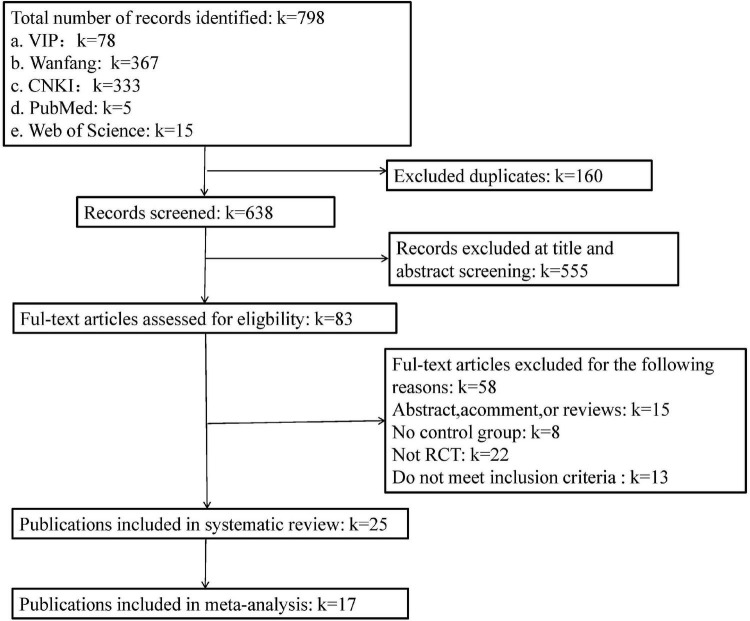
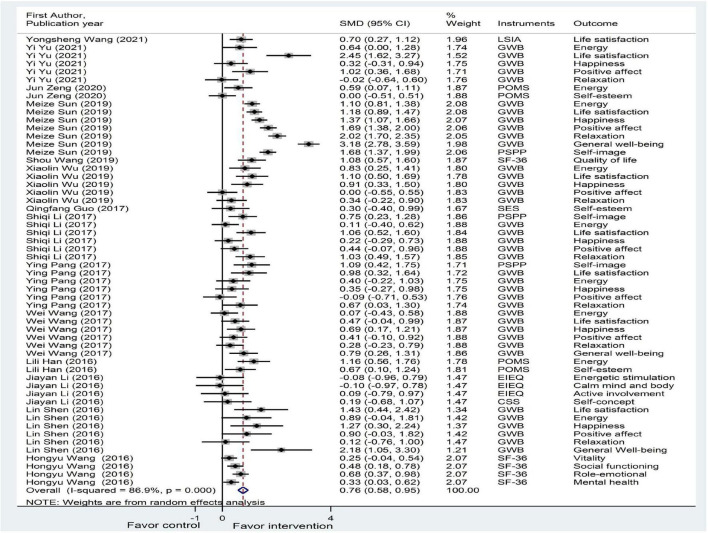
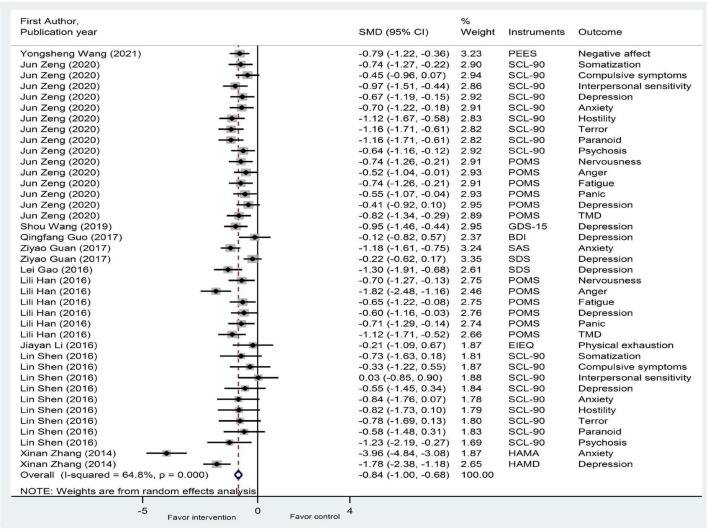
Evidence suggests that participation in plaza dancing may affect mental health. This study for the first time quantified the relationships between plaza dancing and psychological well-being and ill-being. We systematically searched PubMed, Web of Science, CNKI, Wanfang, and VIP to identify relevant studies published from the databases since their inception to July 25, 2021. The standardized mean differences (SMDs) of pre-to-post intervention data were calculated in the meta-analysis. Subgroup and meta-regression analyses were performed to test the potential moderating effects of age, outcome classification, measurement instruments, district, publication year, total sample size, and the duration, frequency, and length of the square dance intervention. A total of 25 original articles met all the eligibility criteria and were included in the review, and 17 studies were included in the meta-analysis. The meta-analysis revealed that plaza dancing improved psychological well-being (pooled SMD = 0.76; 95% CI: 0.58, 0.95; I 2 = 86.9%) and reduced psychological ill-being (pooled SMD = -0.84; 95% CI: -1.00, -0.68; I 2 = 64.8%). The study participants' age and district did not seem to affect the effectiveness of the plaza dancing intervention. The duration and frequency of plaza dancing affected the association between square dance and psychological well-being (duration, β = -0.044; 95% CI: -0.085, -0.004; frequency, β = 0.122; 95% CI: 0.024, 0.221) and psychological ill-being (duration, β = -0.029; 95% CI: -0.040, -0.018; frequency, β = 0.154; 95% CI: 0.030, 0.278). Plaza dancing has a significant positive effect on psychological well-being and psychological ill-being, and the effects are moderated by intervention modality. Generalizing plaza dancing interventions to promote psychological well-being and prevent or treat psychological ill-being is needed.
Systematic review registration: [www.crd.york.ac.uk/prospero], identifier [CRD42021272016].
Keywords: mental health; mental hygiene; plaza dancing; psychological health; square fitness dance.
Copyright © 2022 Bai, Li, Yang, Xie, Zhu, Xu and Bai.
Conflict of interest statement
The authors declare that the research was conducted in the absence of any commercial or financial relationships that could be construed as a potential conflict of interest.
Figures
References
-
- Bai H. (2004). Research on negative psychology and behavior in sports. J. Wuhan Inst. Phys. Educ. 38 173–176.
-
- Barnish M. S., Barran S. M. (2020). A systematic review of active group-based dance, singing, music therapy and theatrical interventions for quality of life, functional communication, speech, motor function and cognitive status in people with Parkinson’s disease. BMC Neurol. 20:371. 10.1186/s12883-020-01938-3 - DOI - PMC - PubMed
Publication types
LinkOut - more resources
Full Text Sources
Miscellaneous
