


The emerging roles of eosinophils: Implications for the targeted treatment of eosinophilic-associated inflammatory conditions
- PMID: 35496822
- PMCID: PMC9040157
- DOI: 10.1016/j.crimmu.2022.03.002
The emerging roles of eosinophils: Implications for the targeted treatment of eosinophilic-associated inflammatory conditions
Abstract
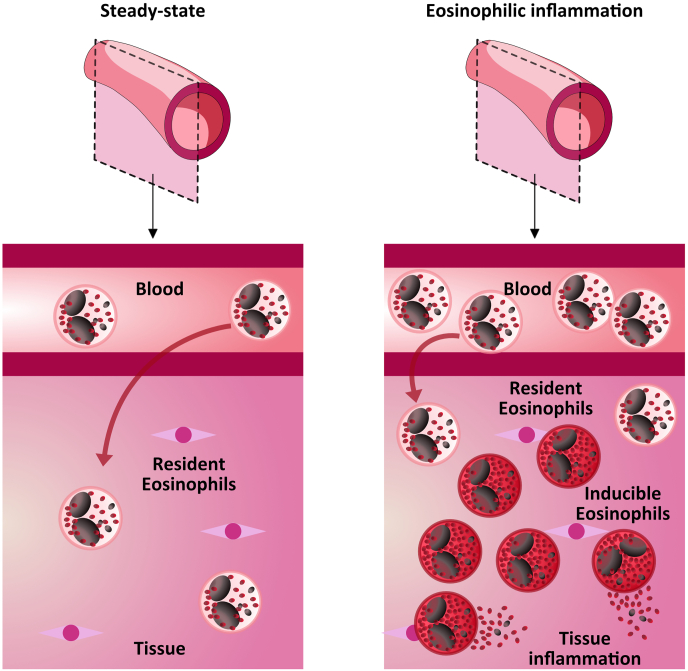
Eosinophils have multiple relevant biological functions, including the maintenance of homeostasis, host defense against infectious agents, innate immunity activities, immune regulation through Th1/Th2 balance, anti-inflammatory, and anti-tumorigenic effects. Eosinophils also have a main role in tissue damage through eosinophil-derived cytotoxic mediators that are involved in eosinophilic inflammation, as documented in Th2-high asthma and other eosinophilic-associated inflammatory conditions. Recent evidence shows that these multiple and apparently conflicting functions may be attributed to the existence of different eosinophil subtypes (i.e.: tissue resident and inducible eosinophils). Therapeutic intervention with biological agents that totally deplete tissues and circulating eosinophils or, vice versa, maintain a minimal proportion of eosinophils, particularly the tissue-resident ones, could therefore have a very different impact on patients, especially when considering the administration of these therapies for prolonged time. In addition, the characterization of the predominant pathway underlying eosinophilic inflammation by surrogate biomarkers (circulating eosinophils, organ-specific eosinophils levels such as eosinophil count in sputum, bronchoalveolar lavage, tissue biopsy; total circulating IgE levels, or the use of FeNO) in the single patient with an eosinophilic-associated inflammatory condition could help in choosing the treatment. These observations are crucial in light of the increasing therapeutic armamentarium effective in modulating eosinophilic inflammation through the inhibition in different, yet complementary ways of eosinophil pathways, such as the interleukin-5 one (with mepolizumab, benralizumab, reslizumab) or the interleukin-4/13 one (with dupilumab and lebrikizumab), in severe T2-high asthma as well as in other systemic eosinophilic associated diseases, such as eosinophilic granulomatosis with polyangiitis and hypereosinophilic syndrome.
Keywords: Asthma; Benralizumab; Dupilumab; Eosinophilic granulomatosis with polyangiitis; Eosinophils; Homeostasis; Hypereosinophilic syndrome; Inflammation; Mepolizumab; Reslizumab; Type 2 phenotype.
© 2022 The Authors.
Conflict of interest statement
The authors declare that they have no known competing financial interests or personal relationships that could have appeared to influence the work reported in this paper.
Figures
References
-
- Abdala-Valencia H., Loffredo L., Misharin A., Berdnikovs S. Phenotypic plasticity and targeting of Siglec-F high CD 11clow eosinophils to the airway in a murine model of asthma. Allergy. 2016;71:267–271. - PubMed
-
- Adamko D.J., Yost B.L., Gleich G.J., Fryer A.D., Jacoby D.B. Ovalbumin sensitization changes the inflammatory response to subsequent parainfluenza infection. Eosinophils mediate airway hyperresponsiveness, m(2) muscarinic receptor dysfunction, and antiviral effects. J. Exp. Med. 1999 Nov;190(10):1465–1478. - PMC - PubMed
-
- Amelink M., de Groot J.C., de Nijs S.B., et al. Severe adult-onset asthma: a distinct phenotype. J. Allergy Clin. Immunol. 2013;132:336–341. - PubMed
Publication types
LinkOut - more resources
Full Text Sources
Other Literature Sources
