


Rural-urban and gender differences in metabolic syndrome in the aging population from southern India: Two parallel, prospective cohort studies
- PMID: 35497067
- PMCID: PMC9044001
- DOI: 10.1016/j.eclinm.2022.101395
Rural-urban and gender differences in metabolic syndrome in the aging population from southern India: Two parallel, prospective cohort studies
Abstract
Background: Despite the growing evidence of metabolic syndrome as a major risk factor for cardiovascular and cerebrovascular disease, there are limited studies from India on its prevalence, especially in the aging population. We aimed to estimate the prevalence of metabolic syndrome and associated comorbidities in two prospective, aging cohorts from rural and urban India.
Methods: In these two parallel, prospective, aging (≥ 45 years) cohorts, the samples included 2171 people from rural India (Srinivaspura Aging, Neuro Senescence and COGnition, SANSCOG cohort; April 23, 2018 to Sept 25, 2021) and 332 people from urban India (Tata Longitudinal Study on Aging, TLSA cohort; July 8, 2015 to Oct 23, 2021). Using cross-sectional data from baseline clinical and biochemical assessments, we calculated metabolic syndrome prevalence using two well established criteria, namely consensus criteria and National Cholesterol Education Program - Adult Treatment Panel III (NCEP-ATP III) criteria; further, rural-urban, gender, and age-wise differences were compared.
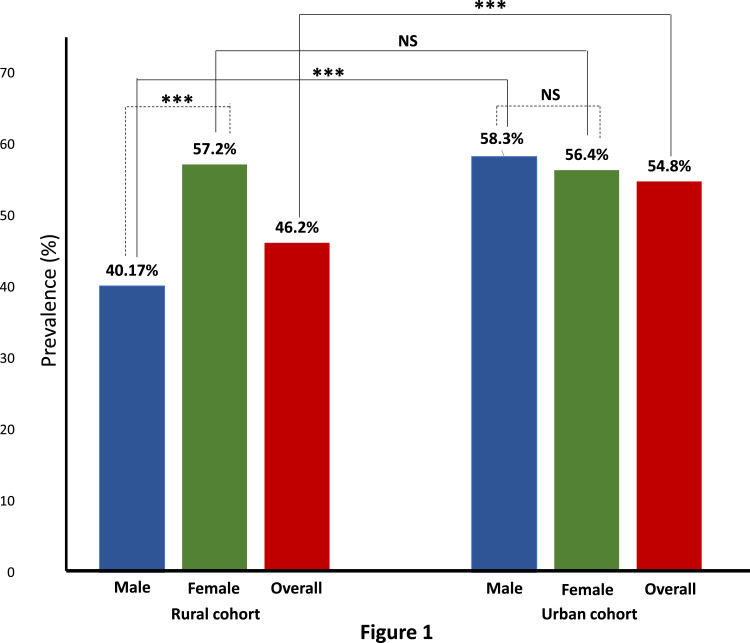
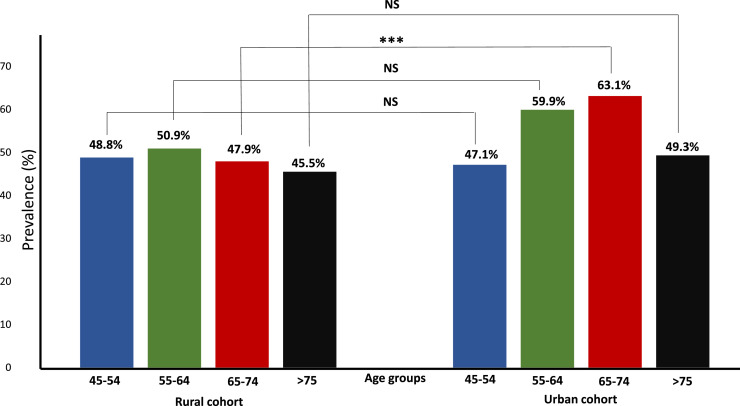
Findings: Proportions of metabolic syndrome were 46.2 and 54.8% as per consensus criteria in rural and urban participants, respectively; corresponding numbers using NCEP-ATP III criteria were 40.3 and 45.1%. Rural-dwelling older adults had a significantly lesser prevalence of all individual metabolic syndrome parameters except impaired triglycerides and high-density lipoprotein levels. Rural women had a significantly higher prevalence of metabolic syndrome than rural men, whereas there was no significant difference among urban participants. We did not observe any consistent age-wise trend when comparing both cohorts. There was high burden of comorbidities among both groups, mostly undiagnosed in rural participants.
Interpretation: Roughly one in two older adults had metabolic syndrome, urban significantly more than rural, reaching an alarming 63.1% among urban participants aged 65-74 years. The very high prevalence of undiagnosed co-morbidities among rural adults is extremely concerning, calling for urgent public health measures in this marginalised and health-disparate population.
Funding: SANSCOG study is funded through the Centre for Brain Research (CBR), Indian Institute of Science (IISc) by Pratiksha Trust, the philanthropic arm of Mr. Kris Gopalakrishnan. TLSA is funded by Tata Trusts.
Keywords: Aging; Cohort; Gender difference; India; Metabolic syndrome; Prevalence; Rural; Urban.
© 2022 The Authors.
Conflict of interest statement
We declare no competing interests.
Figures
References
-
- Alberti K.G., Zimmet P.Z. Definition, diagnosis and classification of diabetes mellitus and its complications. Part 1: diagnosis and classification of diabetes mellitus provisional report of a WHO consultation. Diabet Med. 1998;15:539–553. - PubMed
-
- Alberti K.G.M.M., Eckel R.H., Grundy S.M., et al. Harmonizing the metabolic syndrome: a joint interim statement of the international diabetes federation task force on epidemiology and prevention; national heart, lung, and blood institute; American heart association; world heart federation; international. Circulation. 2009;120:1640–1645. - PubMed
-
- Ford E.S. Risks for all-cause mortality, cardiovascular disease, and diabetes associated with the metabolic syndrome: a summary of the evidence. Diabetes Care. 2005;28:1769–1778. - PubMed
-
- Malik S., Wong D.N, Franklin S.S, et al. Impact of the metabolic syndrome on mortality from coronary heart disease, cardiovascular disease, and all causes in United States adults. Circulation. 2004;110:1245–1250. - PubMed
-
- Lakka H.M., Laaksonen D, Lakka T.A., et al. The metabolic syndrome and total and cardiovascular disease mortality in middle-aged men. J Am Med Assoc. 2002;288:2709–2716. - PubMed
LinkOut - more resources
Full Text Sources
Miscellaneous
