


Optimizing daylight utilization of flat skylights in heritage buildings
- PMID: 35499058
- PMCID: PMC9039694
- DOI: 10.1016/j.jare.2021.06.005
Optimizing daylight utilization of flat skylights in heritage buildings
Abstract
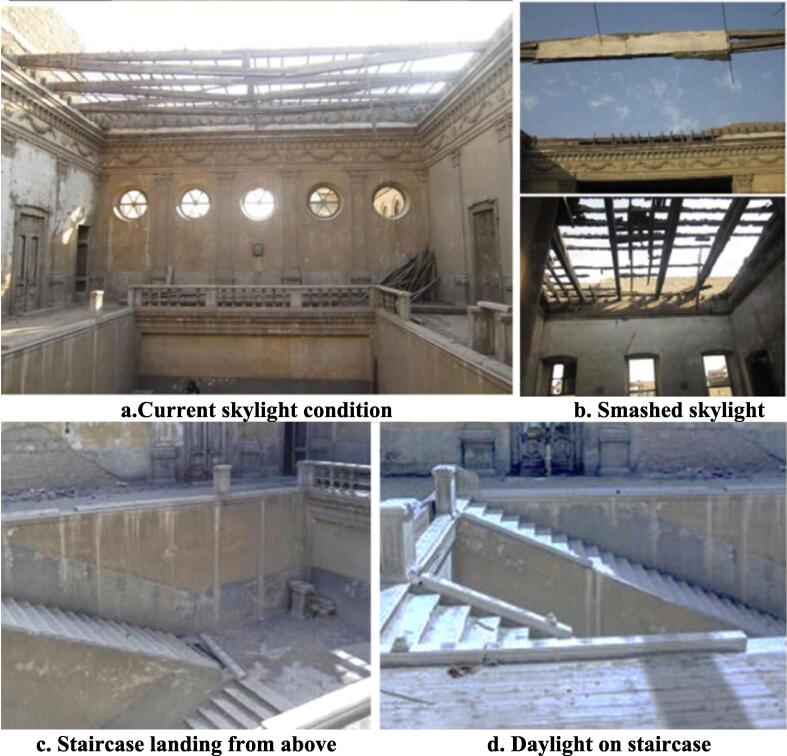
Introduction: Adapted reuse in old historical buildings has been a real challenge since the state of deterioration is usually found severe, and suggested retrofitting is applied with high delicacy to preserve the building originality. Additionally, on altering the potential users' activity, special considerations are required to fulfill the new needs. Daylight in historical buildings has a special significance in conceiving the massive artistic content within the interior spaces, in providing visual comfort for users, and affecting the total energy performance.
Objectives: The main goal is to meet the new daylight requirements in heritage building spaces, and to rely on relaxing daylight instead of artificial light sources during the day.
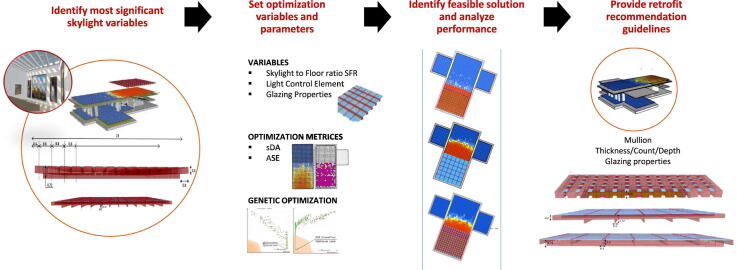
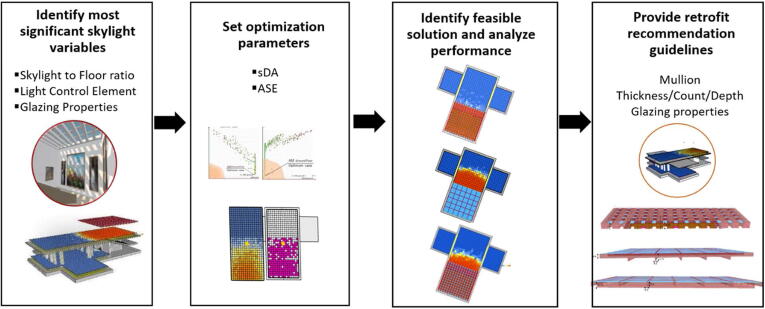
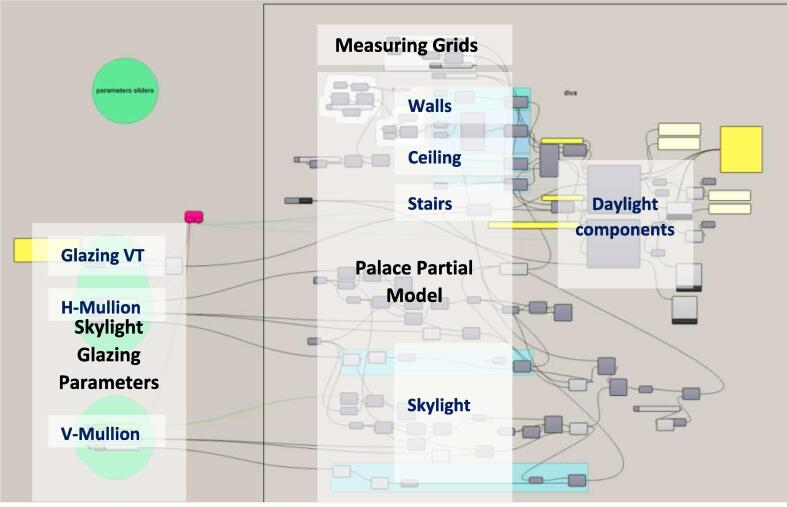
Methods: The research is implemented in Tosson Palace, a historical palace in Egypt, where a top-lit space's daylight performance is assessed using Rhino + Grasshopper's Diva package, then the skylight is parametrically configured to optimize daylighting conditions using Radiance, and Daysim engines in high intensity solar climate. Optimization of skylight glazing technologies and skylight size is conducted by changing optimization parameters including the number the two perpendicular mullions grid, and mullions' depth, which also acts as a shading element. These parameters are genetically optimized using a multi-objective octopus plugin and the optimized configuration is evaluated using LEED v4.1 in Spatial Daylight Autonomy (sDA), and Annual Sun Exposure (ASE) criteria that show both the daylight adequacy, and the comfortable daylight exposure percentages in the skylight covered space.
Results: The outcomes offer guidance for heritage adapted reuse in hot climatic conditions with minimum design interventions to meet the original design and provide potential users' comfort conditions. Furthermore, enhancement of both visual, and thermal conditions through the skylight configurations is to be studied.
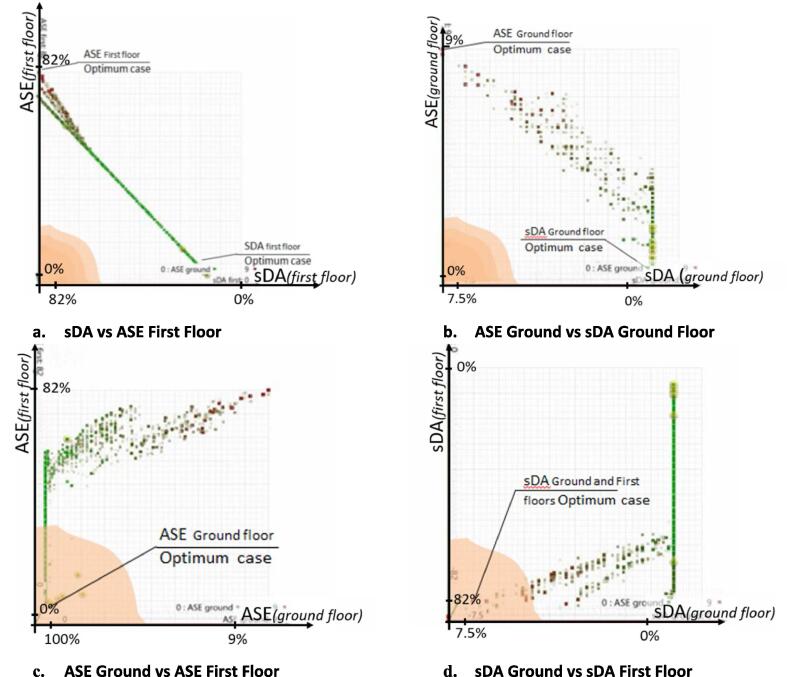
Conclusion: The selected optimum case succeeded in compromising the assessing metrics such that ASE was reduced by 38% from the base-case, avoiding unpleasant direct daylight, and providing protection for interior artifacts from sunlight and achieving a moderate uniform daylight distribution on both affected floors levels.
Keywords: Daylighting; Genetic algorithms; Heritage Buildings; Optimization; Skylight; Visual comfort.
© 2022 The Authors. Published by Elsevier B.V. on behalf of Cairo University.
Conflict of interest statement
The authors declare that they have no known competing financial interests or personal relationships that could have appeared to influence the work reported in this paper.
Figures
References
-
- DeSilvey C. U of Minnesota Press; 2017. Curated decay: Heritage beyond saving.
-
- Yazdani Mehr S. Analysis of 19th and 20th century conservation key theories in relation to contemporary adaptive reuse of heritage buildings. Heritage. 2019;2(1):920–937.
-
- Sibley M.E.T.E.R. Let there be light! Investigating vernacular daylighting in Moroccan heritage hammams for rehabilitation, benchmarking and energy saving. Sustainability. 2018;10(11):3984.
-
- Eltaweel A., Su Y. Controlling Venetian blinds based on parametric design; via implementing Grasshopper’s plugins: A Case study of an office building in Cairo. Energy Build. 2017;139:31–43.
-
- Fang Y and Cho, S. Sensitivity analysis of skylight and clerestory design on energy and daylight performance of retail building. In Proceedings of the 2018 Building Performance Analysis Conference and SimBuild Co-Organized by ASHRAE and IBPSA-USA, Chicago, IL, USA 2018; 26-28.
Publication types
MeSH terms
LinkOut - more resources
Full Text Sources
