Review
. 2022 May;54(5):553-566.
doi: 10.1038/s12276-022-00765-5. Epub 2022 May 2.

Functional and pathologic association of aminoacyl-tRNA synthetases with cancer

Affiliations
Review

Functional and pathologic association of aminoacyl-tRNA synthetases with cancer

Yulseung Sung et al. Exp Mol Med. 2022 May.

Abstract

Although key tumorigenic and tumor-suppressive factors have been unveiled over the last several decades, cancer remains the most life-threatening disease. Multiomic analyses of patient samples and an in-depth understanding of tumorigenic processes have rapidly revealed unexpected pathologic associations of new cellular factors previously overlooked in cancer biology. In this regard, the newly discovered activities of human aminoacyl-tRNA synthases (ARSs) deserve attention not only for their pathological significance in tumorigenesis but also regarding diagnostic and therapeutic implications. ARSs are not only essential enzymes covalently linking substrate amino acids to cognate tRNAs for protein synthesis but also function as regulators of cellular processes by sensing different cellular conditions. With their catalytic role in protein synthesis and their regulatory role in homeostasis, functional alterations or dysregulation of ARSs might be pathologically associated with tumorigenesis. This review focuses on the potential implications of ARS genes and proteins in different aspects of cancer based on various bioinformatic analyses and experimental data. We also review their diverse activities involving extracellular secretion, protein-protein interactions, and amino acid sensing, which are related to cancers. The newly discovered cancer-related activities of ARSs are expected to provide new opportunities for detecting, preventing and curing cancers.


Conflict of interest statement

The authors declare no competing interests.

Figures
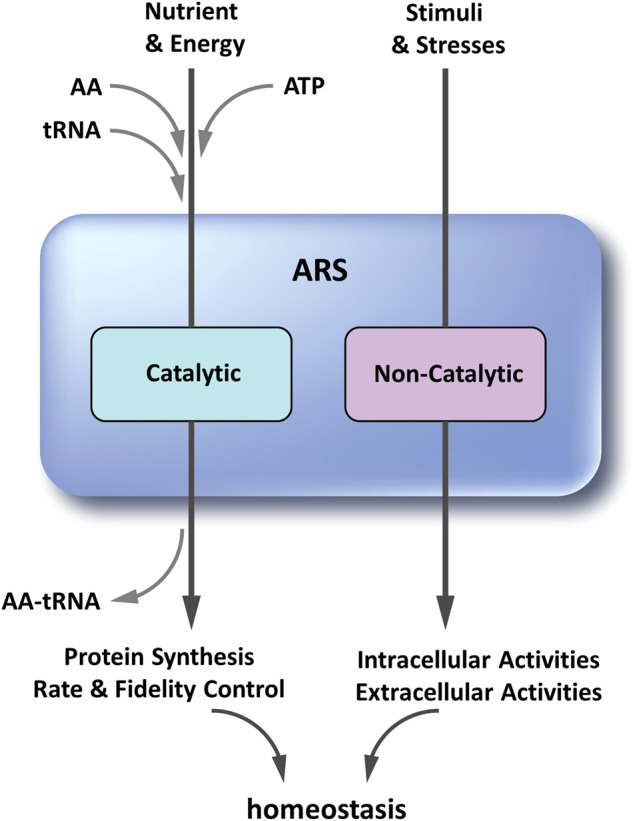
Fig. 1
Fig. 1. Dual activities of ARSs for system homeostasis.
The catalytic and noncatalytic functions of ARSs are important for homeostasis. The catalytic function of ARS is to produce aminoacyl-tRNAs from amino acids and ATP for protein synthesis. Their catalytic activities can be controlled to adjust the protein synthesis rate and fidelity in coordination with nutrients (particularly amino acids) and energy status. In another axis, ARSs can sense various stimuli and stresses and mediate cellular responses via unique extracellular and intracellular activities. These two lines of activities cooperatively function in system homeostasis.
Fig. 2
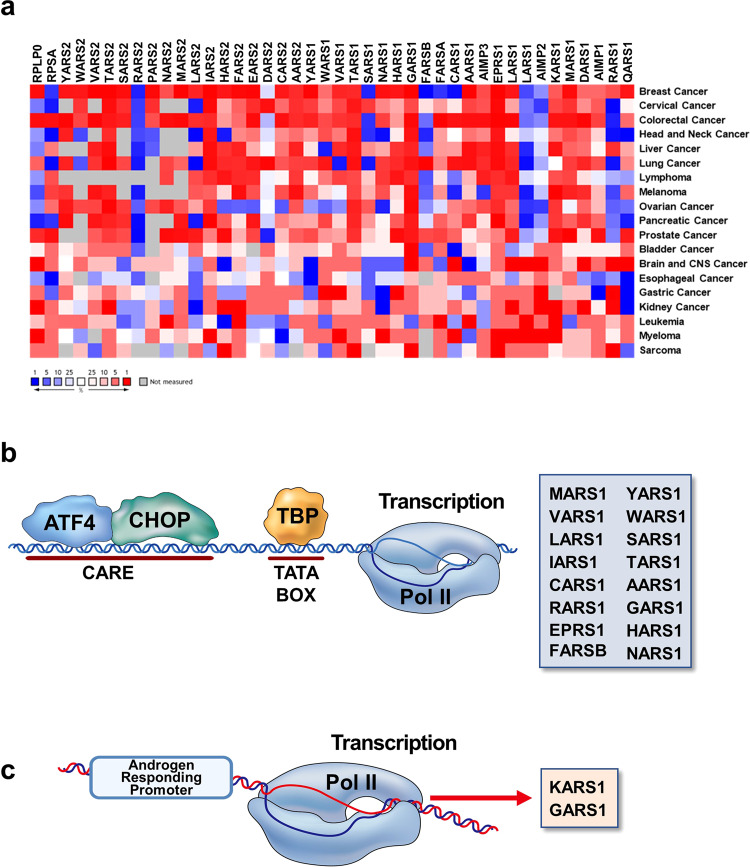
Fig. 2. ARS gene expression in cancer.
a Heatmap of ARS and ribosomal subunit gene expression in different cancers. Gene expression information was obtained from TCGA and analyzed using Oncomine Data Tools. The gene expression data were extracted by ordering the genes according to the p values from the whole gene pool across the respective analysis. The corresponding median gene ranks are displayed in a color gradient from overexpression (red) to underexpression (blue). No cancer-dependent expression change is indicated with white color. XARS, aminoacyl-tRNA synthetase for amino acid “X”, 1 and 2 represent the cytosolic and mitochondrial forms, respectively. b ATF4-mediated transcriptional control of ARSs. Interaction of CARE with ATF4 constitutes the initiating step of ARS gene expression, followed by assembly of CHOP and TBP. When the complete transcription machinery has assembled, RNA polymerase II is recruited and initiates ARS gene expression. c Promoters with androgen response elements are involved in KARS1 and GARS1 transcription, which may be involved in endocrine cancers.
Fig. 3
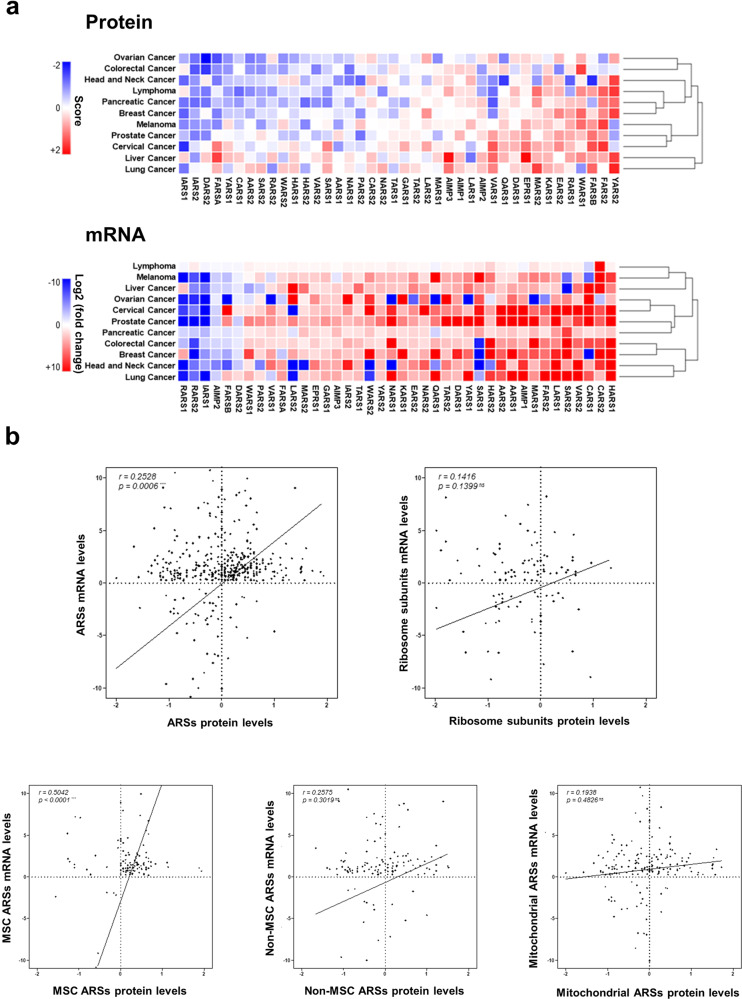
Fig. 3. Comparison of cancer-associated ARS gene expression and protein levels.
a The heatmap of cancer-associated ARS protein levels was generated with data extracted from The Human Protein Atlas (upper). The protein levels of each ARS are represented as a score that ranges from −2 to +2. The Human Protein Atlas provides information about protein levels based on the staining intensity in IHC images, which are classified into not detected, lowly detected, moderately detected and highly detected. We scored the staining intensities (not detected (−1), lowly detected (−1/3), moderately detected (+1/3) and highly detected (+1)) and averaged the score in normal and cancer tissues. Then, cancer-associated ARS protein levels were calculated by subtracting the normal score from the corresponding cancer score. A heatmap of the cancer-associated ARS mRNA levels was also generated with data extracted from TCGA (lower). The log2 of the fold change of each ARS mRNA in cancer tissue compared to normal tissue is displayed. Blue indicates low detection, red high detection, and white moderate detection in each cancer type. Cancer types and genes are hierarchically clustered based on the Pearson correlation score and average linkage (dendrogram shown for cancer types). b Correlation of the cancer-associated mRNA and protein levels of ARSs (top-left panel) and ribosome subunit proteins (top-right panel) is compared. The plot for ARSs is further divided into three different plots of MSC, non-MSC and mitochondrial ARSs (bottom panel). For analysis of ARSs, all 37 ARS types were investigated. For analysis of ribosome subunits, RPSA, RPS5, RPS6, RPS13, RPS20, RPLP0, RPL5, RLP8, RPL9, and RPL10A were investigated. Levels of protein and mRNA were calculated using the same method as in Fig. 4a. Cancer types shared by both databases were utilized for the correlation plot. The coefficient of correlation (r-value) and the significance level (p-value) were calculated via GraphPad PrismX. The coefficient of correlation and significance level were only statistically significant for ARSs.
Fig. 4
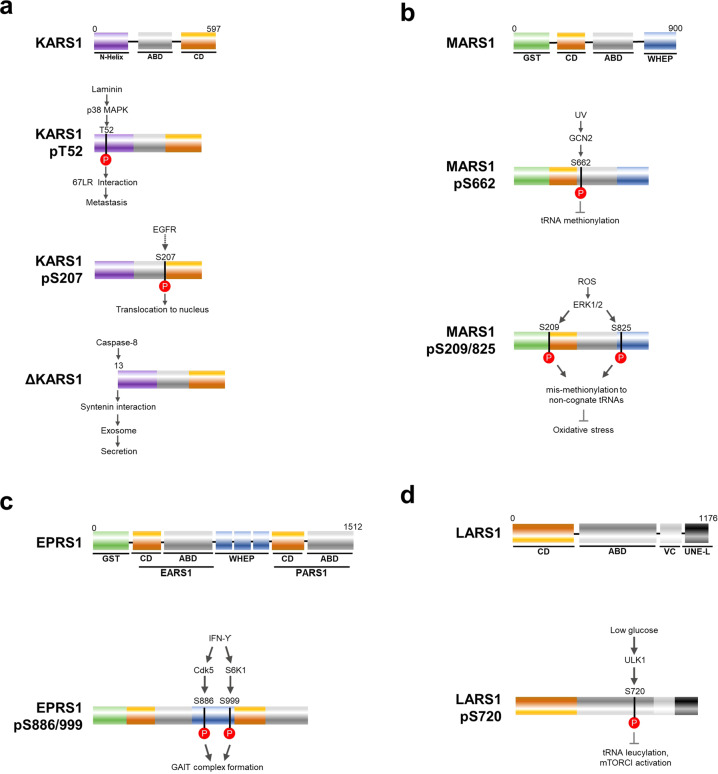
Fig. 4. Posttranslational modification of ARSs in cancer.
a Full-length KARS1 consists of the N-Helix, ABD and CD Domains. KARS1 is modified to three different forms by different kinds of upstream enzymes. First, KARS1 is phosphorylated at T52 by p38 MAPK in the presence of laminin. KARS1 pT52 is translocated to the plasma membrane for interaction with 67LR and then promotes metastasis. Second, KARS1 is phosphorylated at S207 upon EGFR signaling pathway activation. KARS1 pS207 is translocated to the nucleus and appears to be associated with disease-free survival of NSCLC. Third, the N-terminal 12 amino acid KARS1 is cleaved by caspase-8 to produce ΔKARS1. ΔKARS1 is secreted into the extracellular space in exosomes via interaction with syntenin. b Full-length MARS1 consists of GST, CD, ABD and WHEP domains. MARS1 is modified to two different forms of MARS1 in response to various input signals. Upon UV irradiation, MARS1 is phosphorylated at S662 by GCN2. MARS1 pS662 has a decreased capability to methionylate tRNAs, resulting in downregulation of global translation. In contrast, MARS1 is doubly phosphorylated at S209 and S825 by ERK1/2 in response to oxidative stress. MARS1 pS209/825 shows increased mismethionylation to noncognate tRNAs due to an increase in Met residues in proteins, which contribute to reducing ROS levels. c Upon stimulation with IFN-γ, EPRS1 is phosphorylated at S886 and S999 by CDK5 and S6K1, respectively. EPRS1 pS886/999 forms the GAIT complex to regulate translation of GAIT elements. d LARS1 is phosphorylated at S720 by ULK1 in response to glucose starvation. LARS1 S720 shows decreased leucine binding capability, resulting in decreased tRNA leucylation and mTORC1 stimulation. CD, catalytic domain; ABD, anticodon-binding domain; ROS, reactive oxygen species.
Fig. 5
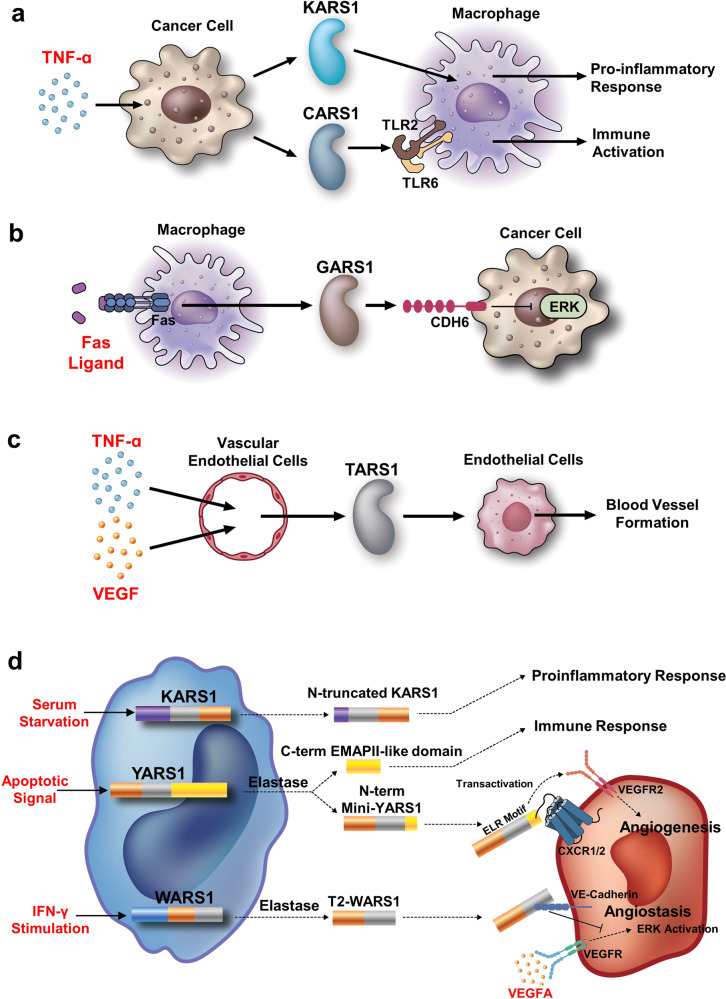
Fig. 5. Secreted ARSs function in cancer.
a KARS1 and CARS1 are secreted from cancer cells by TNF-α signaling to induce immune responses via macrophages. CARS1 appears to function via TLR2/6; KARS1’s functional receptor has yet to be identified. b Upon stimulation with Fas, GARS1 is secreted from macrophages and induces cancer cell death via CCDH6. Binding of GARS1 to CDH6 releases PP2A from CDH6 to deactivate the ERK signaling pathway required for cancer cell survival. c Vascular endothelial cells secrete TARS1 upon TNF-α or VEGF stimulation, promoting blood vessel formation. d Proteolytic cleavage of ARSs induces secretion or activation of their extracellular activities. The N-truncated KARS1 generated by caspase-8 is secreted upon serum starvation to induce a proinflammatory response. Upon apoptotic signaling, YARS1 is secreted and cleaved via elastase to produce the C-terminal EMAP II-like domain and N-terminal mini-YARS1. The EMAP II-like domain activates the immune response; mini-YARS1 binds to CXCR1/2 through its ELR motif for angiogenesis. Elastase cleaves WARS1 to produce T2-WARS1 upon IFN-ɣ stimulation. T2-WARS1 binds to VE-cadherin, leading to inhibition of VEGFA-activated VEGFR signal transduction.
Fig. 6
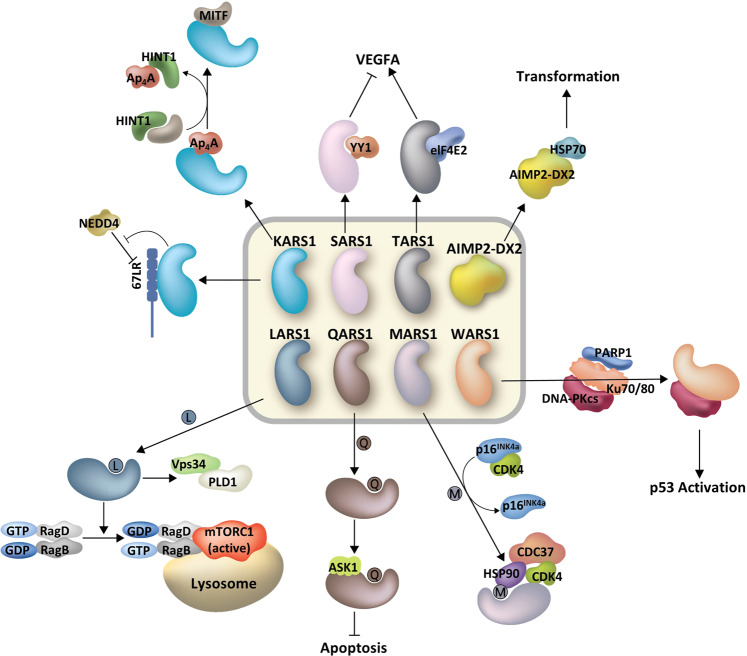
Fig. 6. Intracellular signaling functions of ARSs via diverse protein–protein interactions.
ARSs mediate diverse intracellular and extracellular signaling pathways by protein–protein interactions, some of which are further controlled by amino acid sensing and by generating second messengers such as diadenosine polyphosphates. KARS1 inhibits NEDD4 and stabilizes 67LR through its interaction with 67LR. KARS1-mediated Ap4A production increases the transcriptional activity of MITF by liberating HINT1. SARS1 inhibits VEGFA transcription through its interaction with YY1; the TARS1-eIF4E2 complex increases translation initiation of VEGFA. Oncogenic AIMP2-DX2 is stabilized by its association with HSP70, leading to cell transformation. LARS1 mediates mTORC1 activation through leucine-dependent interactions with either RagD or Vps34. QARS1 decreases apoptosis through glutamine-dependent interactions with ASK1. MARS1 competes with p16INK4a for interaction with CDK4. Interaction between MARS1 and CDK4 is possibly dependent on methionine, and the MARS1-CDK4-HSP90-CDC37 complex increases the stability of CDK4. WARS1 mediates PARylation of DNA-PKcs, leading to p53 activation. Association of WARS1, PARP-1, and DNA-PKcs might also be dependent on tryptophan.
Fig. 7
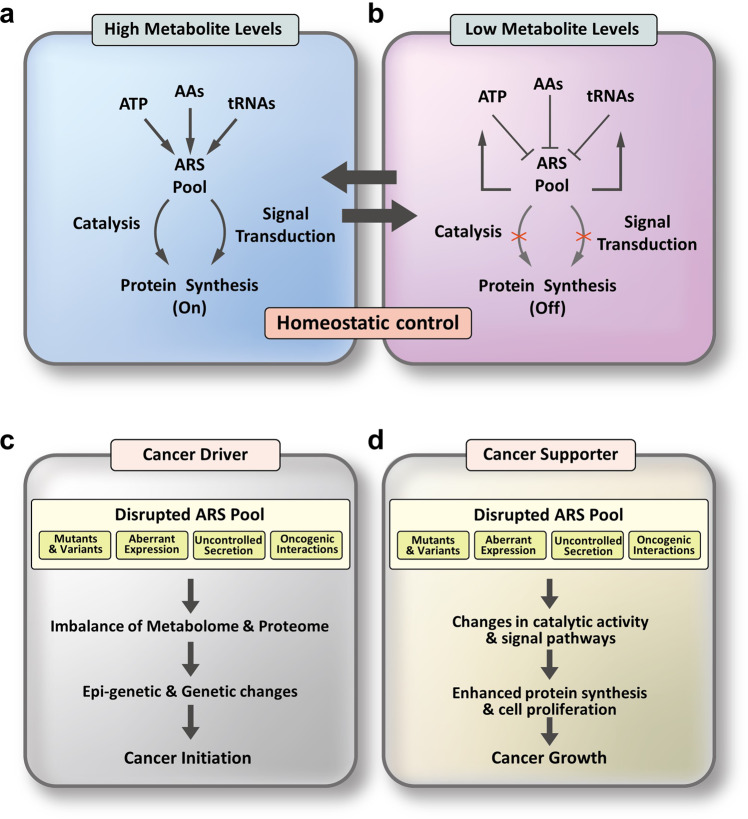
Fig. 7. Potential role of ARSs in the pathogenesis of cancer.
a, b ARSs may regulate protein synthesis by integrating information about metabolite levels. In cells with high metabolite levels, ARSs increase protein synthesis through catalytic and signal transduction pathways; under low metabolite conditions, ARSs decrease protein synthesis by inhibiting catalytic and signal transduction pathways to achieve metabolite balance through metabolic reprogramming. c, d ARS may function as either a driver or supporter in tumor development. Disruption of the ARS pool by mutation, aberrant expression, uncontrolled secretion and oncogenic interaction results in an imbalance of the metabolome and proteome, which can trigger epigenetic and genetic changes for cancer initiation. In addition, a disrupted ARS pool supports cancer growth by enhancing protein synthesis and cell proliferation.

Similar articles

Cited by

References

    1. Kwon NH, Fox PL, Kim S. Aminoacyl-tRNA synthetases as therapeutic targets. Nat. Rev. Drug Discov. 2019;18:629–650. doi: 10.1038/s41573-019-0026-3. - DOI - PubMed
    1. Jia J, Arif A, Ray PS, Fox PL. WHEP domains direct noncanonical function of glutamyl-Prolyl tRNA synthetase in translational control of gene expression. Mol. Cell. 2008;29:679–690. doi: 10.1016/j.molcel.2008.01.010. - DOI - PMC - PubMed
    1. Kim S, Landro JA, Gale AJ, Schimmel P. C-terminal peptide appendix in a class I tRNA synthetase needed for acceptor-helix contacts and microhelix aminoacylation. Biochemistry. 1993;32:13026–13031. doi: 10.1021/bi00211a011. - DOI - PubMed
    1. Ahn H-C, Kim S, Lee B-J. Solution structure and p43 binding of the p38 leucine zipper motif: coiled-coil interactions mediate the association between p38 and p43. FEBS Lett. 2003;542:119–124. doi: 10.1016/S0014-5793(03)00362-4. - DOI - PubMed
    1. Csank C, Martindale DW. Isoleucyl-tRNA synthetase from the ciliated protozoan Tetrahymena thermophila. DNA sequence, gene regulation, and leucine zipper motifs. J. Biol. Chem. 1992;267:4592–4599. doi: 10.1016/S0021-9258(18)42874-8. - DOI - PubMed

Publication types

MeSH terms