


A meta-analysis of conditioned fear generalization in anxiety-related disorders
- PMID: 35501429
- PMCID: PMC9283469
- DOI: 10.1038/s41386-022-01332-2
A meta-analysis of conditioned fear generalization in anxiety-related disorders
Abstract
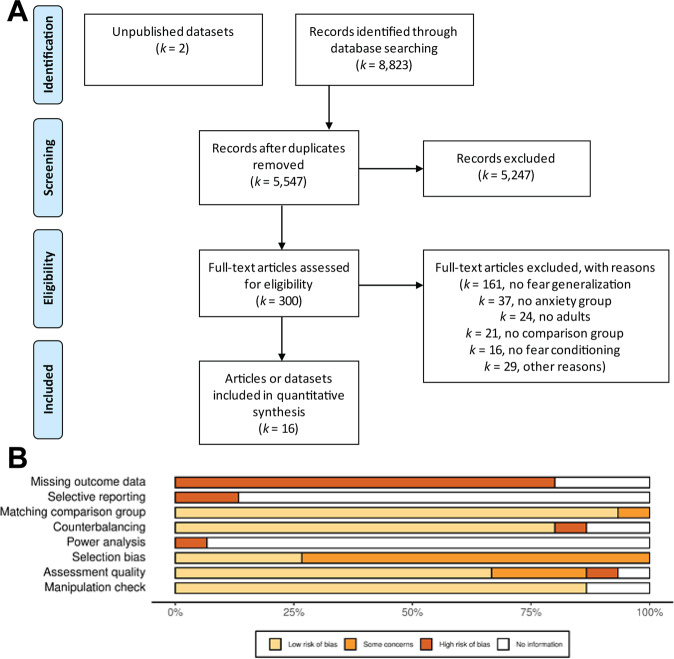
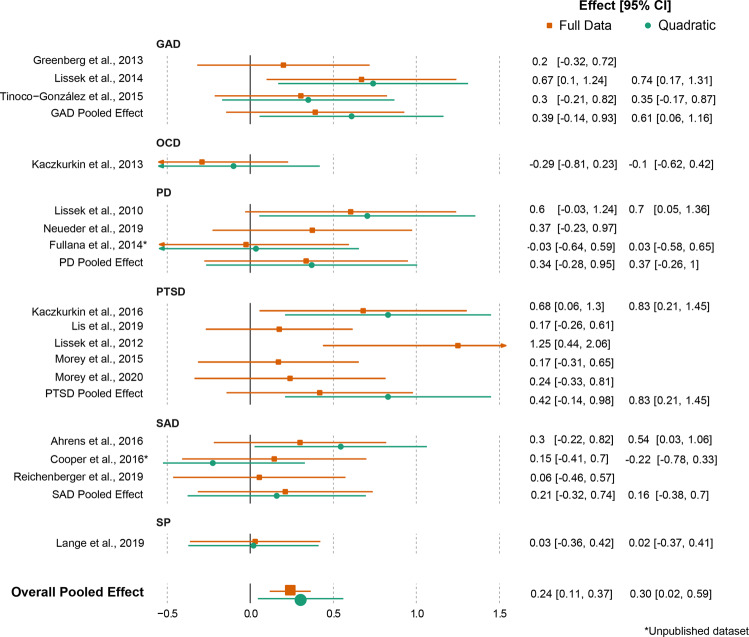
Generalization of conditioned fear is adaptive in some situations but maladaptive when fear excessively generalizes to innocuous stimuli with incidental resemblance to a genuine threat cue. Recently, empirical interest in fear generalization as a transdiagnostic explanatory mechanism underlying anxiety-related disorders has accelerated. As there are now several studies of fear generalization across multiple types of anxiety-related disorders, the authors conducted a meta-analysis of studies reporting behavioral measures (subjective ratings and psychophysiological indices) of fear generalization in anxiety-related disorder vs. comparison groups. We conducted systematic searches of electronic databases (conducted from January-October 2020) for fear generalization studies involving anxiety-related disorder groups or subclinical analog groups. A total of 300 records were full-text screened and two unpublished datasets were obtained, yielding 16 studies reporting behavioral fear generalization measures. Random-effects meta-analytic models and meta-regressions were applied to the identified data. Fear generalization was significantly heightened in anxiety-related disorder participants (N = 439) relative to comparison participants (N = 428). We did not identify any significant clinical, sample, or methodological moderators. Heightened fear generalization is quantitatively supported as distinguishing anxiety-related disorder groups from comparison groups. Evidence suggests this effect is transdiagnostic, relatively robust to experimental or sample parameters, and that generalization paradigms are a well-supported framework for neurobehavioral investigations of learning and emotion in anxiety-related disorders. We discuss these findings in the context of prior fear conditioning meta-analyses, past neuroimaging investigations of fear generalization in anxiety-related disorders, and future directions and challenges for the field.
© 2022. The Author(s), under exclusive licence to American College of Neuropsychopharmacology.
Conflict of interest statement
CBN has received research support from NIH; he has served as a consultant for ANeuroTech (division of Anima BV), Signant Health, Magstim, Inc., Navitor Pharmaceuticals, Inc., Intra-Cellular Therapies, Inc., EMA Wellness, Acadia Pharmaceuticals, Sage, BioXcel Therapeutics, Silo Pharma, XW Pharma, Neuritek, Engrail Therapeutics, Corcept Therapeutics Pharmaceuticals Company, SK Life Science, Alfasigma, Pasithea Therapeutic Corp., EcoR1; he has served on scientific advisory boards for the ANeuroTech (division of Anima BV), Brain and Behavior Research Foundation (BBRF), Anxiety and Depression Association of America (ADAA), Skyland Trail, Signant Health, Laureate Institute for Brain Research (LIBR), Inc., Magnolia CNS, Heading Health, TRUUST Neuroimaging, Pasithea Therapeutic Corp.; he is a stockholder in Xhale, Seattle Genetics, Antares, BI Gen Holdings, Inc., Corcept Therapeutics Pharmaceuticals Company, EMA Wellness, TRUUST Neuroimaging; he serves on the board of directors for Gratitude America, ADAA, Xhale Smart, Inc., Lucy Scientific Discovery, Inc; and he holds patents on a method and devices for transdermal delivery of lithium (patent 6,375,990B1) and a method of assessing antidepressant drug therapy via transport inhibition of monoamine neurotransmitters by ex vivo assay (patent 7,148,027B2). The other authors report no financial relationships with commercial interests.
Figures
References
Publication types
MeSH terms
Grants and funding
LinkOut - more resources
Full Text Sources
Research Materials
Miscellaneous
