


Direct conversion of cellulose to L-lactic acid by a novel thermophilic Caldicellulosiruptor strain
- PMID: 35501875
- PMCID: PMC9063331
- DOI: 10.1186/s13068-022-02137-7
Direct conversion of cellulose to L-lactic acid by a novel thermophilic Caldicellulosiruptor strain
Abstract
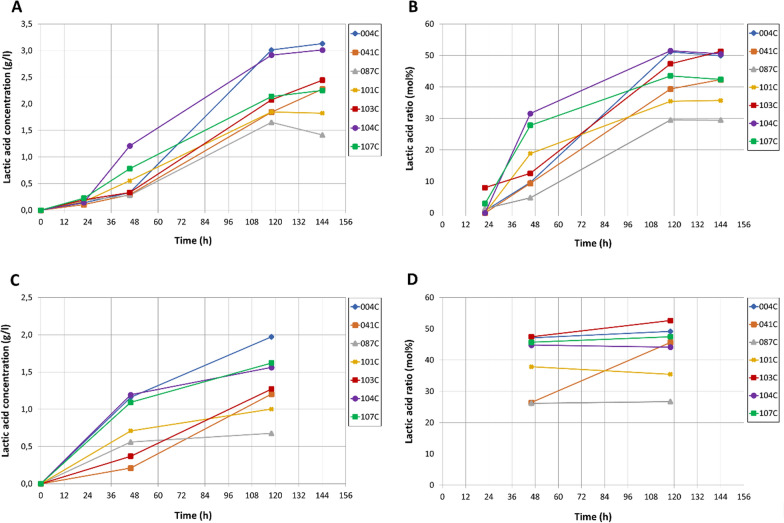
Background: Consolidated bioprocessing (CBP) of lignocellulosic biomass to L-lactic acid using thermophilic cellulolytic/hemicellulolytic bacteria provides a promising solution for efficient lignocellulose conversion without the need for additional cellulolytic/hemicellulolytic enzymes. Most studies on the mesophilic and thermophilic CBP of lignocellulose to lactic acid concentrate on cultivation of non-cellulolytic mesophilic and thermophilic bacteria at temperatures of 30-55 °C with external addition of cellulases/hemicellulases for saccharification of substrates.
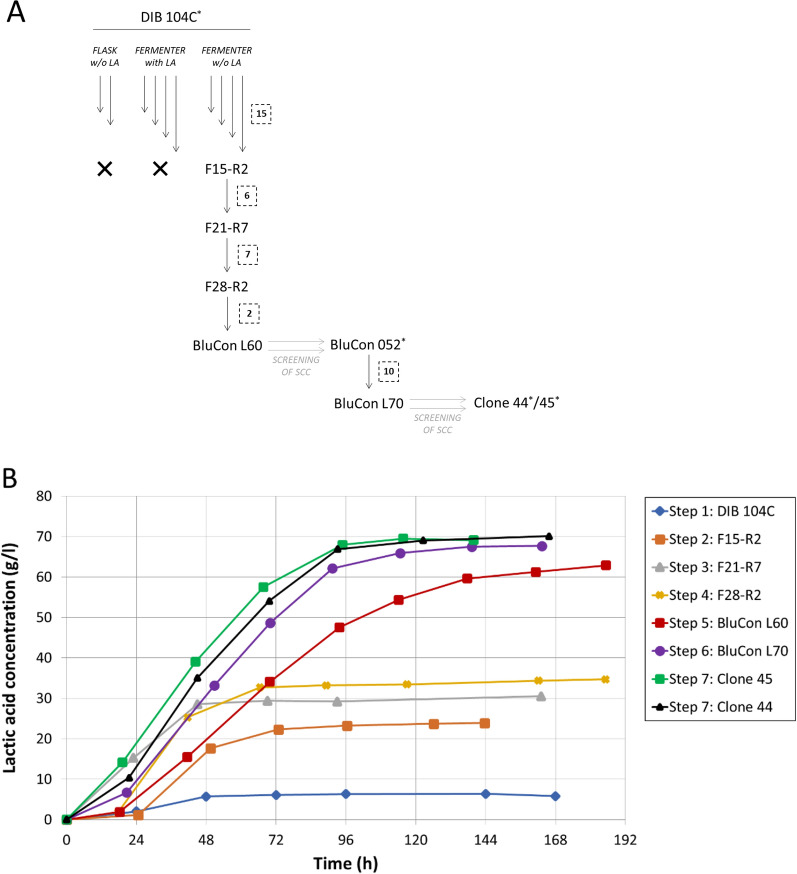
Results: L-Lactic acid was generated by fermenting microcrystalline cellulose or lignocellulosic substrates with a novel thermophilic anaerobic bacterium Caldicellulosiruptor sp. DIB 104C without adding externally produced cellulolytic/hemicellulolytic enzymes. Selection of this novel bacterium strain for lactic acid production is described as well as the adaptive evolution towards increasing the L-lactic acid concentration from 6 to 70 g/l on microcrystalline cellulose. The evolved strains grown on microcrystalline cellulose show a maximum lactic acid production rate of 1.0 g/l*h and a lactic acid ratio in the total organic fermentation products of 96 wt%. The enantiomeric purity of the L-lactic acid generated is 99.4%. In addition, the lactic acid production by these strains on several other types of cellulose and lignocellulosic feedstocks is also reported.
Conclusions: The evolved strains originating from Caldicellulosiruptor sp. DIB 104C were capable of producing unexpectedly large amounts of L-lactic acid from microcrystalline cellulose in fermenters. These strains produce L-lactic acid also from lignocellulosic feedstocks and thus represent an ideal starting point for development of a highly integrated commercial L-lactic acid production process from such feedstocks.
Keywords: Anaerobic; Caldicellulosiruptor; Consolidated bioprocessing; High temperature; L-Lactic acid; Lignocellulose; Thermophilic bacteria.
© 2022. The Author(s).
Conflict of interest statement
All authors are current employees of BluCon Biotech GmbH. BluCon actively develops processes for lignocellulose conversion to chemicals and fuels.
Figures

References
-
- Tan J, Abdel-Rahman MA, Sonomoto K. Biorefinery-based lactic acid fermentation: microbial production of pure monomer product. Adv Polym Sci. 2018;279:27–66. doi: 10.1007/12_2016_11. - DOI
LinkOut - more resources
Full Text Sources