Selenium Metabolism and Biosynthesis of Selenoproteins in the Human Body
- PMID: 35501994
- PMCID: PMC8802287
- DOI: 10.1134/S0006297922140139
Selenium Metabolism and Biosynthesis of Selenoproteins in the Human Body
Abstract
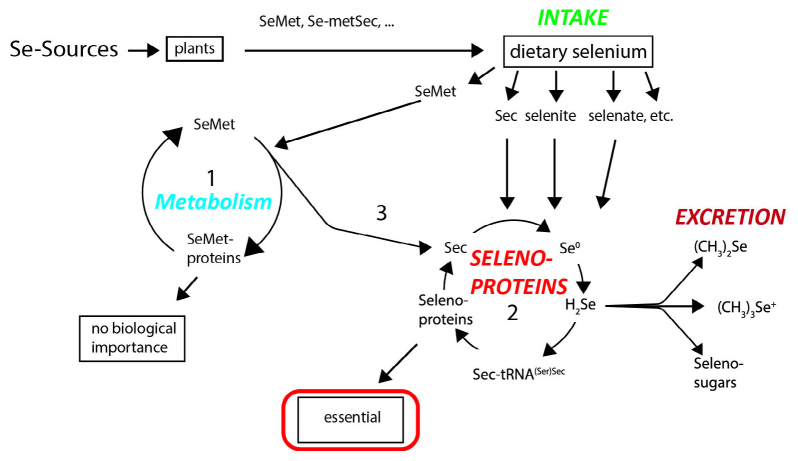
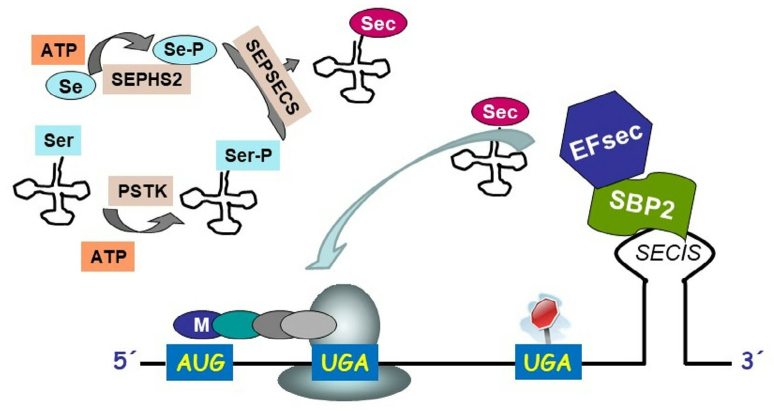
As an essential trace element, selenium (Se) plays a tremendous role in the functioning of the human organism being used for the biosynthesis of selenoproteins (proteins containing one or several selenocysteine residues). The functions of human selenoproteins in vivo are extremely diverse. Many selenoproteins have an antioxidant activity and, hence, play a key role in cell antioxidant defense and maintenance of redox homeostasis, which accounts for their involvement in diverse biological processes, such as signal transduction, proliferation, cell transformation and aging, ferroptosis, immune system functioning, etc. One of the critical functions of selenoenzymes is participation in the synthesis of thyroid hormones regulating basal metabolism in all body tissues. Over the last decades, optimization of population Se intake for prevention of diseases related to Se deficiency or excess has been recognized as a pressing issue in modern healthcare worldwide.
Keywords: antioxidants; selenium; selenocysteine; selenoproteins.
Conflict of interest statement
The author declares no conflicts of interest. This article does not contain description of studies with the involvement of humans or animal subjects.
Figures
References
-
- Kabata-Pendias A. Geochemistry of selenium. J. Environ. Pathol. Toxicol. Oncol. 1998;17:173–177. - PubMed
Publication types
MeSH terms
Substances
LinkOut - more resources
Full Text Sources
Research Materials