


Remembering for resilience: Brief cognitive-reminiscence therapy improves psychological resources and mental well-being in young adults
- PMID: 35502002
- PMCID: PMC9545317
- DOI: 10.1111/aphw.12364
Remembering for resilience: Brief cognitive-reminiscence therapy improves psychological resources and mental well-being in young adults
Abstract
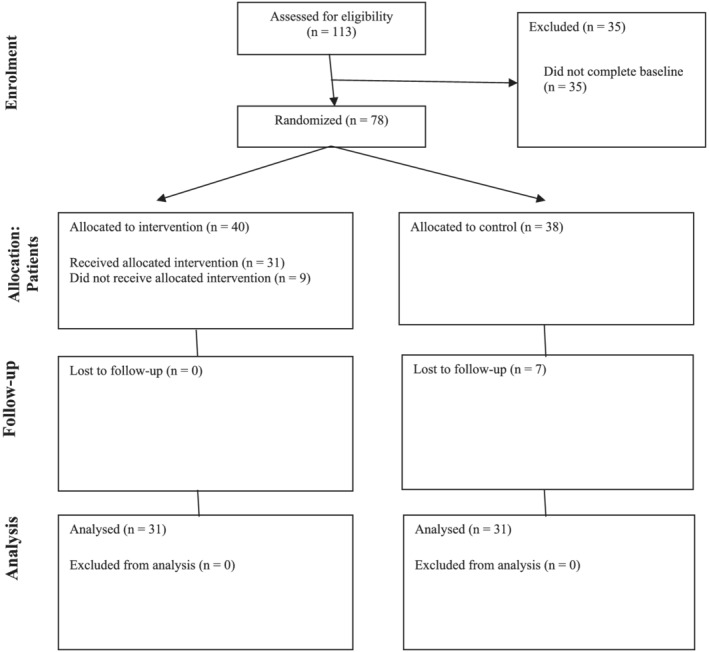
Reminiscence-based interventions focus on the recall of autobiographical memories and reflective reasoning about these remembered experiences. This study assessed the effect of a three-session, positive-memory version of cognitive-reminiscence therapy (CRT) on the psychological resources and mental well-being of young adults. The participants (N = 62, Mage = 24.6 [SD = 3.1], 71% females) were randomised to CRT or wait-list. Psychological resources (self-esteem, self-efficacy, meaning in life and optimism), mental well-being (depression, anxiety and stress symptoms) and theorised change processes (automatic negative thoughts, awareness of narrative identity and cognitive reappraisal) were assessed. The results showed the CRT group was significantly higher on psychological resources at post-CRT (d = 0.75-0.80) and follow-up (d = 0.52-0.87) and mental well-being at post-intervention (d = 0.71-1.30) and follow-up (d = 0.64-0.98). The hypotheses regarding change processes were supported. Future research may use an active comparator and include a longer follow-up, given only short-term effects were assessed. Brief, positive-focused CRT is effective in increasing psychological resources and mental well-being in young adults.
Keywords: automatic thoughts; awareness of narrative identity; cognitive reappraisal; cognitive reminiscence therapy; meaning in life; optimism; reminiscence therapy; self-efficacy; self-esteem; young adults.
© 2022 The Authors. Applied Psychology: Health and Well-Being published by John Wiley & Sons Ltd on behalf of International Association of Applied Psychology.
Conflict of interest statement
The authors have no conflicts of interest to declare.
References
-
- Ahern, E. , Kinsella, S. , & Semkovska, M. (2018). Clinical efficacy and economic evaluation of online cognitive behavioral therapy for major depressive disorder: A systematic review and meta‐analysis. Expert Review of Pharmacoeconomics & Outcomes Research, 18(1), 25–41. 10.1080/14737167.2018.1407245 - DOI - PubMed
-
- American Psychiatric Publishing . (2016). American Psychiatric Association diagnostic and statistical manual of mental disorders, fifth edition [DSM‐5®]. American Psychiatric Publishing, 51(13).
-
- Antony, M. M. , Cox, B. J. , Enns, M. W. , Bieling, P. J. , & Swinson, R. P. (1998). Psychometric properties of the 42‐item and 21‐item versions of the Depression Anxiety Stress Scales in clinical groups and a community sample. Psychological Assessment, 10(2), 176–181. 10.1037/1040-3590.10.2.176 - DOI
-
- Arnett, J. J. (2014). Emerging adulthood: The winding road from the late teens through the twenties. Oxford University Press.
-
- Beck, A. T. , Rush, A. J. , Shaw, B. F. , & Emery, G. (1997). Cognitive theory of depression. The Guilford Press.
Publication types
MeSH terms
LinkOut - more resources
Full Text Sources
Research Materials
