


Coverage of New Drugs in Medicare Part D
- PMID: 35502786
- PMCID: PMC9205672
- DOI: 10.1111/1468-0009.12565
Coverage of New Drugs in Medicare Part D
Abstract
Policy Points Only a small minority of new drugs in "nonprotected" classes are widely covered by Part D plans nationwide in the year after US Food and Drug Administration (FDA) approval. Part D plans frequently apply utilization management restrictions such as prior authorizations to newly approved drugs in both protected and nonprotected classes. Drug price influences both formulary inclusion (in nonprotected classes) and coverage restrictions (in both protected and nonprotected classes), while other drug characteristics such as therapeutic benefits are not consistently associated with formulary design. Plans do not seem to favor the minority of drugs that are determined to offer added therapeutic benefit over existing alternatives.
Context: Medicare Part D is an outpatient prescription drug benefit for older Americans covering more than 46 million beneficiaries. Except for mandatory coverage for essentially all drugs in six protected classes, plans have substantial flexibility in how they design their formularies: which drugs are covered, which drugs are subject to restrictions, and what factors determine formulary placement. Our objective in this paper was to document the extent to which Part D plans limit coverage of newly approved drugs.
Methods: We examined the formulary design of 4,582 Part D plans from 2014 through 2018 and measured (1) the decision to cover newly approved drugs in nonprotected classes, (2) use of utilization management tools in protected and nonprotected classes, and (3) the association between plan design and drug-level characteristics such as 30-day cost, therapeutic benefit, and the US Food and Drug Administration (FDA) expedited regulatory pathway.
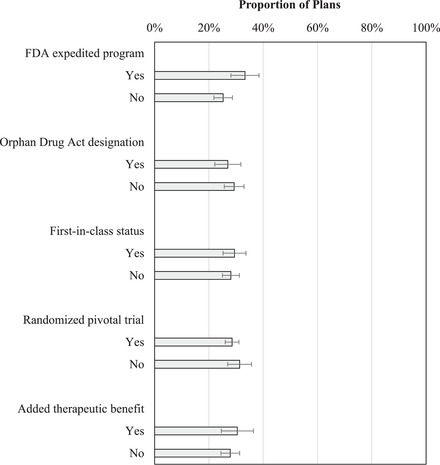
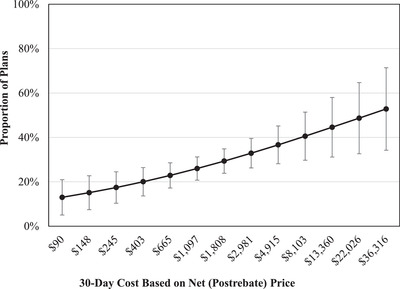
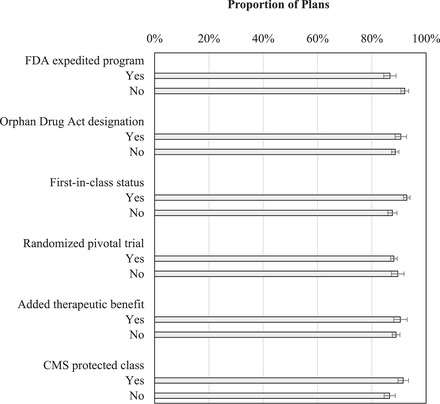
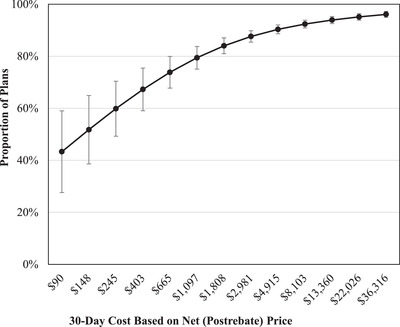
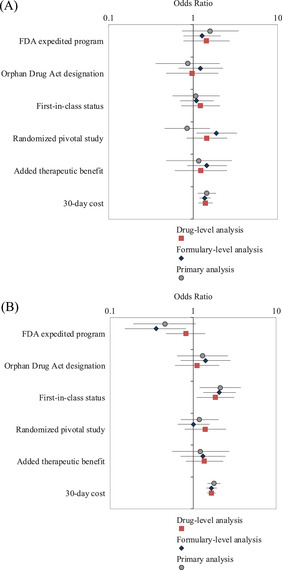
Findings: The FDA approved 109 new drugs predominantly used in outpatient settings between 2013 and 2017. Of these, 75 fell outside of the six protected drug classes. One-fifth of drugs in nonprotected classes (15 out of 75) were covered by more than half of plans during the first year after approval. Coverage was often conditional on utilization management strategies in both protected and nonprotected classes: only seven drugs (6%) were covered without prior authorization requirements in more than half of plans. Higher 30-day drug costs were associated with more widespread coverage in nonprotected classes: drugs that cost less than $150 for a 30-day course were covered by fewer than 20% of plans while those that cost more than $30,000 per 30 days were covered by more than 50% of plans. Plans were also more likely to implement utilization management tools on high-cost drugs in both protected and nonprotected classes. A higher proportion of plans implemented utilization management strategies on covered drugs with first-in-class status than drugs that were not first in class. Other drug characteristics, including availability of added therapeutic benefit and inclusion in FDA expedited regulatory approval, were not consistently associated with plan coverage or formulary restrictions.
Conclusions: Newly approved drugs are frequently subject to formulary exclusions and restrictions in Medicare Part D. Ensuring that formulary design in Part D is linked closely to the therapeutic value of newly approved drugs would improve patients' welfare.
Keywords: Medicare Part D; US Food and Drug Administration; prescription drugs.
© 2022 The Authors. The Milbank Quarterly published by Wiley Periodicals LLC on behalf of The Milbank Memorial Fund.
Figures
References
-
- Kaiser Family Foundation. An overview of the Medicare Part D prescription drug benefit. https://www.kff.org/medicare/fact‐sheet/an‐overview‐of‐the‐medicare‐part.... Published October 13, 2020. Accessed August 2, 2021.
-
- Centers for Medicare and Medicaid Services . Prescription drug benefit manual. https://www.cms.gov/medicare/prescription‐drug‐coverage/prescriptiondrug.... Published September 26, 2018. Accessed February 15, 2022.
Publication types
MeSH terms
Substances
LinkOut - more resources
Full Text Sources
Medical
