Randomized Controlled Trial
. 2022 May 3;327(17):1666-1678.
doi: 10.1001/jama.2022.4726.

Effect of Self-monitoring of Blood Pressure on Blood Pressure Control in Pregnant Individuals With Chronic or Gestational Hypertension: The BUMP 2 Randomized Clinical Trial

Collaborators, Affiliations
Randomized Controlled Trial

Effect of Self-monitoring of Blood Pressure on Blood Pressure Control in Pregnant Individuals With Chronic or Gestational Hypertension: The BUMP 2 Randomized Clinical Trial

Lucy C Chappell et al. JAMA. .

Abstract

Importance: Inadequate management of elevated blood pressure is a significant contributing factor to maternal deaths. The role of blood pressure self-monitoring in pregnancy in improving clinical outcomes for the pregnant individual and infant is unclear.

Objective: To evaluate the effect of blood pressure self-monitoring, compared with usual care alone, on blood pressure control and other related maternal and infant outcomes, in individuals with pregnancy hypertension.

Design, setting, and participants: Unblinded, randomized clinical trial that recruited between November 2018 and September 2019 in 15 hospital maternity units in England. Individuals with chronic hypertension (enrolled up to 37 weeks' gestation) or with gestational hypertension (enrolled between 20 and 37 weeks' gestation). Final follow-up was in May 2020.

Interventions: Participants were randomized to either blood pressure self-monitoring using a validated monitor and a secure telemonitoring system in addition to usual care (n = 430) or to usual care alone (n = 420). Usual care comprised blood pressure measured by health care professionals at regular antenatal clinics.

Main outcomes and measures: The primary maternal outcome was the difference in mean systolic blood pressure recorded by health care professionals between randomization and birth.

Results: Among 454 participants with chronic hypertension (mean age, 36 years; mean gestation at entry, 20 weeks) and 396 with gestational hypertension (mean age, 34 years; mean gestation at entry, 33 weeks) who were randomized, primary outcome data were available from 444 (97.8%) and 377 (95.2%), respectively. In the chronic hypertension cohort, there was no statistically significant difference in mean systolic blood pressure for the self-monitoring groups vs the usual care group (133.8 mm Hg vs 133.6 mm Hg, respectively; adjusted mean difference, 0.03 mm Hg [95% CI, -1.73 to 1.79]). In the gestational hypertension cohort, there was also no significant difference in mean systolic blood pressure (137.6 mm Hg compared with 137.2 mm Hg; adjusted mean difference, -0.03 mm Hg [95% CI, -2.29 to 2.24]). There were 8 serious adverse events in the self-monitoring group (4 in each cohort) and 3 in the usual care group (2 in the chronic hypertension cohort and 1 in the gestational hypertension cohort).

Conclusions and relevance: Among pregnant individuals with chronic or gestational hypertension, blood pressure self-monitoring with telemonitoring, compared with usual care, did not lead to significantly improved clinic-based blood pressure control.

Trial registration: ClinicalTrials.gov Identifier: NCT03334149.


Conflict of interest statement

Conflict of Interest Disclosures: Dr Chappell reported serving as chief scientific adviser to the UK Department of Health and Social Care and chief executive officer for the National Institute for Health and Care Research since August 2021. Dr Rivero-Arias reported being a member of the EuroQol Group, which is the copyright holder of the EQ-5D instruments. Dr Mackillop reported receiving grants from the NIHR Oxford Biomedical Research Centre during the conduct of the study and personal fees (as a part-time employee and shareholder) from Sensyne Health plc outside the submitted work. Dr Sandall reported holding a role as head of maternity and midwifery research in NHS England and NHS Improvement. Dr Santos reported receiving personal fees from Sensyne Health Group outside the submitted work; in addition, Dr Santos had a patent for University of Oxford Innovation Project 17725, BUMP–Technology License licensed to Sensyne Health Group. Dr Tarassenko reported receiving grants and personal fees (as a nonexecutive director and director of research and development) from Sensyne Health outside the submitted work. Dr Velardo reported being a full-time employee of Sensyne Health outside the submitted work; in addition, Dr Velardo had a patent for the University of Oxford Innovation Project 17725, BUMP–Technology License licensed to Sensyne Health Group. Dr McManus reported receiving other from Sensyne (the BUMP intervention was licensed by the University of Oxford for free during the COVID-19 pandemic and the university has received fees subsequently) during the conduct of the study and nonfinancial support from Omron (Omron licensed and paid consultancy to the University of Oxford with regard to a telemonitoring intervention developed with his help, and previously supplied blood pressure monitors for TASMINH4 study) and grants from the National Institute for Health Research (NIHR) outside the submitted work; and occasional travel and accommodation for speaking at conferences (any honoraria are paid to his institution). No other disclosures were reported.

Figures

Figure 1.
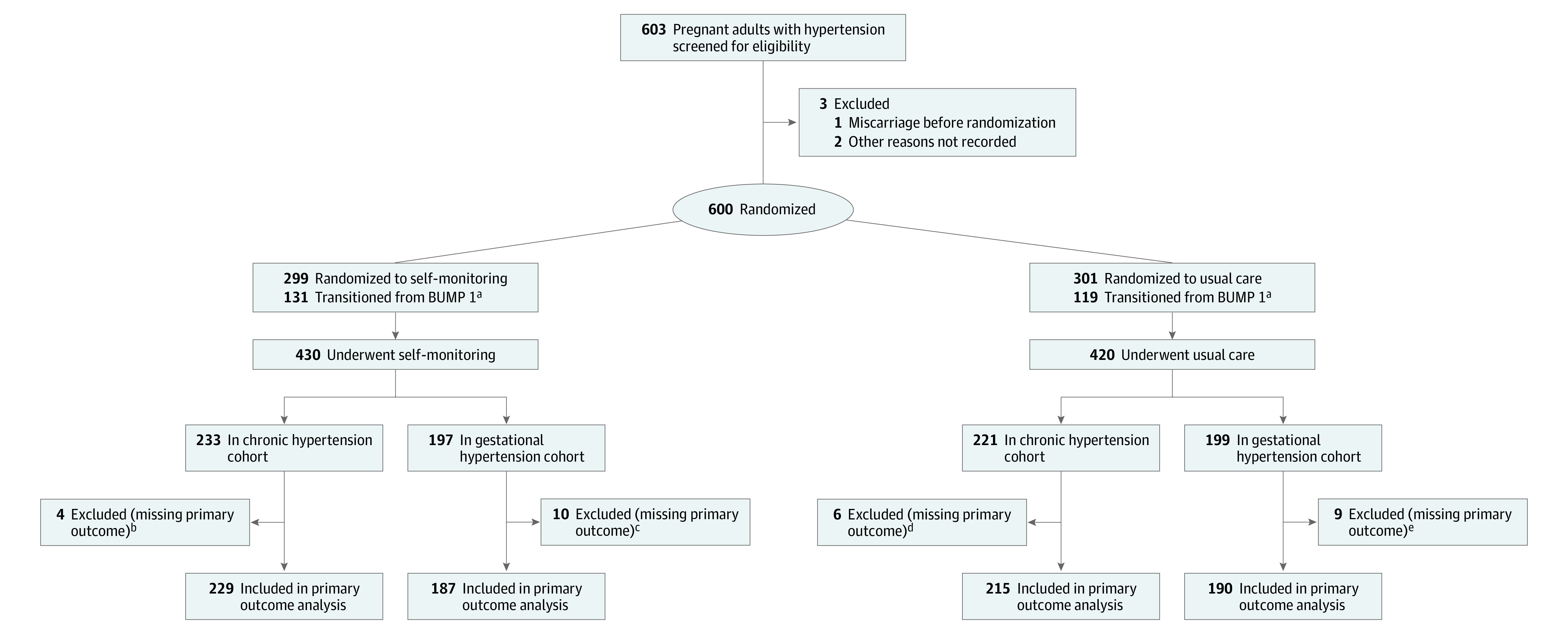
Figure 1.. Eligibility, Randomization, and Data Availability in a Trial of Self-monitoring for Blood Pressure Control in Pregnant Individuals With Hypertension
aThe BUMP 1 trial aimed to establish whether self-monitoring blood pressure with telemonitoring in addition to usual care could lead to earlier detection of elevated clinic blood pressure, compared with usual care, during higher-risk pregnancies. A total of 250 pregnant individuals who developed gestational hypertension during the linked BUMP 1 trial migrated to this trial, staying in their original randomization groups but changing to daily monitoring. bDelivery date not recorded so primary outcome could not be determined (n = 2); delivery more than 2 days after entering the trial but before primary outcome was recorded (n = 2). cDelivery 1 to 2 days after entering the trial and no primary outcome recorded (n = 1); delivery more than 2 days after entering the trial but before primary outcome was recorded (n = 9). dDelivery date not recorded so primary outcome could not be determined (n = 4); delivery more than 2 days after entering the trial but before primary outcome was recorded (n = 2). eDelivery date not recorded so primary outcome could not be determined (n = 1); delivery more than 2 days after entering the trial but before primary outcome was recorded (n = 8).
Figure 2.
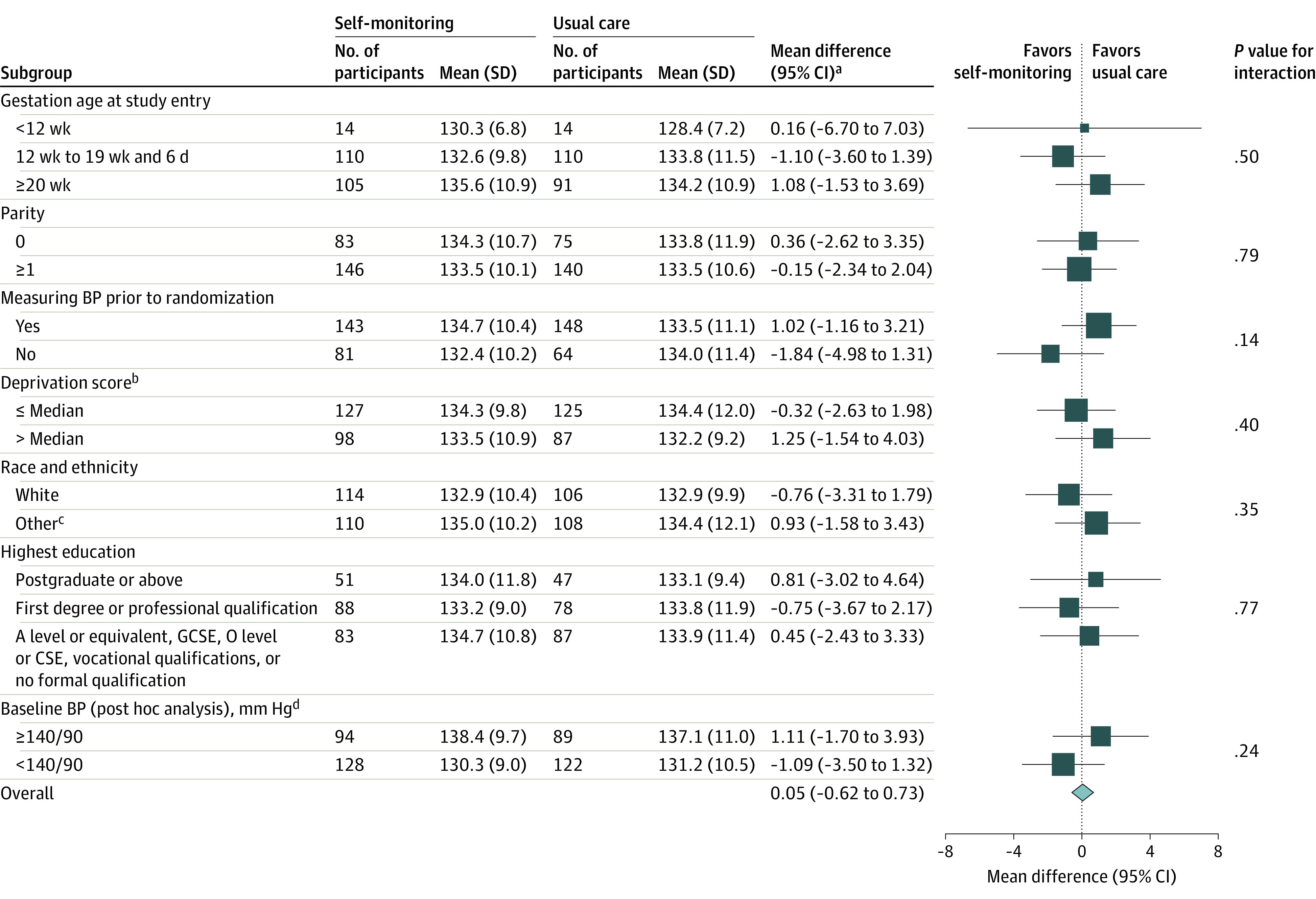
Figure 2.. Subgroup Analyses for Mean Systolic Blood Pressure (BP) in Chronic Hypertension Group
Linear mixed-effects model of mean systolic BP modeled against an interaction between randomized group and subgroup indicator, parity, and site. Level of significance = .05. A level indicates Advanced level; CSE, Certificate of Secondary Education; GCSE, General Certificate of Secondary Education; and O level, Ordinary level. aMean differences presented for self-monitoring vs usual care. bThe index of multiple deprivation is an assessment of deprivation based on multiple weighted components including income, employment, education, health, crime, barriers to housing and services, and living environment. It is assessed at the postcode level. Scores below the median indicate higher deprivation than scores above the median. cThe Other category includes any other race or ethnicity not listed above, in which case participants were asked to specify. dBP of 140/90 mm Hg or greater means systolic and/or diastolic BP greater or equal to 140/90 mm Hg as measured by a health care professional.
Figure 3.
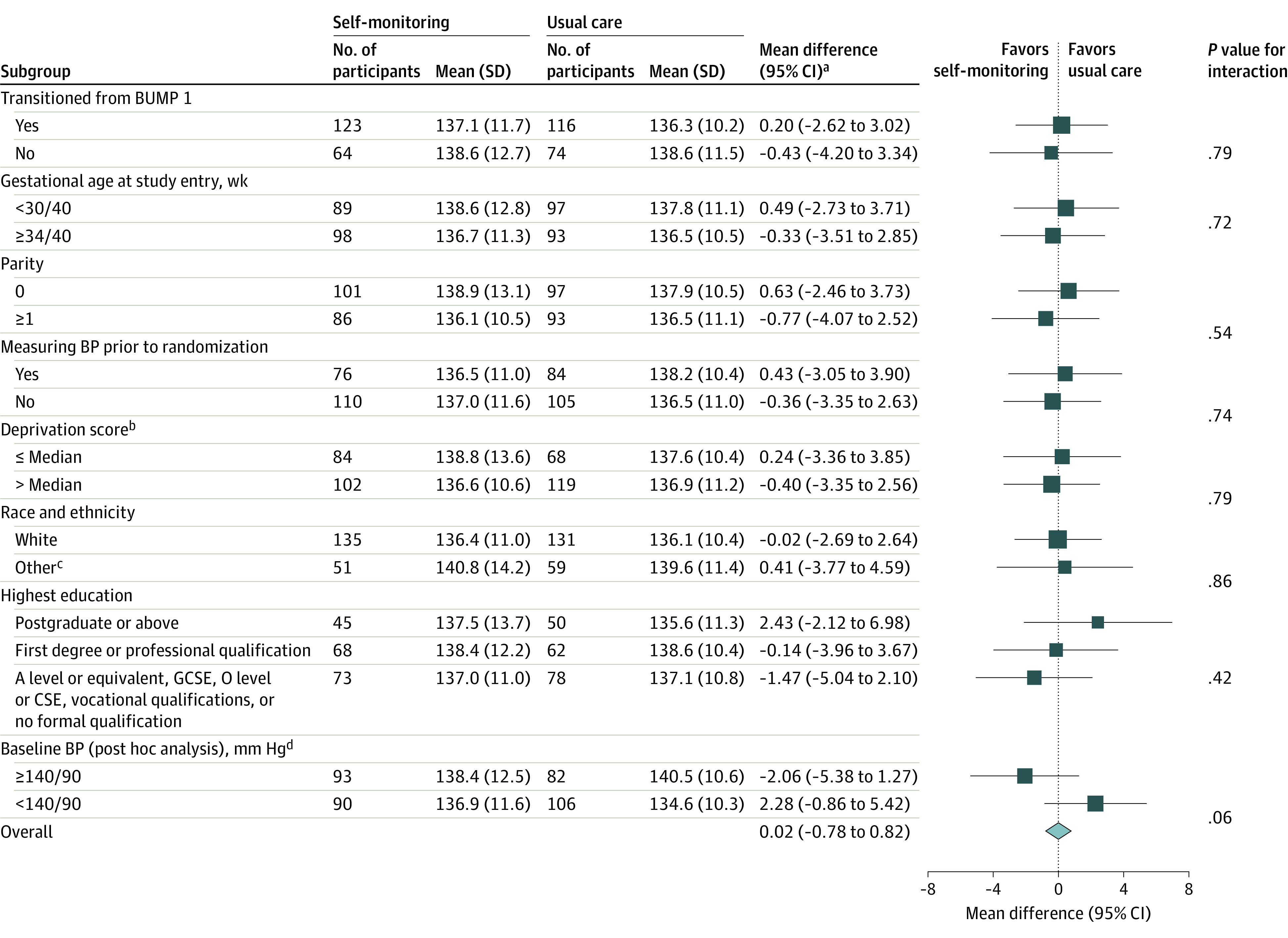
Figure 3.. Subgroup Analyses for Mean Systolic Blood Pressure (BP) in Gestational Hypertension Group
Linear mixed-effects model of mean systolic BP modeled against an interaction between randomized group and subgroup indicator, parity, site, and transfer from BUMP 1. Level of significance = .05. A level indicates Advanced level; CSE, Certificate of Secondary Education; GCSE, General Certificate of Secondary Education; and O level, Ordinary level. aMean differences presented for self-monitoring vs usual care. bThe index of multiple deprivation is an assessment of deprivation based on multiple weighted components including income, employment, education, health, crime, barriers to housing and services, and living environment. It is assessed at the postcode level. Scores below the median indicate higher deprivation than scores above the median. cThe Other category includes any other race or ethnicity not listed above, in which case participants were asked to specify. dBP of 140/90 mm Hg or greater means systolic and/or diastolic blood pressure greater or equal to 140/90 mm Hg as measured by a health care professional.

Comment in

References

    1. Abalos E, Cuesta C, Grosso AL, Chou D, Say L. Global and regional estimates of preeclampsia and eclampsia: a systematic review. Eur J Obstet Gynecol Reprod Biol. 2013;170(1):1-7. doi:10.1016/j.ejogrb.2013.05.005 - DOI - PubMed
    1. Wang W, Xie X, Yuan T, et al. . Epidemiological trends of maternal hypertensive disorders of pregnancy at the global, regional, and national levels: a population-based study. BMC pregnancy and childbirth. 2021/05/08 2021;21(1):364. doi:10.1186/s12884-021-03809-2 - DOI - PMC - PubMed
    1. Say L, Chou D, Gemmill A, et al. . Global causes of maternal death: a WHO systematic analysis. Lancet Glob Health. 2014;2(6):e323-e333. doi:10.1016/S2214-109X(14)70227-X - DOI - PubMed
    1. Lawn JE, Blencowe H, Waiswa P, et al. ; Lancet Ending Preventable Stillbirths Series study group; Lancet Stillbirth Epidemiology investigator group . Stillbirths: rates, risk factors, and acceleration towards 2030. Lancet. 2016;387(10018):587-603. doi:10.1016/S0140-6736(15)00837-5 - DOI - PubMed
    1. Conti-Ramsden F, Knight M, Green M, Shennan AH, Chappell LC. Reducing maternal deaths from hypertensive disorders: learning from confidential inquiries. BMJ. 2019;364:l230. doi:10.1136/bmj.l230 - DOI - PubMed

Publication types

Substances

Associated data