


Prevalence, incidence, and survival of pulmonary arterial hypertension: A systematic review for the global burden of disease 2020 study
- PMID: 35506069
- PMCID: PMC9052982
- DOI: 10.1002/pul2.12020
Prevalence, incidence, and survival of pulmonary arterial hypertension: A systematic review for the global burden of disease 2020 study
Abstract
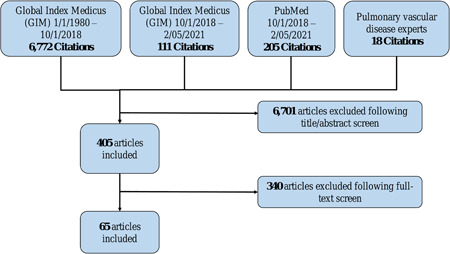
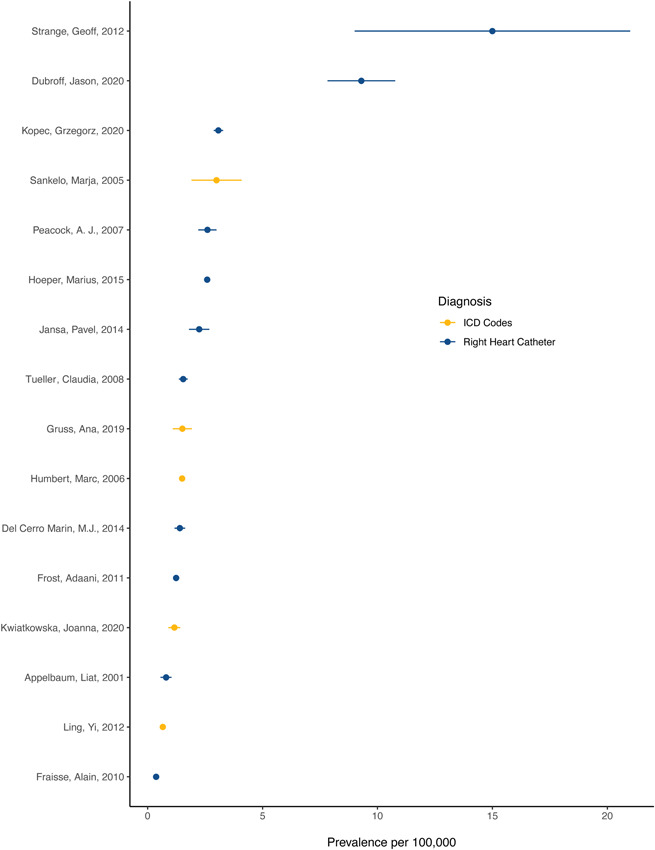
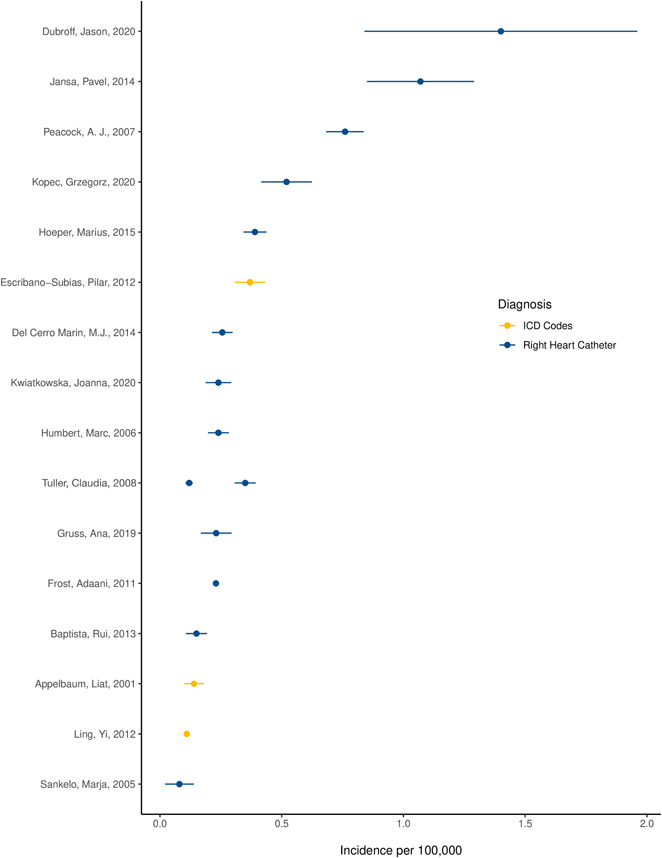
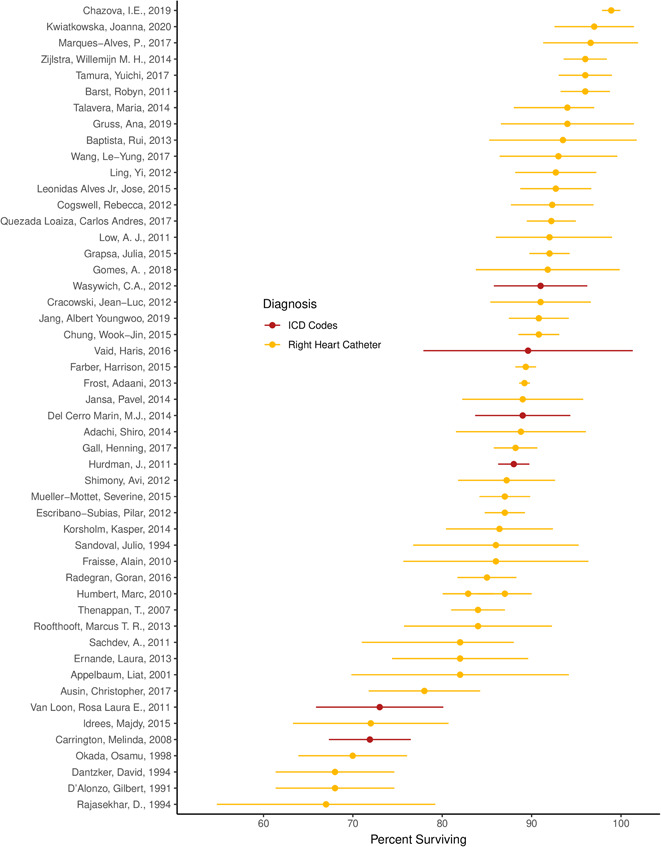
Pulmonary arterial hypertension (PAH) is characterized by increased resistance in the pulmonary arterioles as a result of remodeled blood vessels. We sought all available epidemiologic data on population-based prevalence, incidence, and 1-year survival of PAH as part of the Global Burden of Disease Study. We performed a systematic review searching Global Index Medicus (GIM) for keywords related to PAH between 1980 and 2021 and identified population-representative sources of prevalence, incidence, and mortality for clinically diagnosed PAH. Of 6772 articles identified we found 65 with population-level data: 17 for prevalence, 17 for incidence, and 58 reporting case fatality. Reported prevalence ranged from 0.37 cases/100,000 persons in a referral center of French children to 15 cases/100,000 persons in an Australian study. Reported incidence ranged from 0.008 cases/100,000 person-years in Finland, to 1.4 cases/100,000 person-years in a retrospective chart review at a clinic in Utah, United States. Reported 1-year survival ranged from 67% to 99%. All studies with sex-specific estimates of prevalence or incidence reported higher levels in females than males. Studies varied in their size, study design, diagnostic criteria, and sampling procedures. Reported PAH prevalence, incidence, and mortality varied by location and study. Prevalence ranged from 0.4 to 1.4 per 100,000 persons. Harmonization of methods for PAH registries would improve efforts at disease surveillance. Results of this search contribute to ongoing efforts to quantify the global burden of PAH.
Keywords: population health; pulmonary arterial hypertension; survival.
© 2021 The Authors. Pulmonary Circulation published by Wiley Periodicals LLC on behalf of the Pulmonary Vascular Research Institute.
Conflict of interest statement
Paul A. Corris serves on clinical trial committees for Acceleron, Bayer, and Johnson and Johnson.
Figures
References
-
- Mocumbi AO, Thienemann F, Sliwa K. A Global perspective on the epidemiology of pulmonary hypertension. Can J Cardiol. 2015;31:375–81. - PubMed
-
- Fernandes CJC, Jardim C, Souza R. The global view. Curr Opin Pulm Med. 2019;25:391–7. - PubMed
-
- Awdish R, Cajigas H. Definition, epidemiology and registries of pulmonary hypertension. Heart Fail Rev. 2016;21:223–8. - PubMed
LinkOut - more resources
Full Text Sources
