


Qualitative study to characterize patient experience and relevance of patient-reported outcome measures for patients with metastatic synovial sarcoma
- PMID: 35507231
- PMCID: PMC9068846
- DOI: 10.1186/s41687-022-00450-1
Qualitative study to characterize patient experience and relevance of patient-reported outcome measures for patients with metastatic synovial sarcoma
Abstract
Background: The outlook for patients with metastatic synovial sarcoma (mSS) is poor. Better understanding of patient experience in this setting, beyond clinical measures, may guide improvements in management. Validated patient-reported outcome (PRO) instruments specific to many types of cancer exist, but for rare cancers this is often not the case.
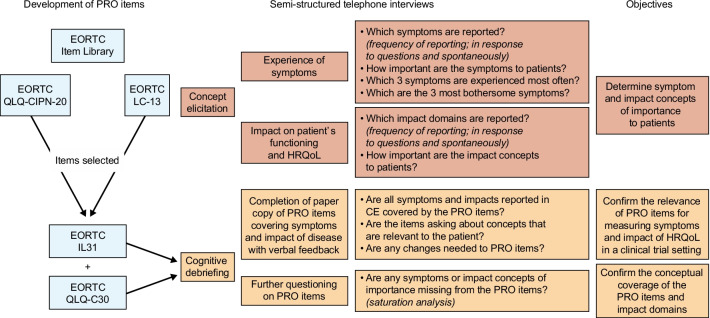
Methods: This study aimed to characterize patient experiences of symptoms and impacts of mSS and evaluate the content validity and relevance of the novel European Organization for Research and Treatment of Cancer Item Library 31 (EORTC IL31) Disease Symptoms PRO tool assessing synovial sarcoma symptoms. This tool comprises items from preexisting, validated cancer-specific PRO instruments from the EORTC Item Library. It was developed as an mSS-specific add-on to the EORTC Quality of Life Questionnaire Core 30 (QLQ-C30), which evaluates general cancer and treatment-related symptoms and functioning. This was a non-interventional, qualitative interview study involving semi-structured, concept elicitation (CE) and cognitive debriefing (CD) telephone interviews in adults with mSS. CE explored symptoms and their impact on functioning and quality of life; CD assessed participant understanding and relevance of the PRO tools.
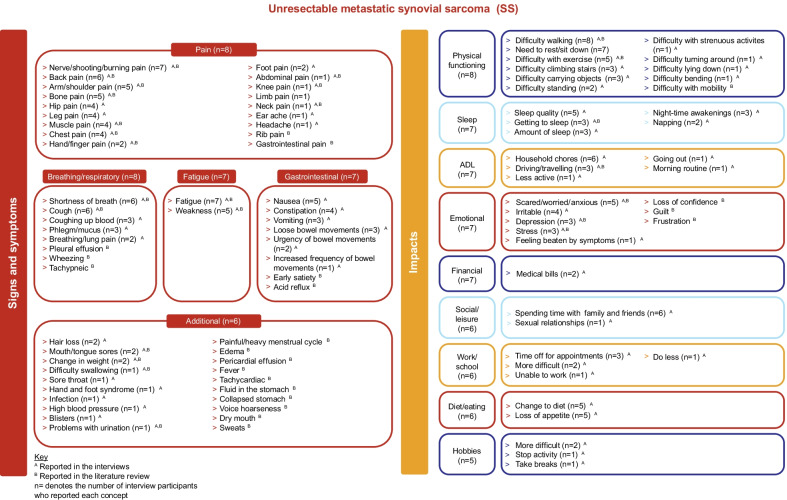
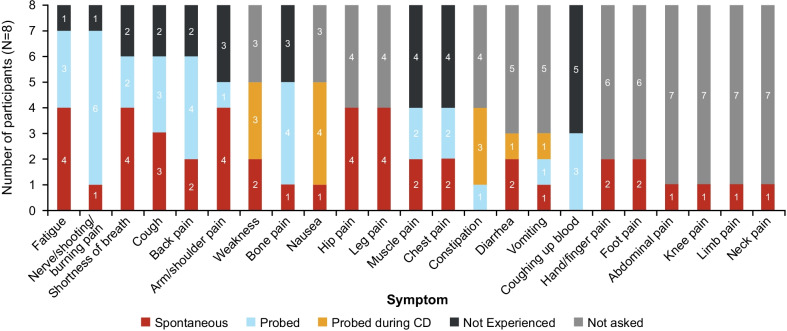
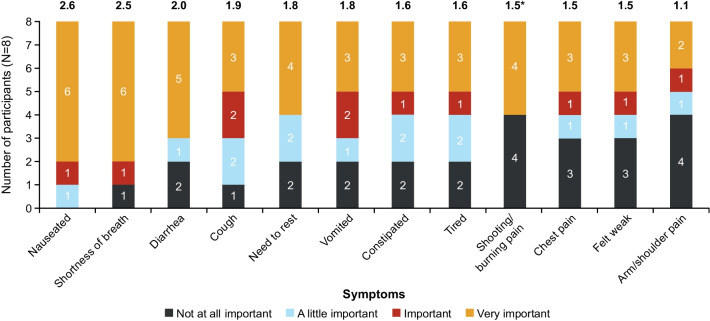
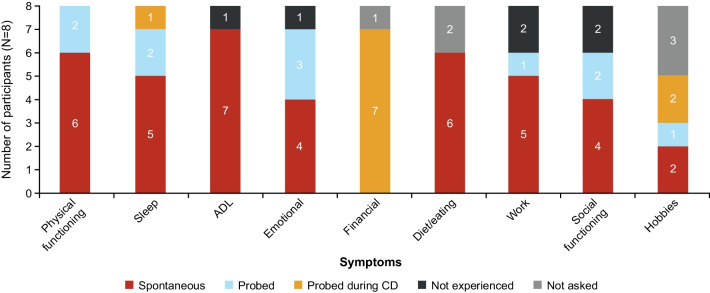
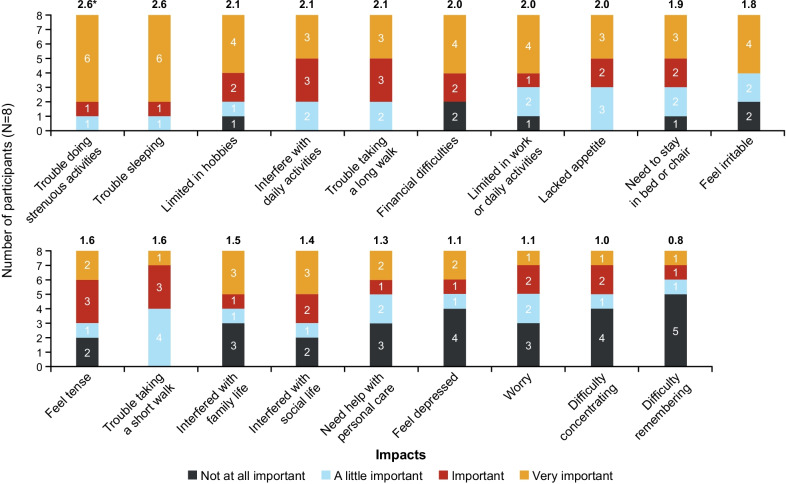
Results: Among the 8 participants, the most common disease-related symptoms reported during CE were fatigue and pain, while shortness of breath was one of the most bothersome. The greatest negative impacts of mSS occurred in domains of physical functioning and sleep. Key treatment priorities for patients were to improve disrupted sleep and ability to undertake strenuous activities.
Conclusions: The interviews showed that, when used together, the EORTC IL31 and EORTC QLQ-C30 covered symptoms and impacts of most relevance and importance to patients with mSS, with no notable gaps and good conceptual coverage. This study therefore supports the content validity of 2 tools in mSS, advocating their use in clinical trials to assess treatment impact on PRO measures of importance to these patients.
Keywords: Content validity; HRQoL; Impact; Metastatic; PRO; Qualitative interviews; Symptoms; Synovial sarcoma.
© 2022. The Author(s).
Conflict of interest statement
LE, SP, and AC are employees of and hold stocks/stock options in GSK. LG, AF, and RA are employees of Adelphi Values, a health outcomes agency contracted by GSK to conduct the research described here. KC is an employee of GSK, a former employee of Novartis, and owns stocks/shares in GSK. SPC receives grants/consulting fees/honoraria from Amgen, Roche, GSK, Threshold Pharmaceuticals, CytRx Corporation, Ignyta, Immune Design, TRACON Pharma, Karyopharm Therapeutics, Sarcoma Alliance for Research through Collaboration (SARC), Janssen, Advenchen Laboratories, Bayer, InhibRx, NKMax, and Tyme and holds stocks/stock options in AADi, Cellestia Biotech, and Immix BioPharma.
Figures
References
-
- National Cancer Institute (2020) Surveillance, epidemiology, and end results (SEER) program. https://seer.cancer.gov/statfacts/html/soft.html. Accessed November 2020
-
- National Cancer Institute (2019) Synovial sarcoma. https://www.cancer.gov/pediatric-adult-rare-tumor/rare-tumors/rare-soft-.... Accessed October 2020
Grants and funding
LinkOut - more resources
Full Text Sources
