


Using machine learning to predict health-related quality of life outcomes in patients with low grade glioma, meningioma, and acoustic neuroma
- PMID: 35507629
- PMCID: PMC9067699
- DOI: 10.1371/journal.pone.0267931
Using machine learning to predict health-related quality of life outcomes in patients with low grade glioma, meningioma, and acoustic neuroma
Abstract
Background: Predicting reduced health-related quality of life (HRQoL) after resection of a benign or low-grade brain tumour provides the opportunity for early intervention, and targeted expenditure of scarce supportive care resources. We aimed to develop, and evaluate the performance of, machine learning (ML) algorithms to predict HRQoL outcomes in this patient group.
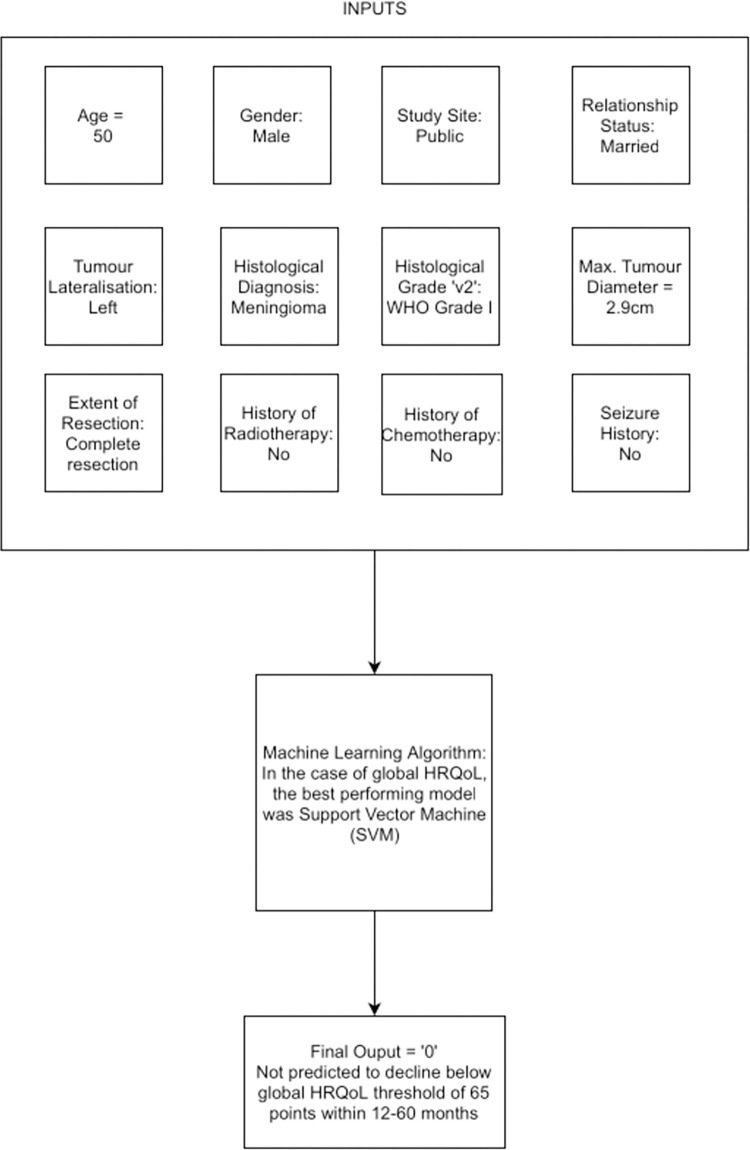
Methods: Using a large prospective dataset of HRQoL outcomes in patients surgically treated for low grade glioma, acoustic neuroma and meningioma, we investigated the capability of ML to predict a) HRQoL-impacting symptoms persisting between 12 and 60 months from tumour resection and b) a decline in global HRQoL by more than the minimum clinically important difference below a normative population mean within 12 and 60 months after resection. Ten-fold cross-validation was used to measure the area under the receiver operating characteristic curve (AUC), area under the precision-recall curve (PR-AUC), sensitivity, and specificity of models. Six ML algorithms were explored per outcome: Random Forest Classifier, Decision Tree Classifier, Logistic Regression, K Neighbours Classifier, Support Vector Machine, and Gradient Boosting Machine.
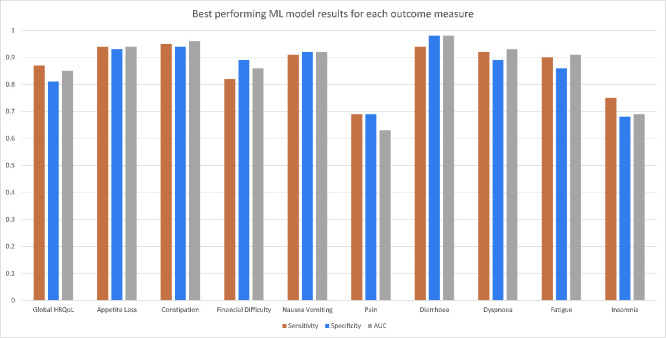
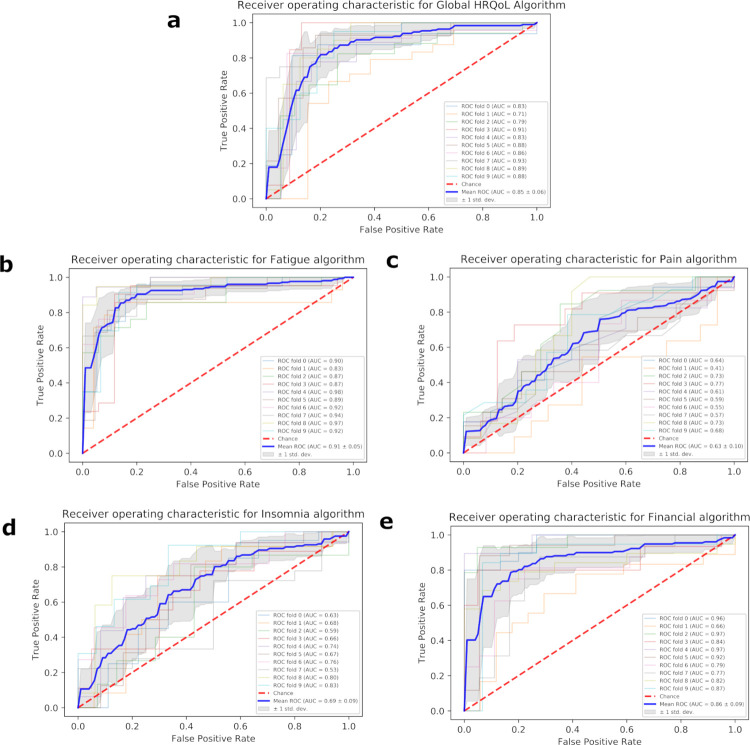
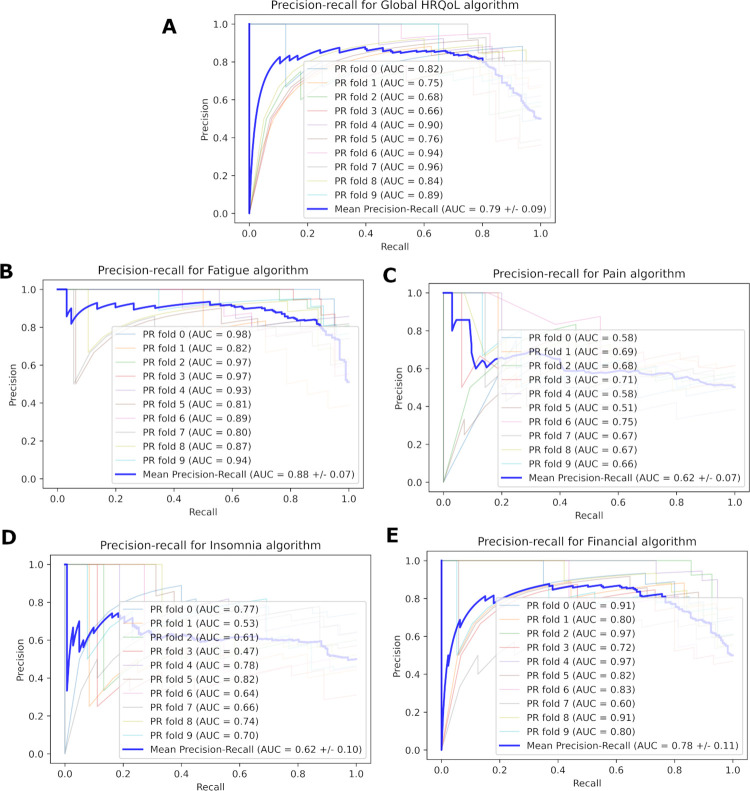
Results: The final cohort included 262 patients. Outcome measures for which AUC>0.9 were Appetite loss, Constipation, Nausea and vomiting, Diarrhoea, Dyspnoea and Fatigue. AUC was between 0.8 and 0.9 for global HRQoL and Financial difficulty. Pain and Insomnia achieved AUCs below 0.8. PR-AUCs were similar overall to the AUC of each respective classifier.
Conclusions: ML algorithms based on routine demographic and perioperative data show promise in their ability to predict HRQoL outcomes in patients with low grade and benign brain tumours between 12 and 60 months after surgery.
Conflict of interest statement
The authors have declared that no competing interests exist.
Figures
References
-
- EORTC | European Organisation for Research and Treatment of Cancer: EORTC [Internet]. [cited 2020 Mar 18]. Available from: https://www.eortc.org/
-
- Hinz A, Singer S, Brähler E. European reference values for the quality of life questionnaire EORTC QLQ-C30: Results of a German investigation and a summarizing analysis of six European general population normative studies. Acta Oncol (Madr). 2014;53(7):958–65. doi: 10.3109/0284186X.2013.879998 - DOI - PubMed
MeSH terms
LinkOut - more resources
Full Text Sources
Medical
Research Materials
