


Platelet-rich plasma injection in the treatment of patellar tendinopathy: a systematic review and meta-analysis
- PMID: 35509070
- PMCID: PMC9066802
- DOI: 10.1186/s43019-022-00151-5
Platelet-rich plasma injection in the treatment of patellar tendinopathy: a systematic review and meta-analysis
Abstract
Purpose: The objective of the study was to assess the efficacy of autologous platelet-rich plasma (PRP) injections in the treatment of patellar tendinopathy.
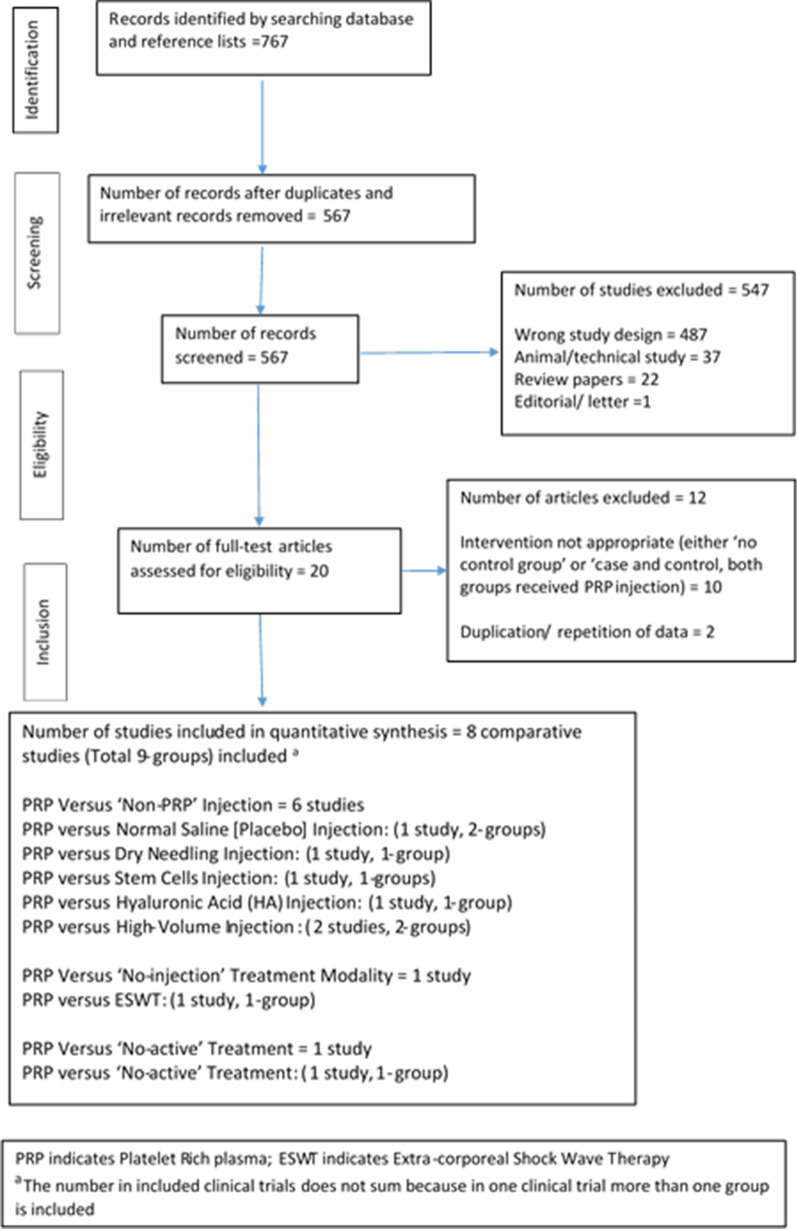
Methods: The PubMed, MEDLINE, EMBASE, CINAHL, and Cochrane Central Register of Controlled Trials databases were searched for clinical trials which compared PRP injection with other 'active treatment' interventions ('Non-PRP' injection and 'No-injection' treatments) or 'No-active treatment' interventions. Randomized and non-randomized clinical trials that had been published up to 15 November 2021, were included in the meta-analysis. The primary outcome, pain relief, was measured on a 'visual analog scale.' Secondary outcomes were knee functional activities and quality of life (QoL). The PRISMA guidelines were followed throughout the study.
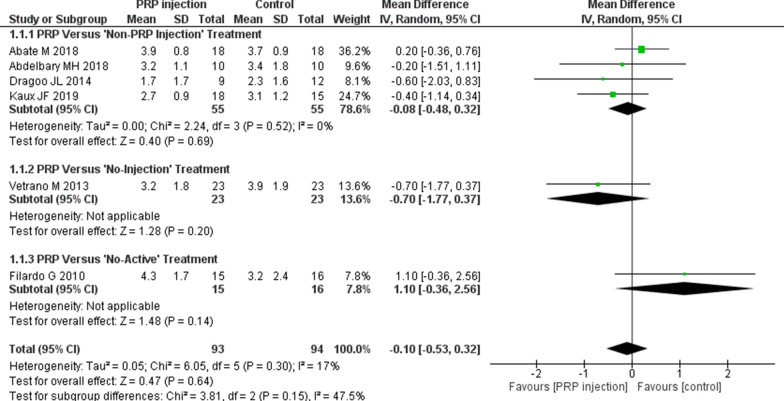
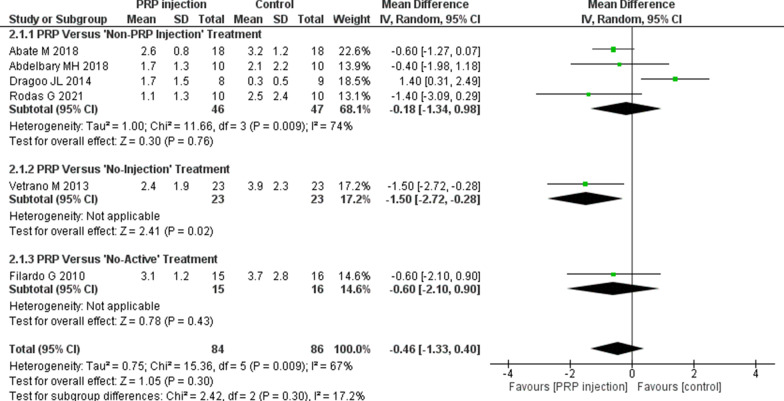
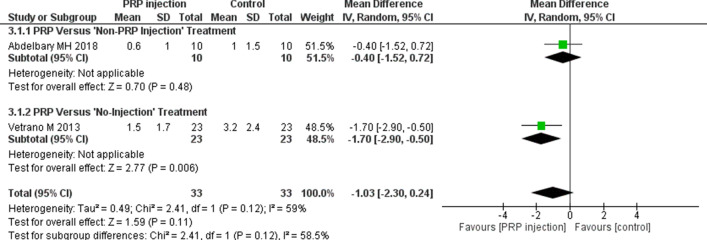
Results: Eight comparative studies were identified for inclusion in the meta-analysis. Assessment of these studies revealed that there were no significant differences in pain relief, functional outcomes, and QoL in the short, medium, and long term between PRP injection and Non-PRP injection interventions. Similarly, comparison of PRP injection to the No-active treatment intervention showed no differences in short- and medium-term pain relief. However, when PRP injection was compared to the No-injection treatment intervention extracorporeal shock wave therapy (ECWT), the former was found to be more effective in terms of pain relief in the medium term (mean difference [MD] - 1.50; 95% confidence interval [CI] - 2.72 to - 0.28) and long term (MD - 1.70; 95% CI, - 2.90 to - 0.50) and functional outcomes in the medium term (MD 13.0; 95% CI 3.01-22.99) and long term (MD 13.70; 95% CI 4.62-22.78).
Conclusions: In terms of pain relief and functional outcomes, the PRP injection did not provide significantly greater clinical benefit than Non-PRP injections in the treatment of patellar tendinopathy. However, in comparison with ESWT, there was a significant benefit in favor of PRP injection.
Keywords: Athletic injuries; Injections; Knee; Meta-analysis; Pain; Patella; Patellar tendinopathy; Platelet-rich plasma.
© 2022. The Author(s).
Conflict of interest statement
Not applicable.
Figures
References
-
- Andriolo L, Altamura SA, Reale D, Candrian C, Zaffagnini S, Filardo G. Nonsurgical treatments of patellar tendinopathy: multiple injections of platelet-rich plasma are a suitable option: a systematic review and meta-analysis. Am J Sports Med. 2019;47:1001–1018. doi: 10.1177/0363546518759674. - DOI - PubMed
Publication types
LinkOut - more resources
Full Text Sources
Research Materials
