


Physical properties and biological effects of ceramic materials emitting infrared radiation for pain, muscular activity, and musculoskeletal conditions
- PMID: 35510621
- PMCID: PMC10084378
- DOI: 10.1111/phpp.12799
Physical properties and biological effects of ceramic materials emitting infrared radiation for pain, muscular activity, and musculoskeletal conditions
Abstract
Background: Up to 33% of the general population worldwide suffer musculoskeletal conditions, with low back pain being the single leading cause of disability globally. Multimodal therapeutic options are available to relieve the pain associated with muscular disorders, including physical, complementary, and pharmacological therapies. However, existing interventions are not disease modifying and have several limitations.
Method: Literature review.
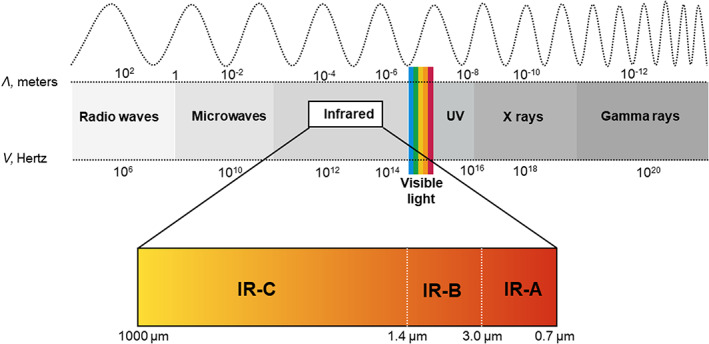
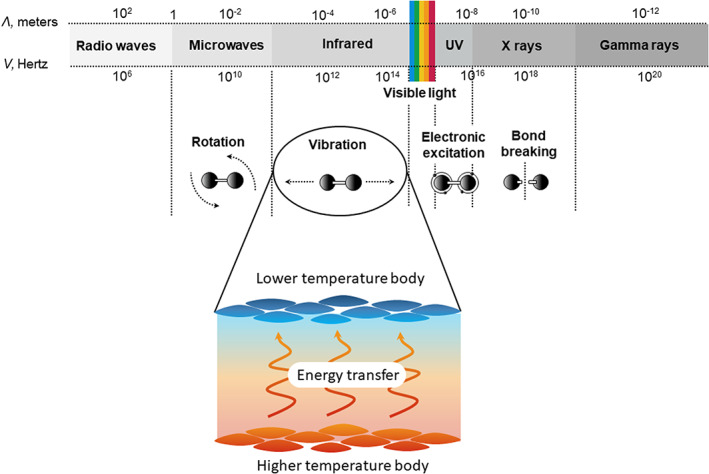
Results: In this context, the use of nonthermal infrared light delivered via patches, fabrics, and garments containing infrared-emitting bioceramic minerals have been investigated. Positive effects on muscular cells, muscular recovery, and reduced inflammation and pain have been reported both in preclinical and clinical studies. There are several hypotheses on how infrared may contribute to musculoskeletal pain relief, however, the full mechanism of action remains unclear. This article provides an overview of the physical characteristics of infrared radiation and its biological effects, focusing on those that could potentially explain the mechanism of action responsible for the relief of musculoskeletal pain.
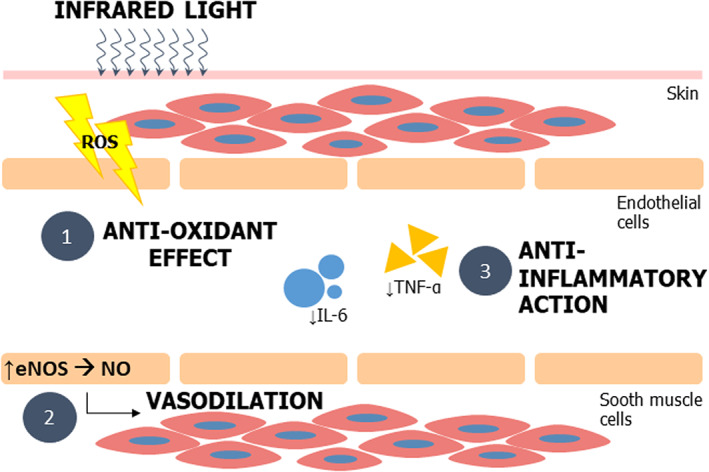
Conclusions: Based on the current evidence, the following pathways have been considered: upregulation of endothelial nitric oxide synthase, increase in nitric oxide bioavailability, anti-inflammatory effects, and reduction in oxidative stress.
Keywords: bioceramic; infrared; mechanism of action; musculoskeletal pain.
© 2022 The Authors. Photodermatology, Photoimmunology & Photomedicine published by John Wiley & Sons Ltd.
Conflict of interest statement
JK and JM have no conflict of interest to declare. MRH declares the following potential conflicts of interest: Scientific Advisory Boards – Transdermal Cap, Inc., Cleveland, OH; Hologenix, Inc., Santa Monica, CA; Vielight, Toronto, Canada; JOOVV, Inc., Minneapolis‐St. Paul, MN; Consulting – USHIO Corp, Japan; Sanofi‐Aventis Deutschland GmbH, Frankfurt am Main, Germany. IIT, HK, and EK are employees of Sanofi CHC and may hold shares and/or stock options in the company.
Figures
References
-
- World Health Organization (WHO) . Musculoskeletal conditions. WHO. Updated February 2021. Accessed 14 March, 2021. https://www.who.int/news‐room/fact‐sheets/detail/musculoskeletal‐conditions
-
- Clarke AM, Symmons DPM. The burden of rheumatic disease. Medicine. 2006;34(9):333‐335. doi:10.1053/j.mpmed.2006.06.007 - DOI
-
- Health H. State of MSK report 2021: changing musculoskeletal trends are redefining MSK care 2021:31. https://healthactioncouncil.org/getmedia/a738c3c5‐7c23‐4739‐bb8d‐069dd5f...
Publication types
MeSH terms
Grants and funding
LinkOut - more resources
Full Text Sources
Medical
