


A comparative transcriptomics and eQTL approach identifies SlWD40 as a tomato fruit ripening regulator
- PMID: 35512210
- PMCID: PMC9434188
- DOI: 10.1093/plphys/kiac200
A comparative transcriptomics and eQTL approach identifies SlWD40 as a tomato fruit ripening regulator
Erratum in
-
Correction to: A comparative transcriptomics and eQTL approach identifies SlWD40 as a tomato fruit ripening regulator.Plant Physiol. 2023 May 31;192(2):1657. doi: 10.1093/plphys/kiad190. Plant Physiol. 2023. PMID: 36995995 Free PMC article. No abstract available.
Abstract
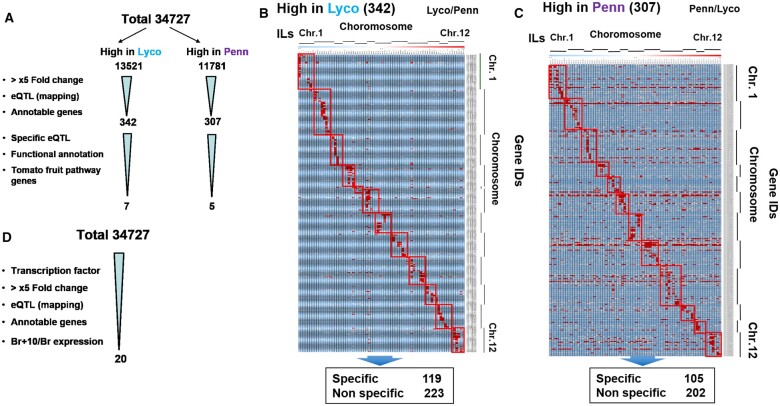
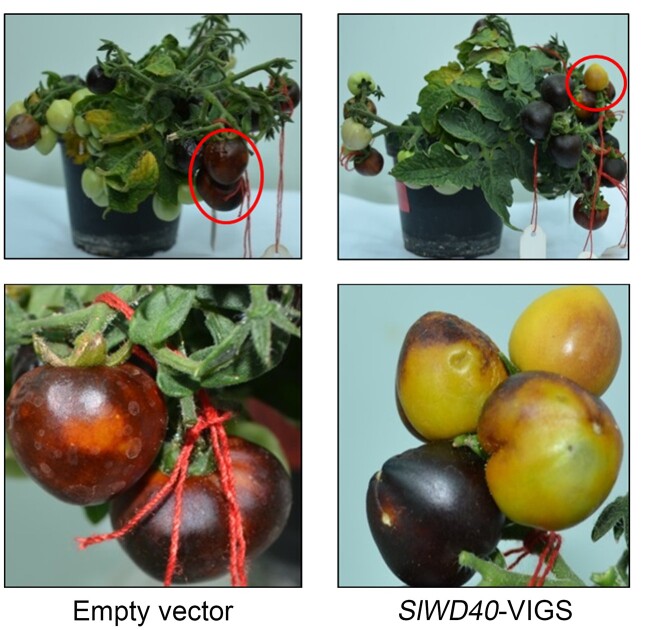
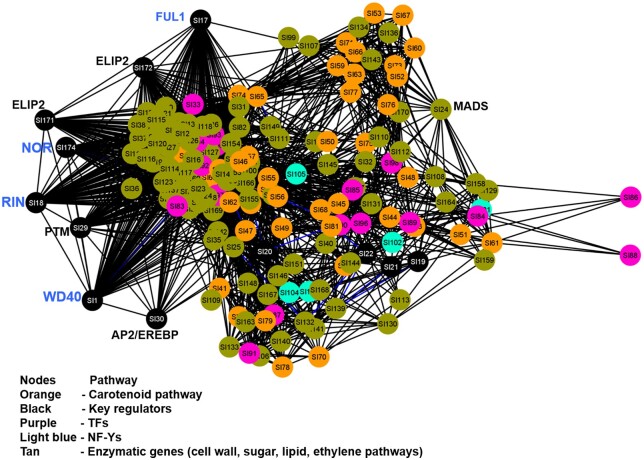
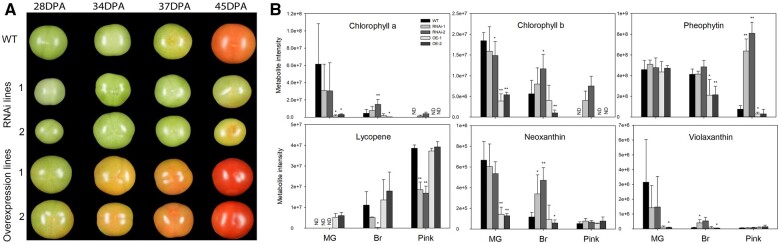
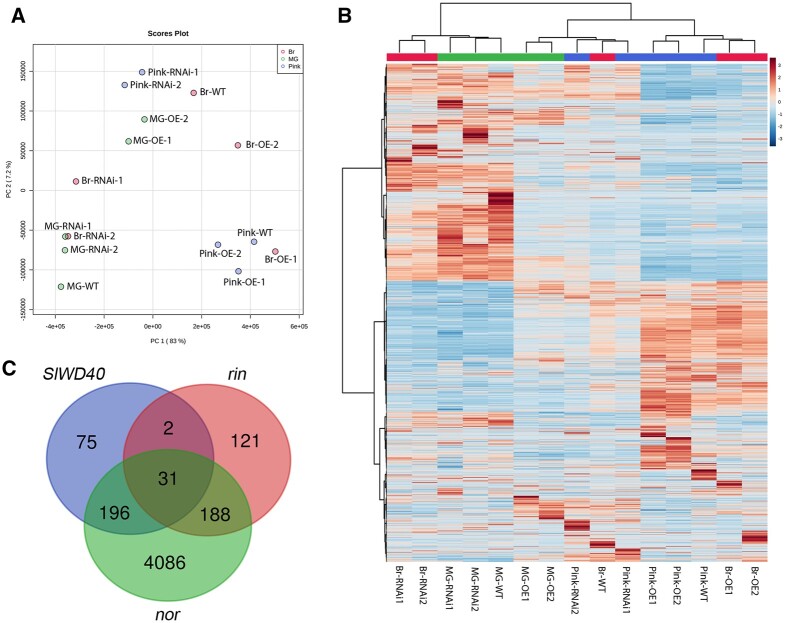
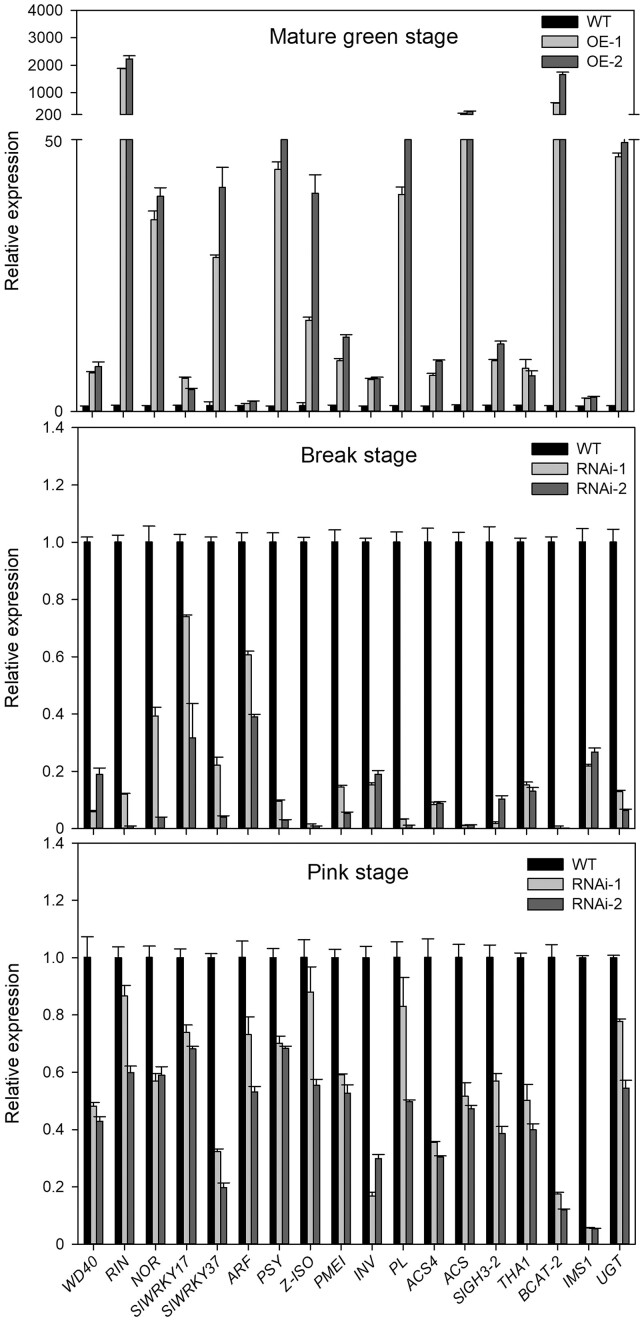
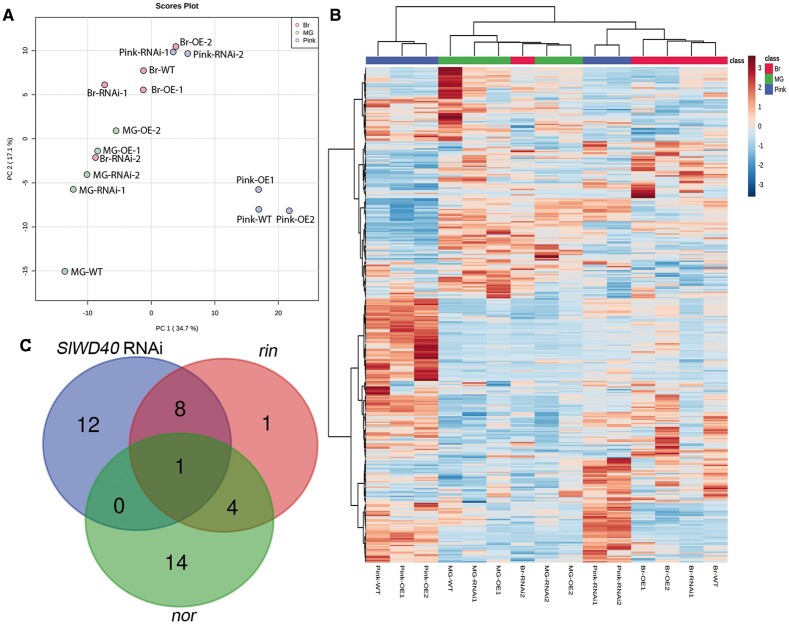
Although multiple vital genes with strong effects on the tomato (Solanum lycopersicum) ripening process have been identified via the positional cloning of ripening mutants and cloning of ripening-related transcription factors (TFs), recent studies suggest that it is unlikely that we have fully characterized the gene regulatory networks underpinning this process. Here, combining comparative transcriptomics and expression QTLs, we identified 16 candidate genes involved in tomato fruit ripening and validated them through virus-induced gene silencing analysis. To further confirm the accuracy of the approach, one potential ripening regulator, SlWD40 (WD-40 repeats), was chosen for in-depth analysis. Co-expression network analysis indicated that master regulators such as RIN (ripening inhibitor) and NOR (nonripening) as well as vital TFs including FUL1 (FRUITFUL1), SlNAC4 (NAM, ATAF1,2, and CUC2 4), and AP2a (Activating enhancer binding Protein 2 alpha) strongly co-expressed with SlWD40. Furthermore, SlWD40 overexpression and RNAi lines exhibited substantially accelerated and delayed ripening phenotypes compared with the wild type, respectively. Moreover, transcriptome analysis of these transgenics revealed that expression patterns of ethylene biosynthesis genes, phytoene synthase, pectate lyase, and branched chain amino transferase 2, in SlWD40-RNAi lines were similar to those of rin and nor fruits, which further demonstrated that SlWD40 may act as an important ripening regulator in conjunction with RIN and NOR. These results are discussed in the context of current models of ripening and in terms of the use of comparative genomics and transcriptomics as an effective route for isolating causal genes underlying differences in genotypes.
© The Author(s) 2022. Published by Oxford University Press on behalf of American Society of Plant Biologists.
Figures
Comment in
-
The time is ripe for eQTLs: Transcriptomic identification of a tomato fruit ripening regulator.Plant Physiol. 2022 Aug 29;190(1):182-184. doi: 10.1093/plphys/kiac287. Plant Physiol. 2022. PMID: 35703978 Free PMC article. No abstract available.
References
-
- Alseekh S, Ofner I, Pleban T, Tripodi P, Di Dato F, Cammareri M, Mohammad A, Grandillo S, Fernie AR, Zamir D (2013) Resolution by recombination: breaking up Solanum pennellii introgressions. Trends Plant Sci 18: 536–538 - PubMed
-
- Ballester AR, Molthoff J, de Vos R, Hekkert B, Orzaez D, Fernandez-Moreno JP, Tripodi P, Grandillo S, Martin C, Heldens J, et al. (2010) Biochemical and molecular analysis of pink tomatoes: deregulated expression of the gene encoding transcription factor SlMYB12 leads to pink tomato fruit color. Plant Physiol 152: 71–84 - PMC - PubMed
-
- Bartley GE, Scolnik PA (1993) cDNA cloning, expression during development, and genome mapping of PSY2, a second tomato gene encoding phytoene synthase. J Biol Chem 268: 25718–25721 - PubMed
Publication types
MeSH terms
Substances
LinkOut - more resources
Full Text Sources
Other Literature Sources
