


An integrated multi-criteria decision-making approach to optimize the number of leagile-sustainable suppliers in supply chains
- PMID: 35513621
- PMCID: PMC9070982
- DOI: 10.1007/s11356-022-20214-0
An integrated multi-criteria decision-making approach to optimize the number of leagile-sustainable suppliers in supply chains
Erratum in
-
Correction to: An integrated multi‑criteria decision‑making approach to optimize the number of leagile‑sustainable suppliers in supply chains.Environ Sci Pollut Res Int. 2022 Sep;29(44):67002. doi: 10.1007/s11356-022-21398-1. Environ Sci Pollut Res Int. 2022. PMID: 35678972 Free PMC article. No abstract available.
Abstract
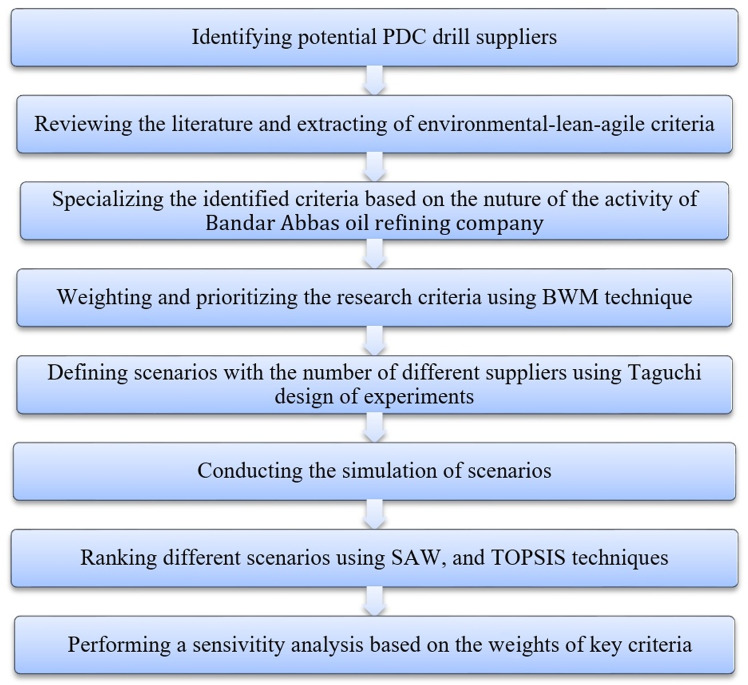
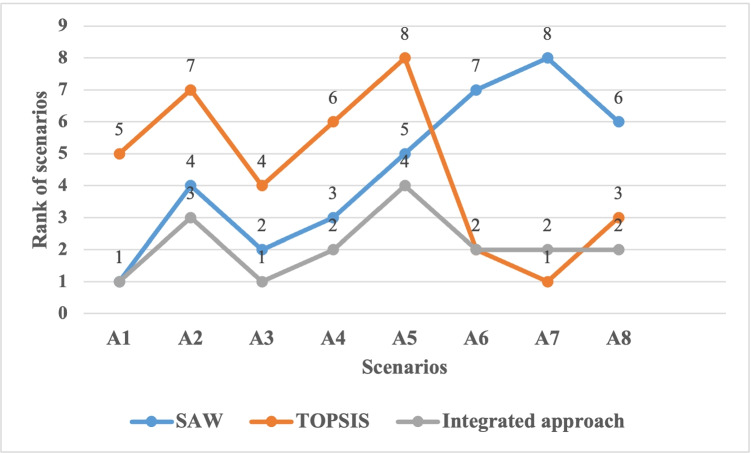
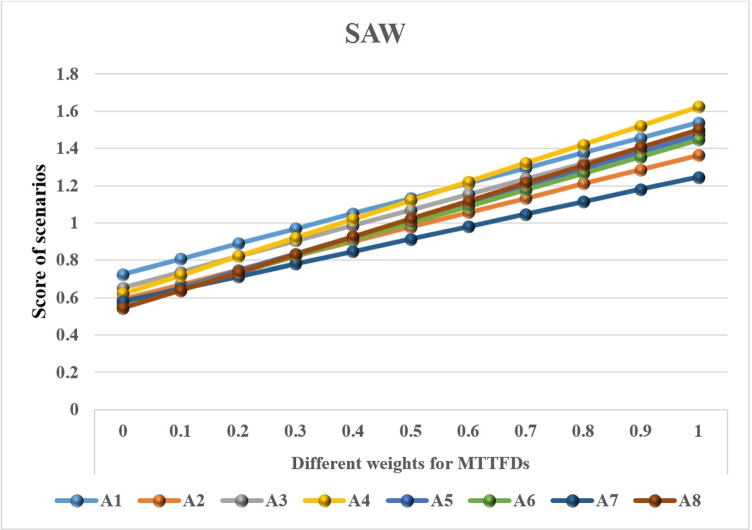
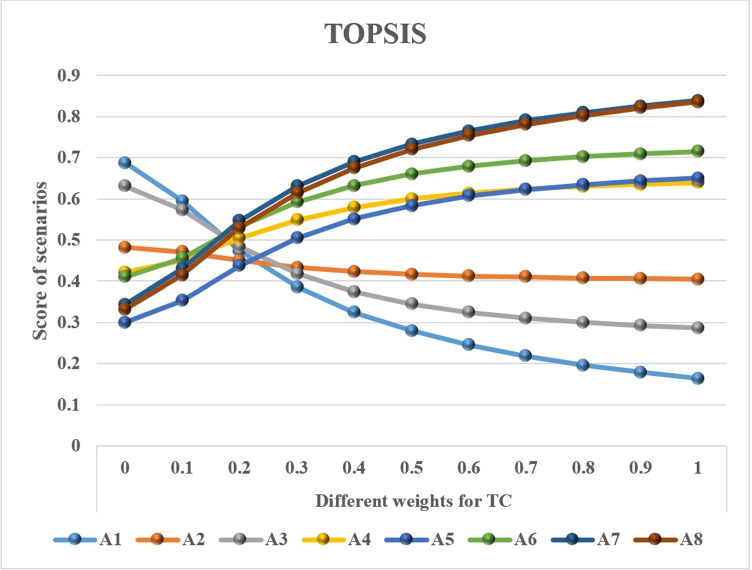
Global supply chains are increasingly becoming complex by having numerous suppliers around the world. To manage this complexity, organizations must identify the optimum number of suppliers. There have been many examples in the literature that used different approaches to solve this problem. Despite the importance of this issue, less attention has been paid to it and managers of the companies do not know how, and based on which approach and criteria, they should determine the optimal number of suppliers which leads to lower cost and higher reliability of the production line. Therefore, in this study, a hybrid methodology is proposed to expose the process of this problem which helps managers to learn how they can determine the optimal number of suppliers. We address this gap by developing an integrated approach based on multi-criteria decision-making (MCDM) comprising best-worst method (BWM), simple additive weighting (SAW), and technique for order preference by similarity to ideal solution (TOPSIS), and simulation to determine the optimal number of suppliers. This study utilizes a comprehensive approach based on leagile and environmentally sustainable criteria to determine the optimal number of suppliers. To examine the efficiency of the proposed approach, an empirical case study is conducted in an Iranian oil company. The final results represent that the scenario with a 1-1-1 arrangement (one supplier for each type of equipment) is the best possible scenario to determine the optimal number of leagile-sustainable suppliers. To examine the reliability and robustness of the obtained results, a sensitivity analysis based on the three most important criteria is conducted. Finally, discussions on the findings as well as theoretical and managerial implications are presented.
Keywords: BWM; Leagile-sustainable suppliers; Optimal number of suppliers; SAW; Supply chain management; TOPSIS.
© 2022. The Author(s), under exclusive licence to Springer-Verlag GmbH Germany, part of Springer Nature.
Conflict of interest statement
The authors declare no competing interests.
Figures





References
-
- Abdollahi M, Arvan M, Razmi J. An integrated approach for supplier portfolio selection: lean or agile? Expert Syst Appl. 2015;42(1):679–690. doi: 10.1016/j.eswa.2014.08.019. - DOI
-
- Agarwal A, Shankar R, Tiwari M. Modeling the metrics of lean, agile and leagile supply chain: An ANP-based approach. Eur J Oper Res. 2006;173(1):211–225. doi: 10.1016/j.ejor.2004.12.005. - DOI
-
- Al-Omoush KS, Simón-Moya V, Sendra-García J. The impact of social capital and collaborative knowledge creation on e-business proactiveness and organizational agility in responding to the COVID-19 crisis. Journal of Innovation & Knowledge. 2020;5(4):279–288. doi: 10.1016/j.jik.2020.10.002. - DOI
-
- Alimardani M, Hashemkhani Zolfani S, Aghdaie MH, Tamošaitienė J. A novel hybrid SWARA and VIKOR methodology for supplier selection in an agile environment. Technol Econ Dev Econ. 2013;19(3):533–548. doi: 10.3846/20294913.2013.814606. - DOI
-
- Amin SH, Razmi J, Zhang G. Supplier selection and order allocation based on fuzzy swot analysis and fuzzy linear programming. Expert Syst Appl. 2011;38(1):334–342. doi: 10.1016/j.eswa.2010.06.071. - DOI
MeSH terms
LinkOut - more resources
Full Text Sources
Miscellaneous
