


Adiponectin receptors sustain haematopoietic stem cells throughout adulthood by protecting them from inflammation
- PMID: 35513711
- PMCID: PMC9107511
- DOI: 10.1038/s41556-022-00909-9
Adiponectin receptors sustain haematopoietic stem cells throughout adulthood by protecting them from inflammation
Abstract
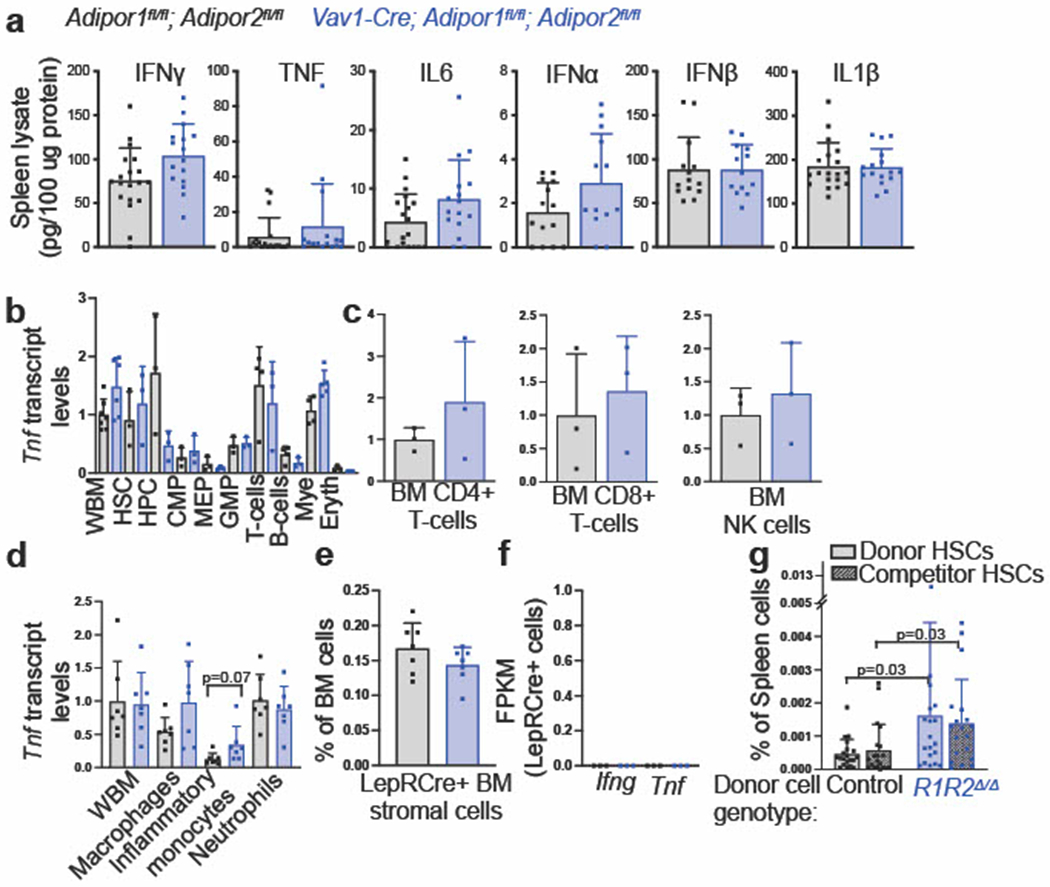
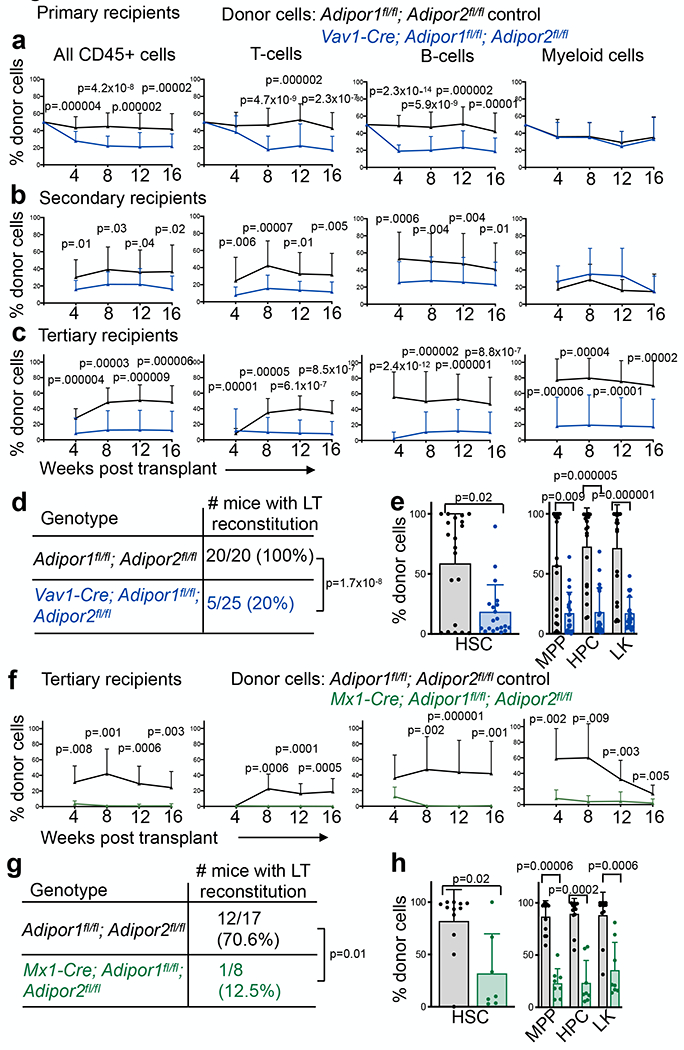
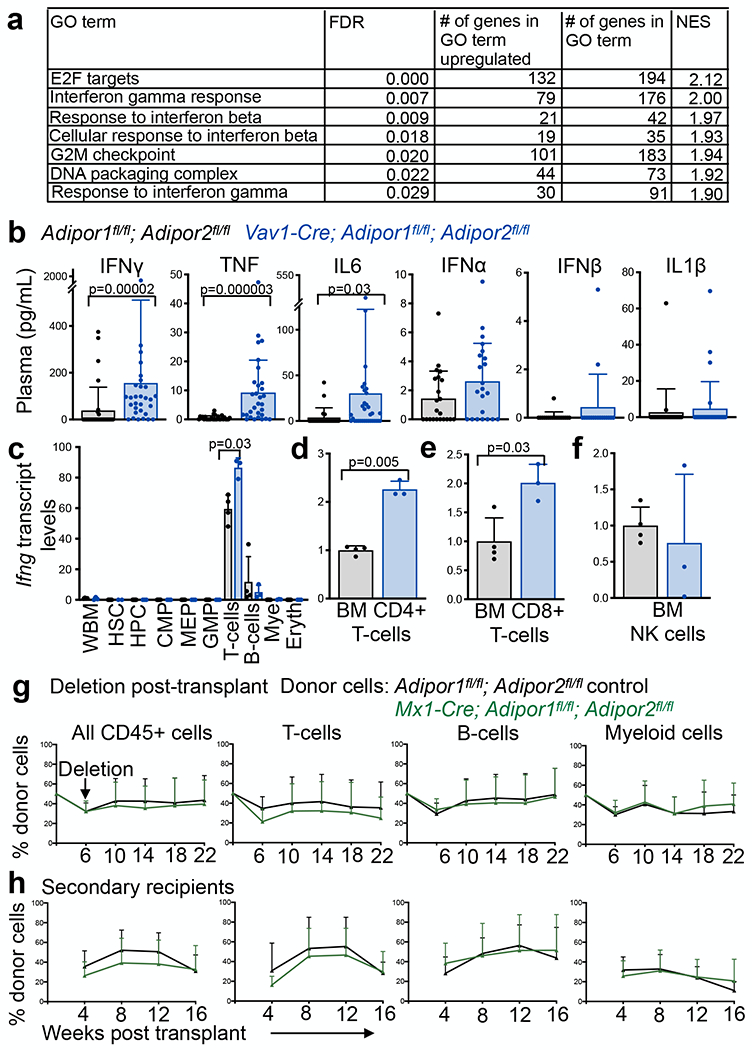
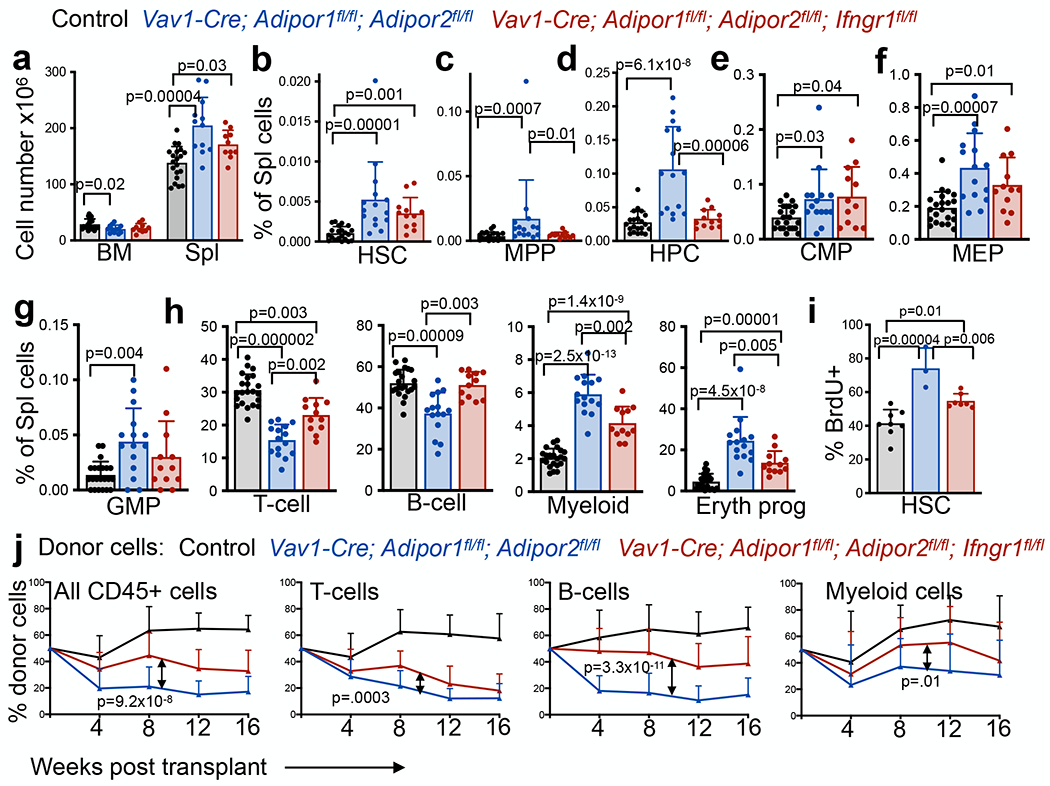
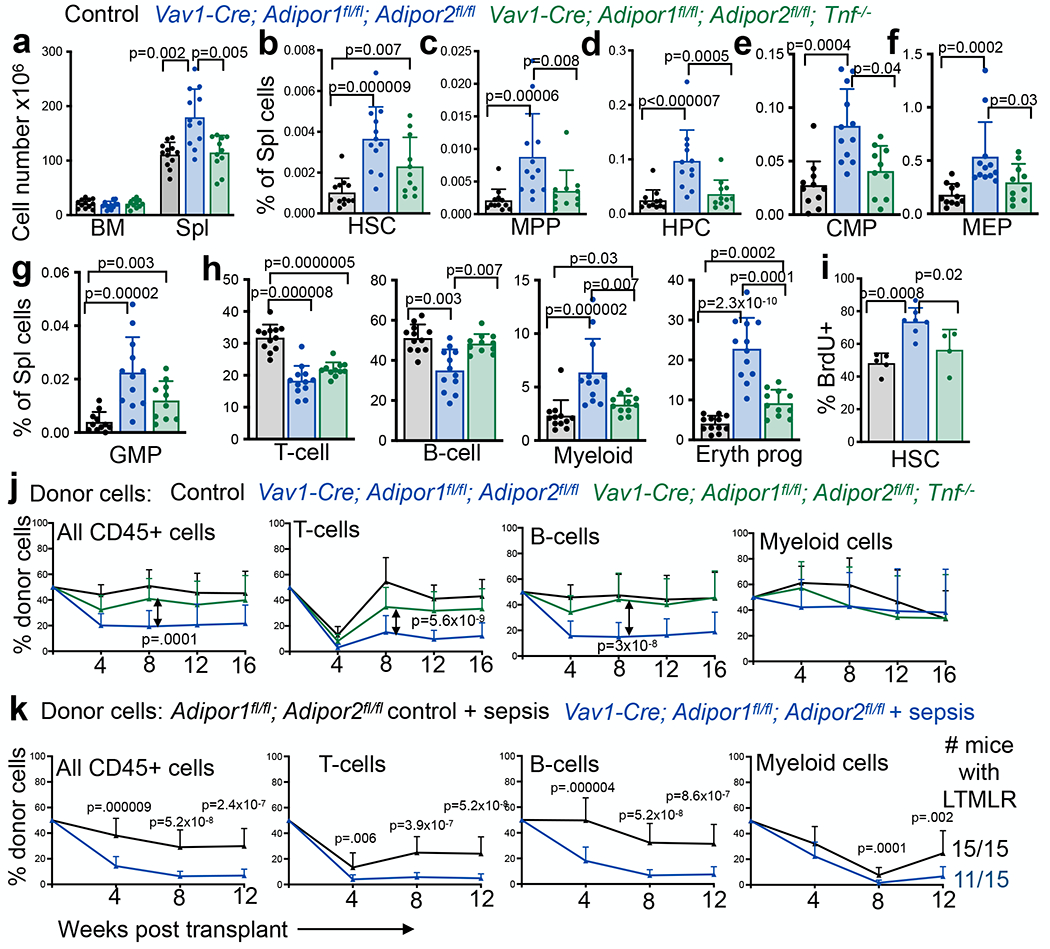
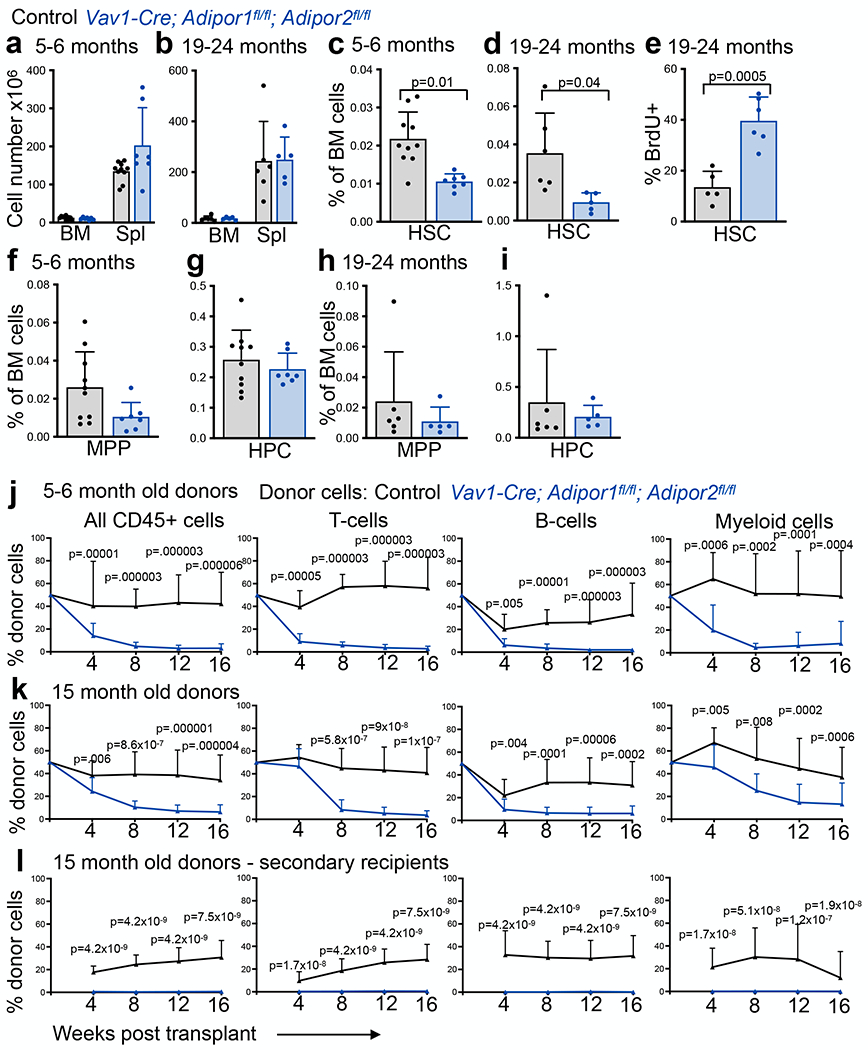
How are haematopoietic stem cells (HSCs) protected from inflammation, which increases with age and can deplete HSCs? Adiponectin, an anti-inflammatory factor that is not required for HSC function or haematopoiesis, promotes stem/progenitor cell proliferation after bacterial infection and myeloablation. Adiponectin binds two receptors, AdipoR1 and AdipoR2, which have ceramidase activity that increases upon adiponectin binding. Here we found that adiponectin receptors are non-cell-autonomously required in haematopoietic cells to promote HSC quiescence and self-renewal. Adiponectin receptor signalling suppresses inflammatory cytokine expression by myeloid cells and T cells, including interferon-γ and tumour necrosis factor. Without adiponectin receptors, the levels of these factors increase, chronically activating HSCs, reducing their self-renewal potential and depleting them during ageing. Pathogen infection accelerates this loss of HSC self-renewal potential. Blocking interferon-γ or tumour necrosis factor signalling partially rescues these effects. Adiponectin receptors are thus required in immune cells to sustain HSC quiescence and to prevent premature HSC depletion by reducing inflammation.
© 2022. The Author(s), under exclusive licence to Springer Nature Limited.
Conflict of interest statement
Competing interests
The authors declare no competing interests.
Figures
References
-
- Berg AH, Combs TP, Du X, Brownlee M & Scherer PE The adipocyte-secreted protein Acrp30 enhances hepatic insulin action. Nat Med 7, 947–953 (2001). - PubMed
-
- Yamauchi T et al. The fat-derived hormone adiponectin reverses insulin resistance associated with both lipoatrophy and obesity. Nat Med 7, 941–946 (2001). - PubMed
-
- Scherer PE, Williams S, Fogliano M, Baldini G & Lodish HF A novel serum protein similar to C1q, produced exclusively in adipocytes. J Biol Chem 270, 26746–26749 (1995). - PubMed
-
- Maeda K et al. cDNA cloning and expression of a novel adipose specific collagen-like factor, apM1 (AdiPose Most abundant Gene transcript 1). Biochem Biophys Res Commun 221, 286–289 (1996). - PubMed
Publication types
MeSH terms
Substances
Grants and funding
LinkOut - more resources
Full Text Sources
Other Literature Sources
