


Magnitude and predictors of common mental disorders among residents in south Gondar Zone, Northwest Ethiopia: a community-based, cross-sectional study
- PMID: 35513829
- PMCID: PMC9074186
- DOI: 10.1186/s12888-022-03966-4
Magnitude and predictors of common mental disorders among residents in south Gondar Zone, Northwest Ethiopia: a community-based, cross-sectional study
Abstract
Background: Common mental disorders such as depression, anxiety, and somatic symptoms are a major public health concern because it is prevalent and chronic, and its impact on physical health, psychological and economic consequences is very serious. Evidence on the prevalence and predictors of common mental disorders is very limited in Ethiopia. This study aims to determine the prevalence and associated factors with common mental disorders.
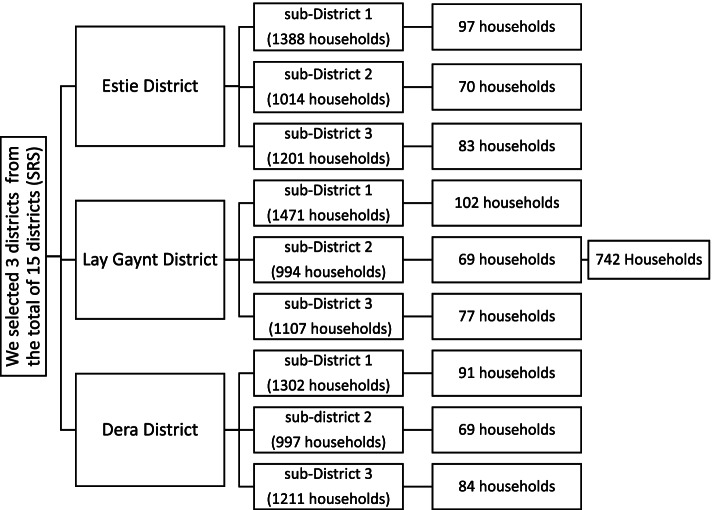
Methods: A community-based cross-sectional study was conducted among 731 south Gondar zone residents recruited with a multistage sampling method. Data were collected by face-to-face interviews on socio-demographic, clinical, and psychosocial factors. Common mental disorders (CMD) were assessed using a self-reporting questionnaire (SRQ-20). A-List of Threatening Experiences and the Oslo social support instruments were used to identify the factors. We used bivariate and multivariable binary logistic regressions to identify factors associated with common mental disorders. Statistical significance was declared at P-value < 0.05.
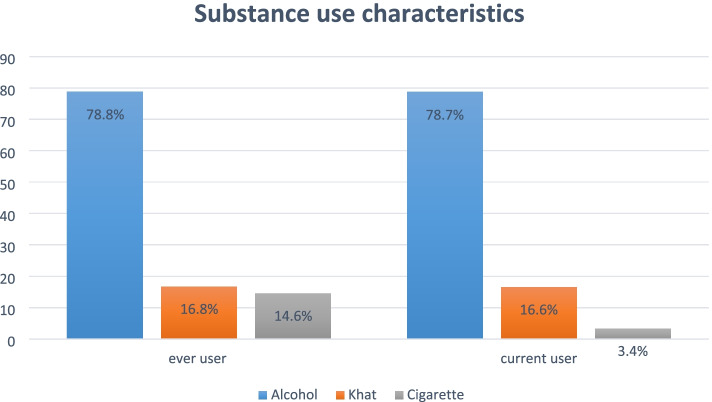
Results: The prevalence of common mental disorders over the last four weeks was found to be 29.7% with 95% of confidence interval (CI) (26.4-33.1). After adjusting possible confounders, female sex, [AOR = 2.47, 95% CI (1.68, 3.62)], poor social support [AOR = 2.34, 95% CI (1.50, 3.64)], family history of mental illness [AOR = 2.15, (1.32-3.51)], rural resident [AOR = 2.01, 95% CI (1.35, 3.01)], current use of khat [AOR = 1.69, 95% CI (1 0.07, 2.64)] current use of tobacco (AOR = 1.71, 95% CI (1.04-2.84) and unemployment [AOR = 1.762, 95% CI; 1.193, 2.602)] were significantly associated with common mental disorders.
Conclusion: The prevalence of common mental disorders was high, especially in Female sex, current substance use (khat chewing (leaves) and tobacco smoking), unemployment, rural residence, family history mental illness, and poor social support are the main determinants of common mental disorders. Early detection and appropriate intervention for common mental disorders in the community level should be promoted. Governmental strategies should be focused on implementing substance rehabilitation centers to treat Khat and tobacco might be helpful to minimize the burden of CMD in Ethiopia.
© 2022. The Author(s).
Conflict of interest statement
The authors have declared that no competing interests exist.
Figures
References
-
- Organization WH. The world health report 2003: shaping the future: World Health Organization; 2003.
-
- Charlson FJ, Diminic S, Lund C, Degenhardt L, Whiteford HA. Mental and substance use disorders in sub-Saharan Africa: predictions of epidemiological changes and mental health workforce requirements for the next 40 years. PLoS ONE. 2014;9(10):e110208. doi: 10.1371/journal.pone.0110208. - DOI - PMC - PubMed
Publication types
MeSH terms
LinkOut - more resources
Full Text Sources
Medical
